Personal projects / Materials & heat
Copper-sphere tungsten furnace
A resistively heated furnace and the small crystals found inside an alumina test sample.
Open the numbered review →Crystal samples
Photos 18–20, 22
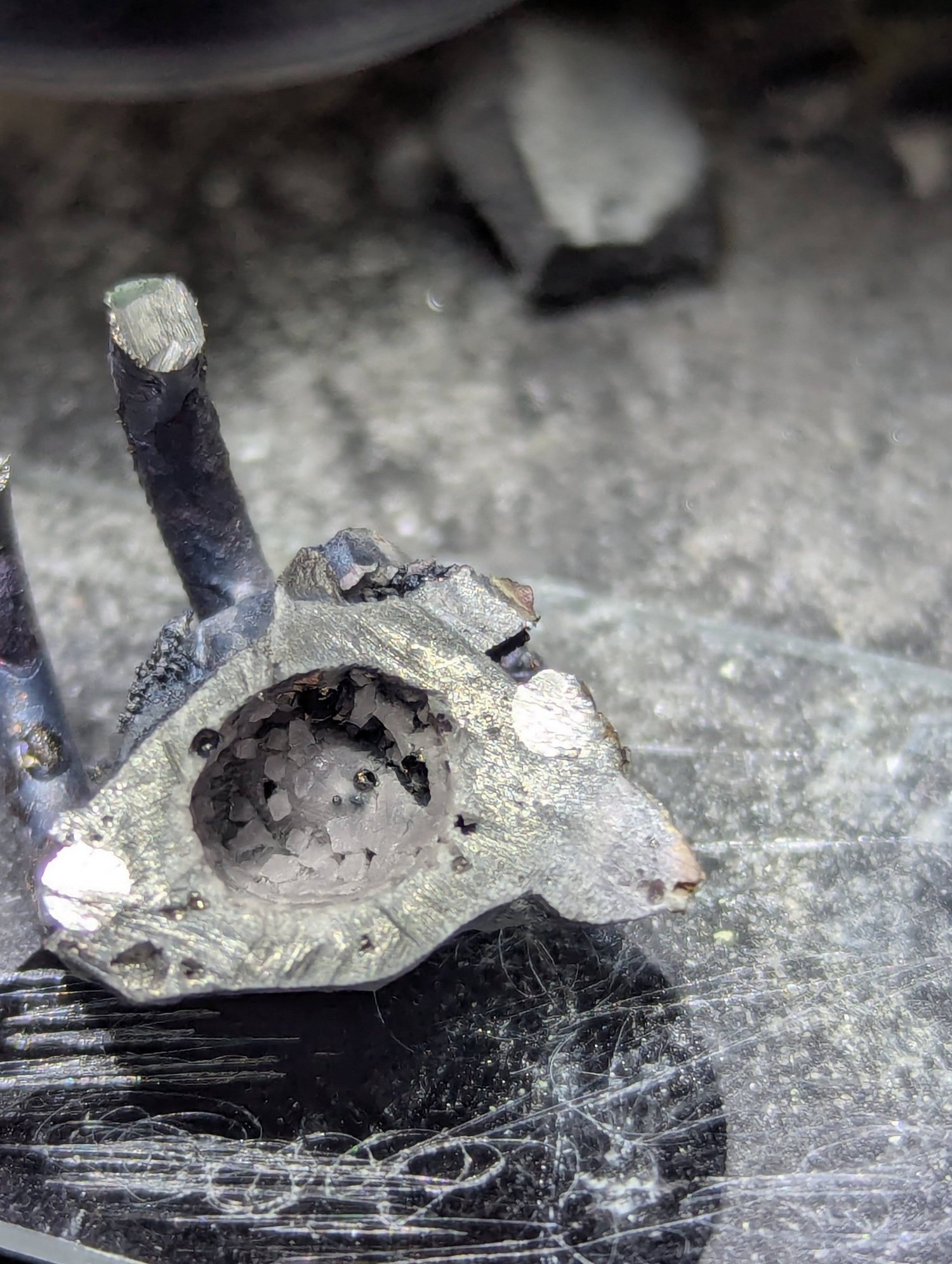
I heated alumina rods inside a tungsten coil, hoping the alumina would drip onto a tungsten plate below. Instead, it formed a mass around the coil. When I cut that mass in half, I found a hollow pocket lined with tiny crystals that I identified as sapphire—a happy accident in an experiment intended to make small alumina droplets.
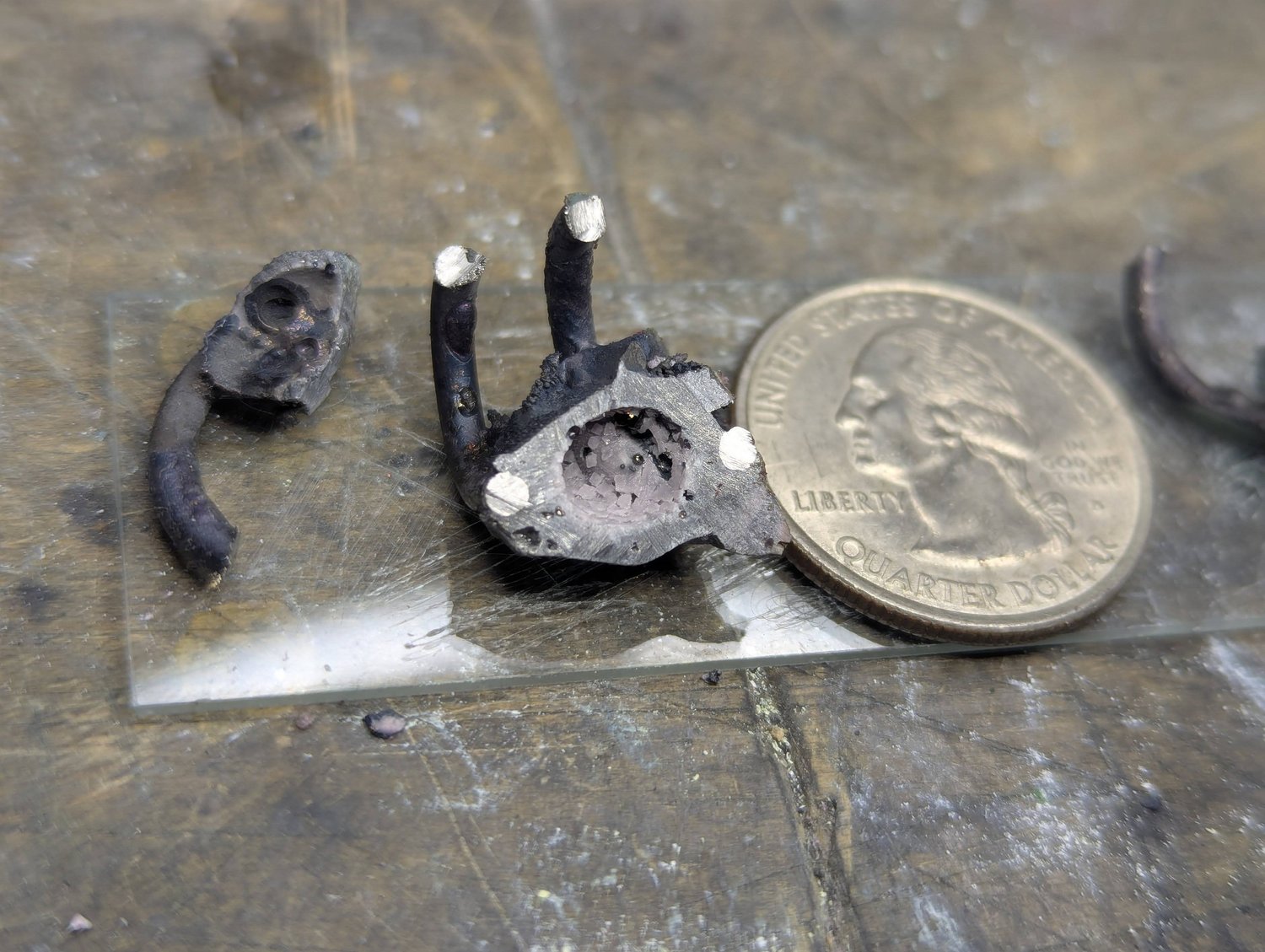
The cut alumina mass beside a U.S. quarter for scale. The crystals lining the internal pocket were roughly the size of small salt grains. Finding them was an unexpected result of heating alumina inside the tungsten coil.
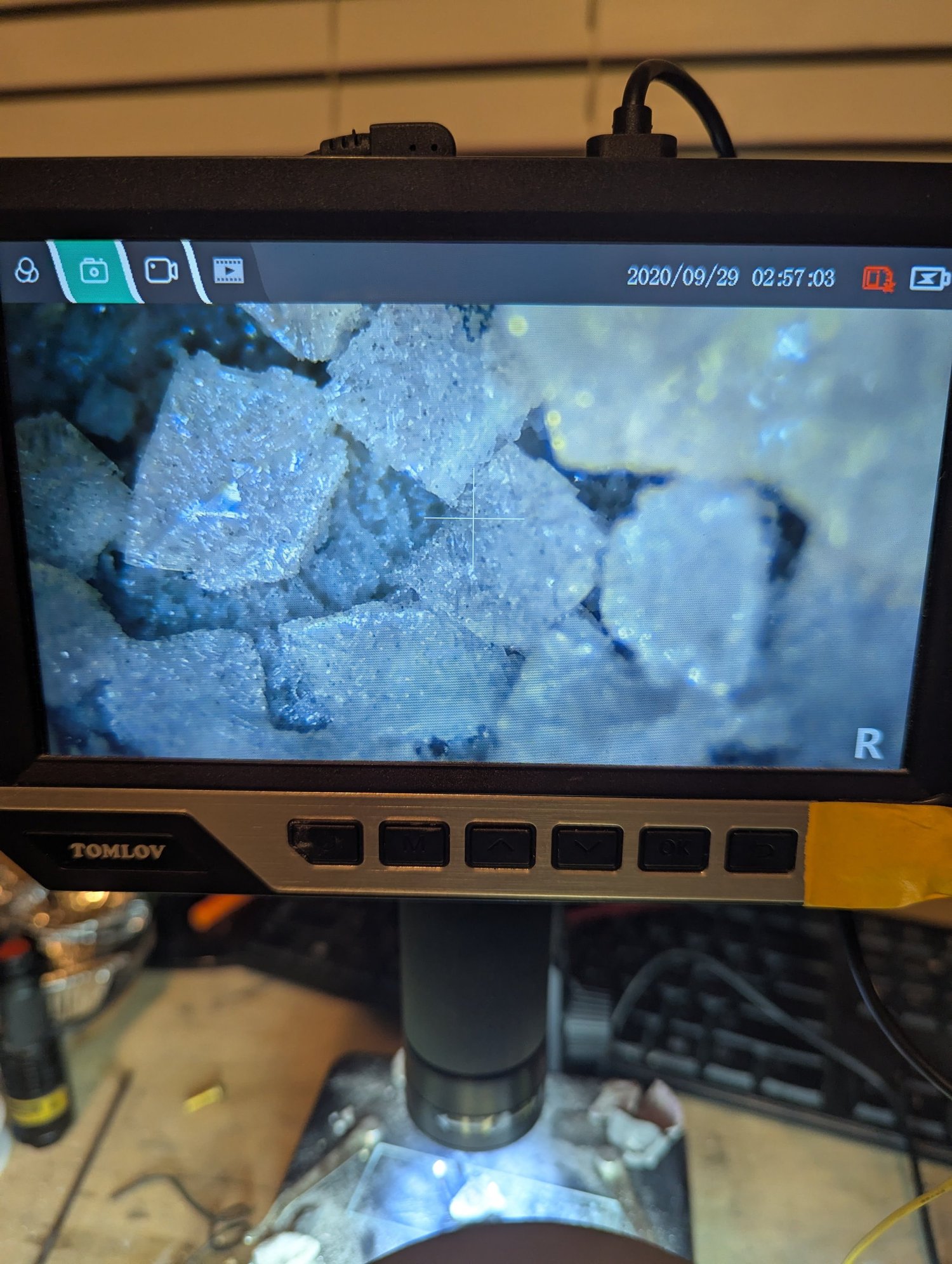
A magnified view of the small crystals inside the alumina mass. Cutting the sample open revealed this hidden pocket and made it possible to examine the crystals more closely.
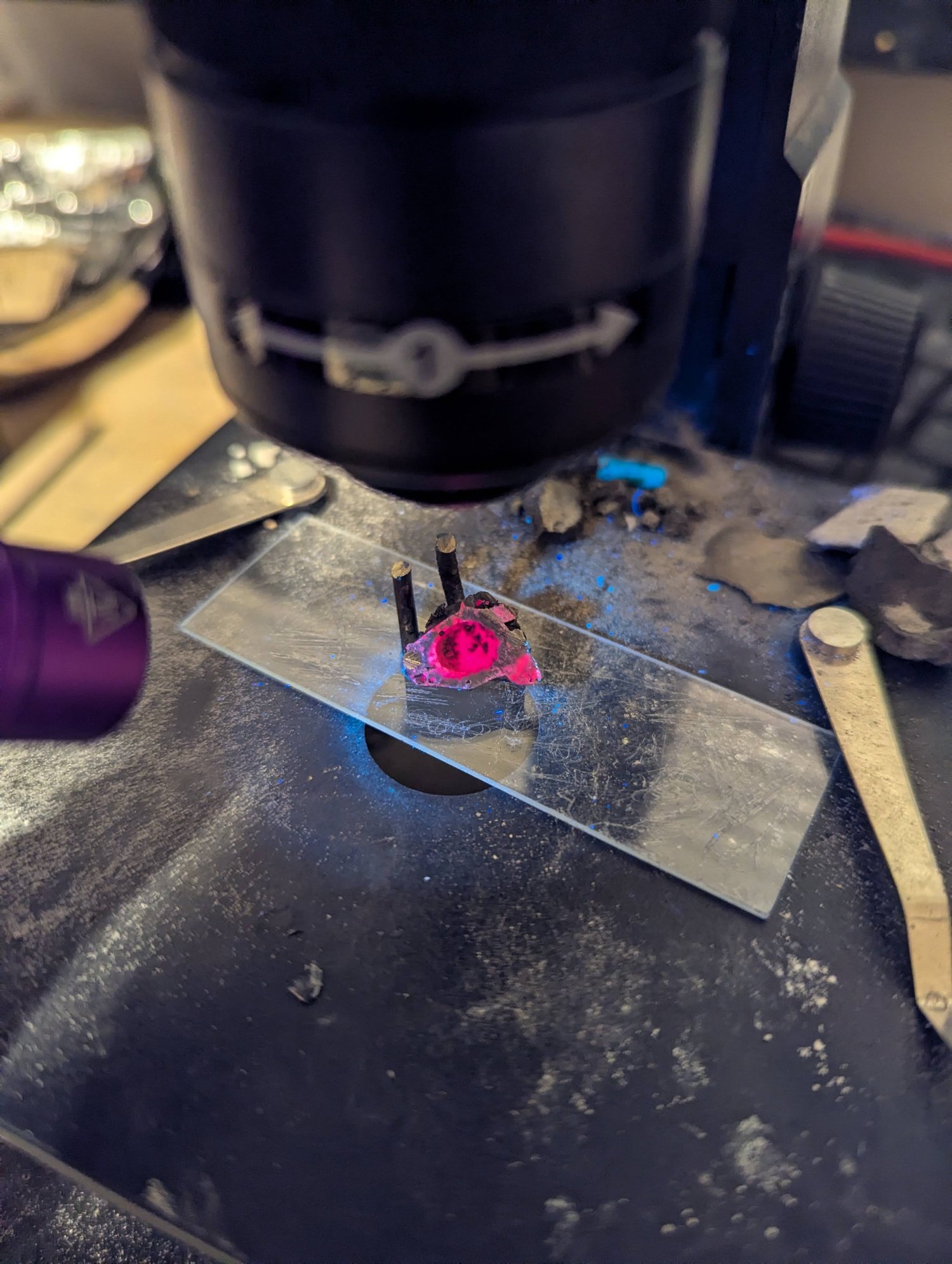
Ultraviolet light illuminates the opened alumina mass. The small crystals show a strong fluorescent glow, making the crystal-lined pocket stand out from the surrounding material.
Furnace and supporting equipment
Photos 23–25
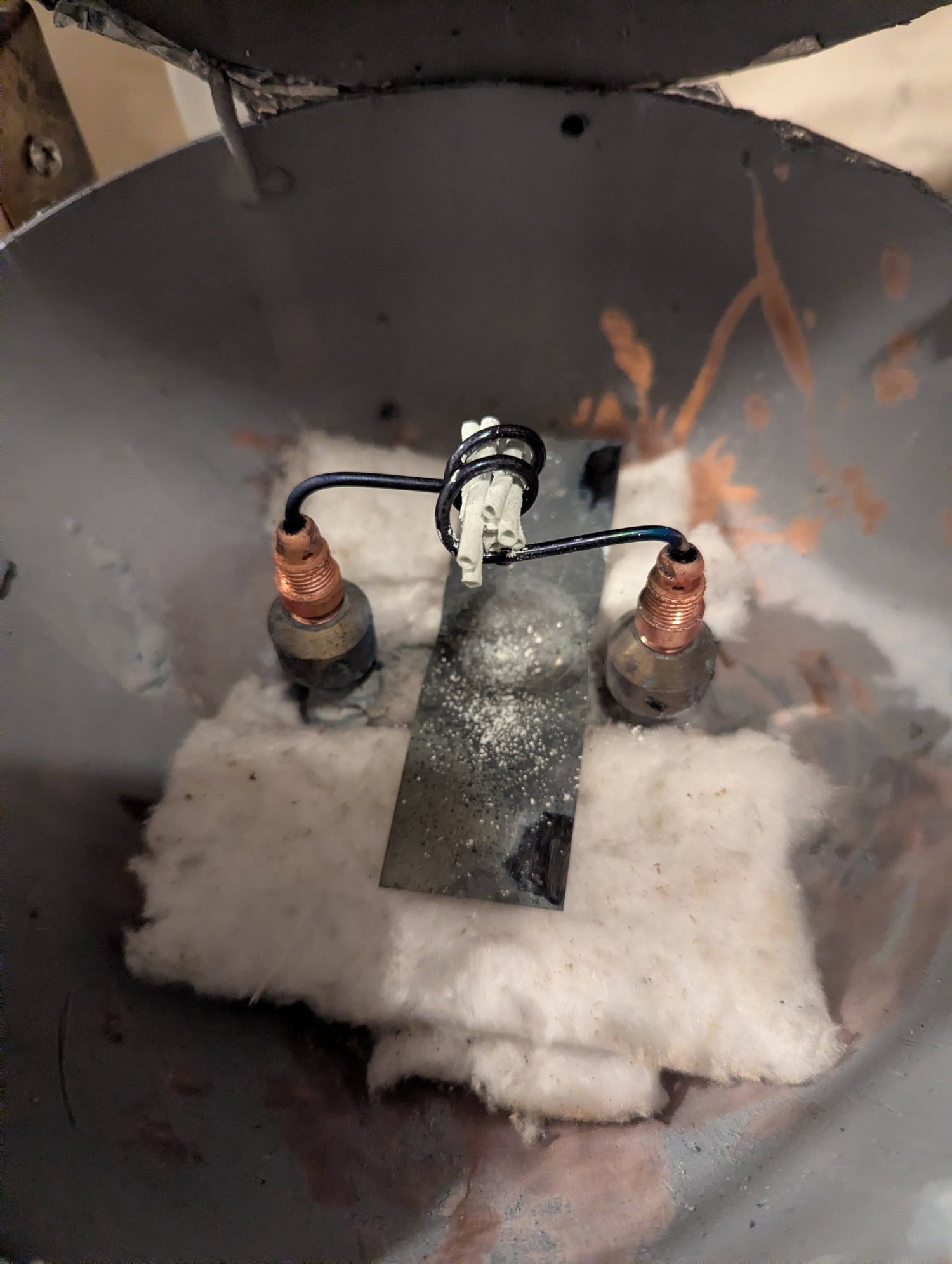
Alumina rods sit inside a tungsten filament made from a TIG welding rod, with a tungsten plate below to catch drips. Copper electrode holders connect through the chamber floor to the power supply. I retired this design because a glass cooling-water connection beneath the insulation could have been exposed to hot material. Later designs focused on keeping cooling water out of the chamber. The yellow-white wall deposits were a recurring oxidation problem.
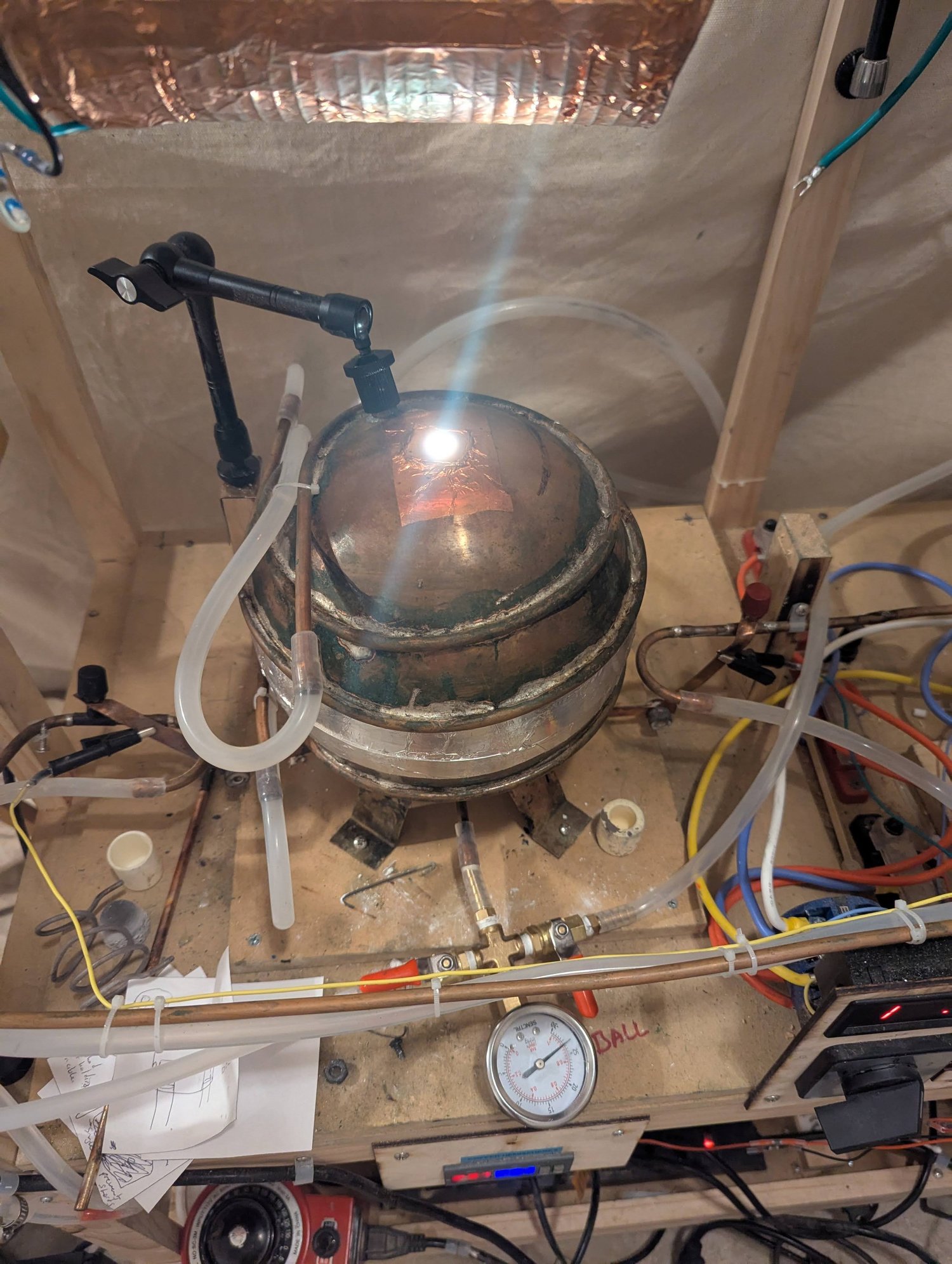
The two copper hemispheres assembled into a furnace chamber, with aluminum tape sealing the joint. Recurring tungsten-oxide deposits taught me how important oxygen control was. This early setup also used threaded pipe fittings and silicone tubing, which I later reconsidered as I improved the chamber and vacuum connections.
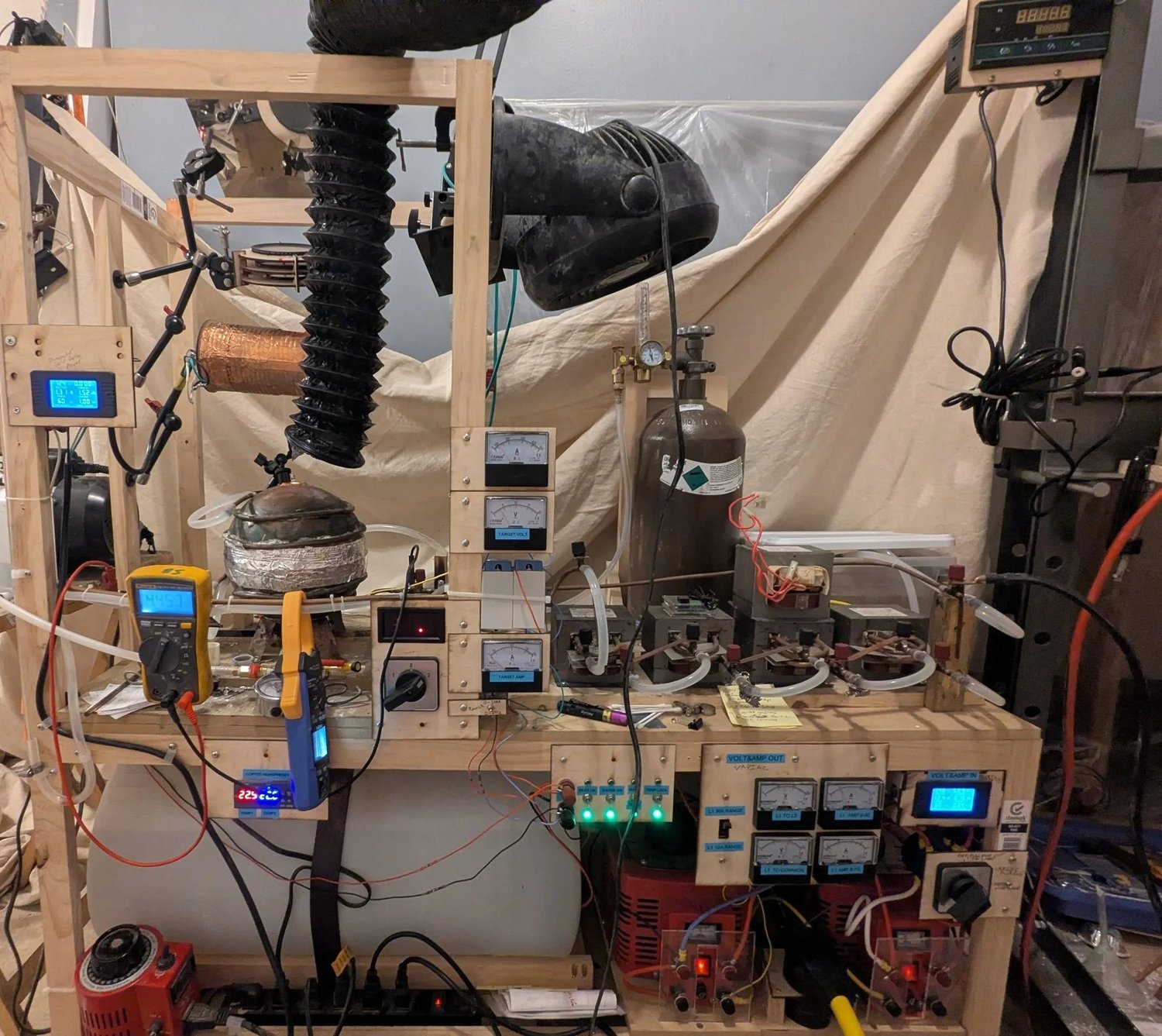
The copper-sphere furnace alongside its power and monitoring equipment. Four rewound microwave-oven transformers supplied high current, and an argon cylinder provided purge gas. Meters tracked filament current and voltage, input and output voltage at the adjustable transformers, and total input power. I added instruments over time as new questions came up during testing.