Personal projects / Optics & light
Optical magnetic-field sensor
A Faraday-effect experiment that translated changes in a magnetic field into a change in transmitted light.
Open the numbered review →Complete optical apparatus
Photos 162–164
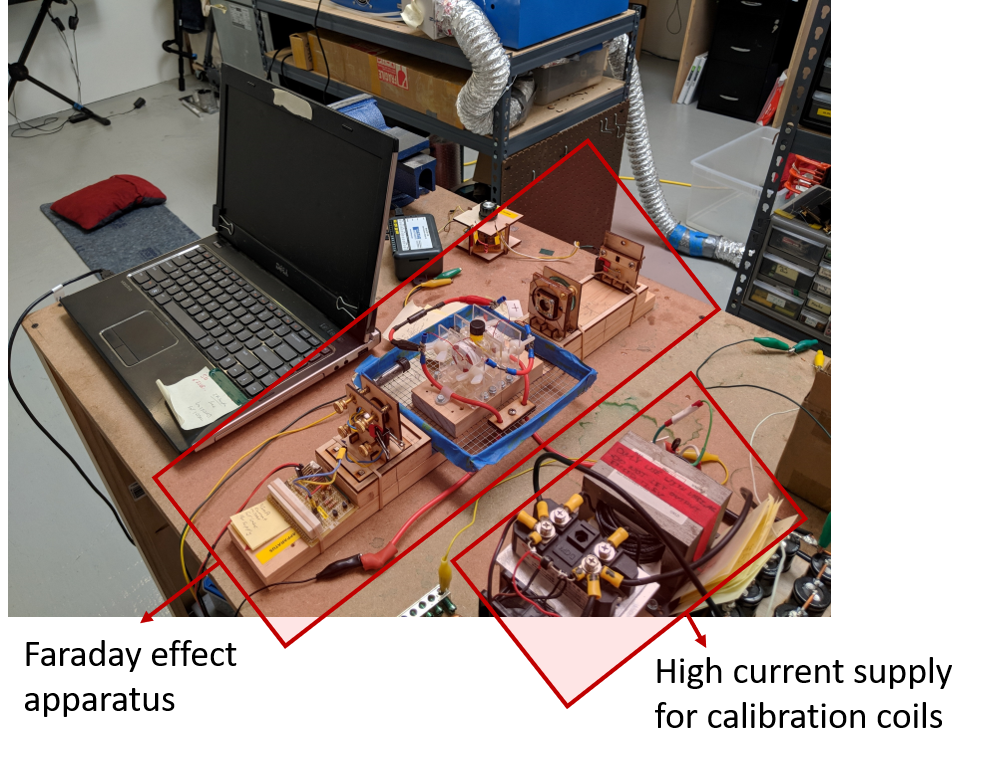
An optical sensing experiment for the magnetic-refrigeration project, using the Faraday effect. A laser passed through virgin olive oil, where an applied magnetic field could rotate the light’s polarization. A second polarizer turned that rotation into a change in brightness for a light sensor to detect. I saw a clear response when testing with the pictured calibration coils, while exploring an approach for strong magnetic pulses.
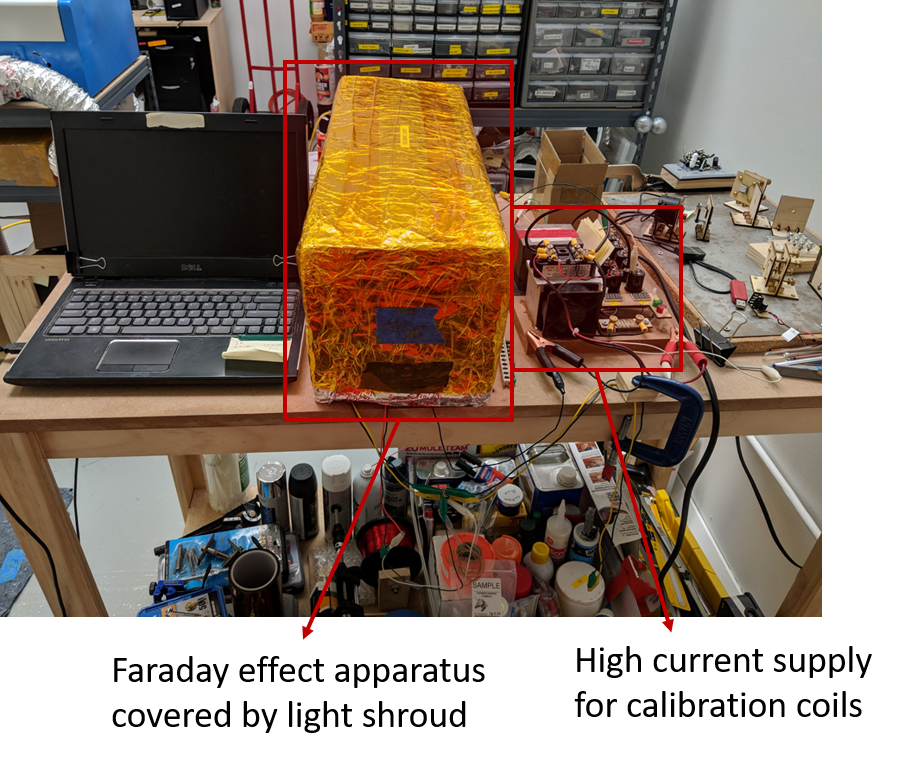
A foil-covered shroud around the optical apparatus helped keep ambient light from reaching the detector. I wanted the recorded signal to reflect changes in the laser light passing through the experiment, with less influence from the surrounding room lighting.
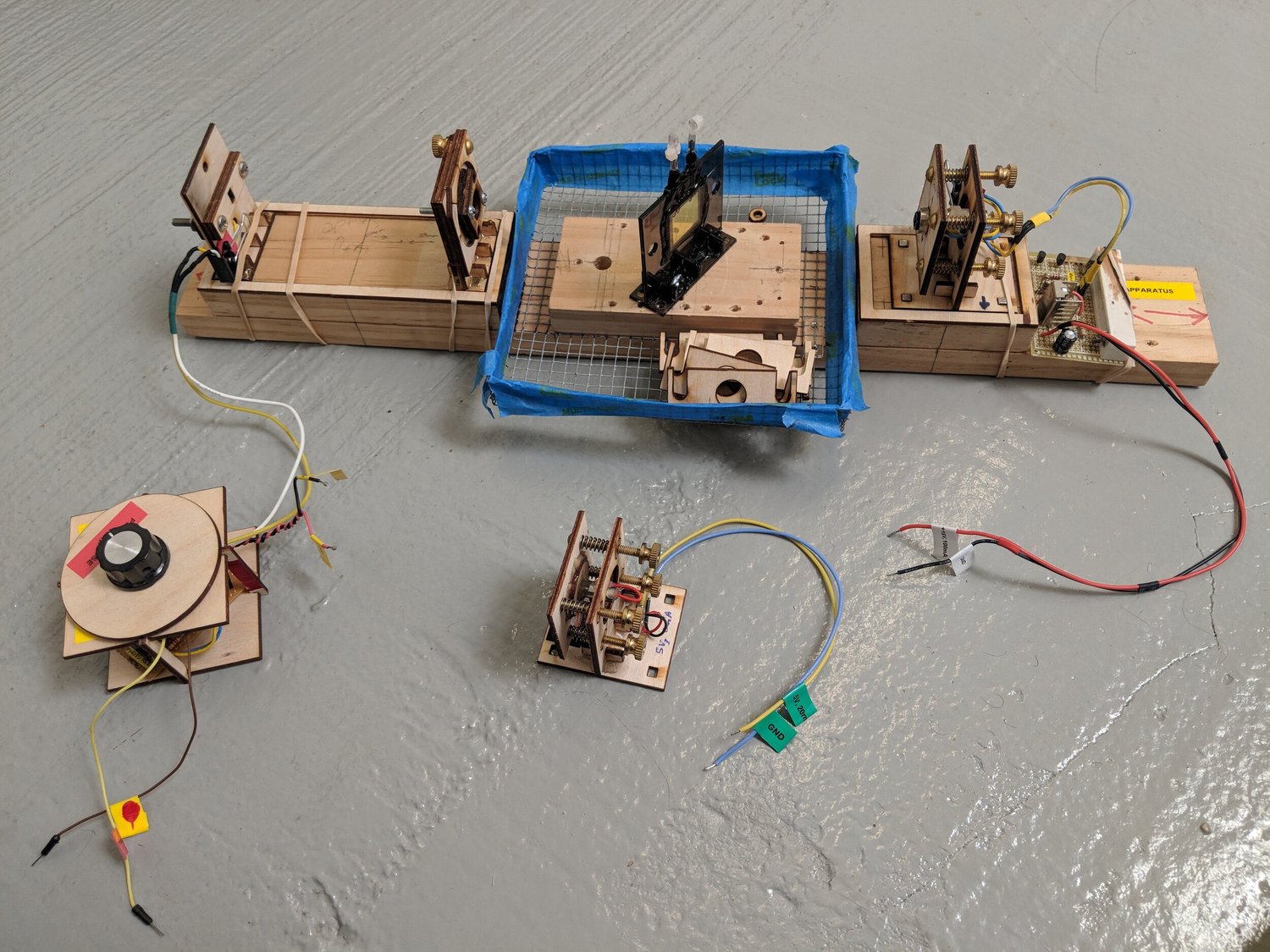
From right to left: the laser, the olive-oil sample, an adjustable polarizer, and the photoresistor that detected changes in transmitted light. The detector connected to an amplifier so its signal could be recorded. This arrangement let me explore magnetic-field sensing through an optical measurement.
Liquid cells and light-sensing electronics
Photos 398–399, 403–405
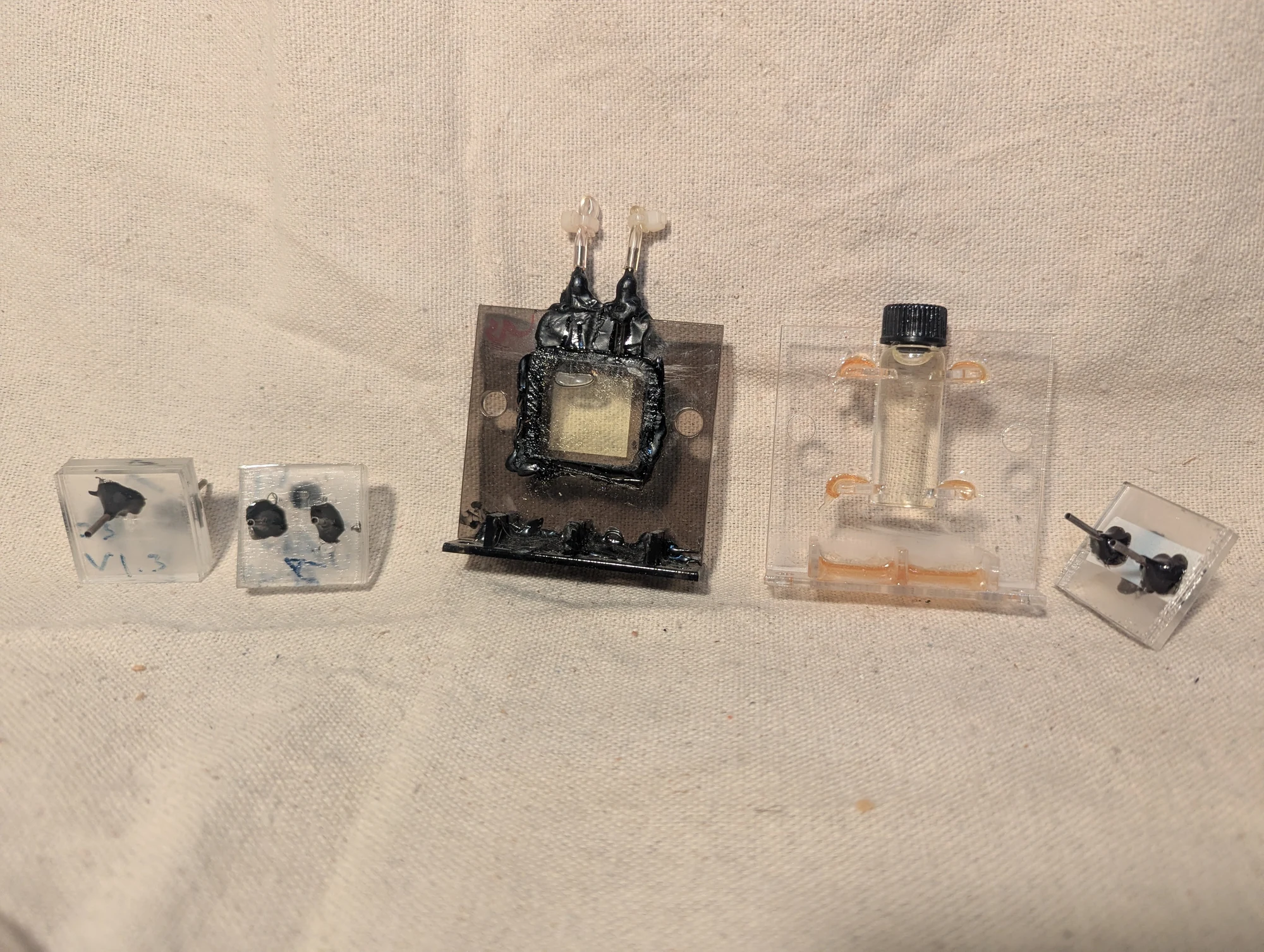
Chambers filled with virgin olive oil for a Faraday-effect experiment: investigating how a magnetic field rotates the polarization, or orientation, of light passing through a material. I used olive oil because it was available for the prototype. A material’s Verdet constant describes the strength of this response; these cells were part of the test apparatus.
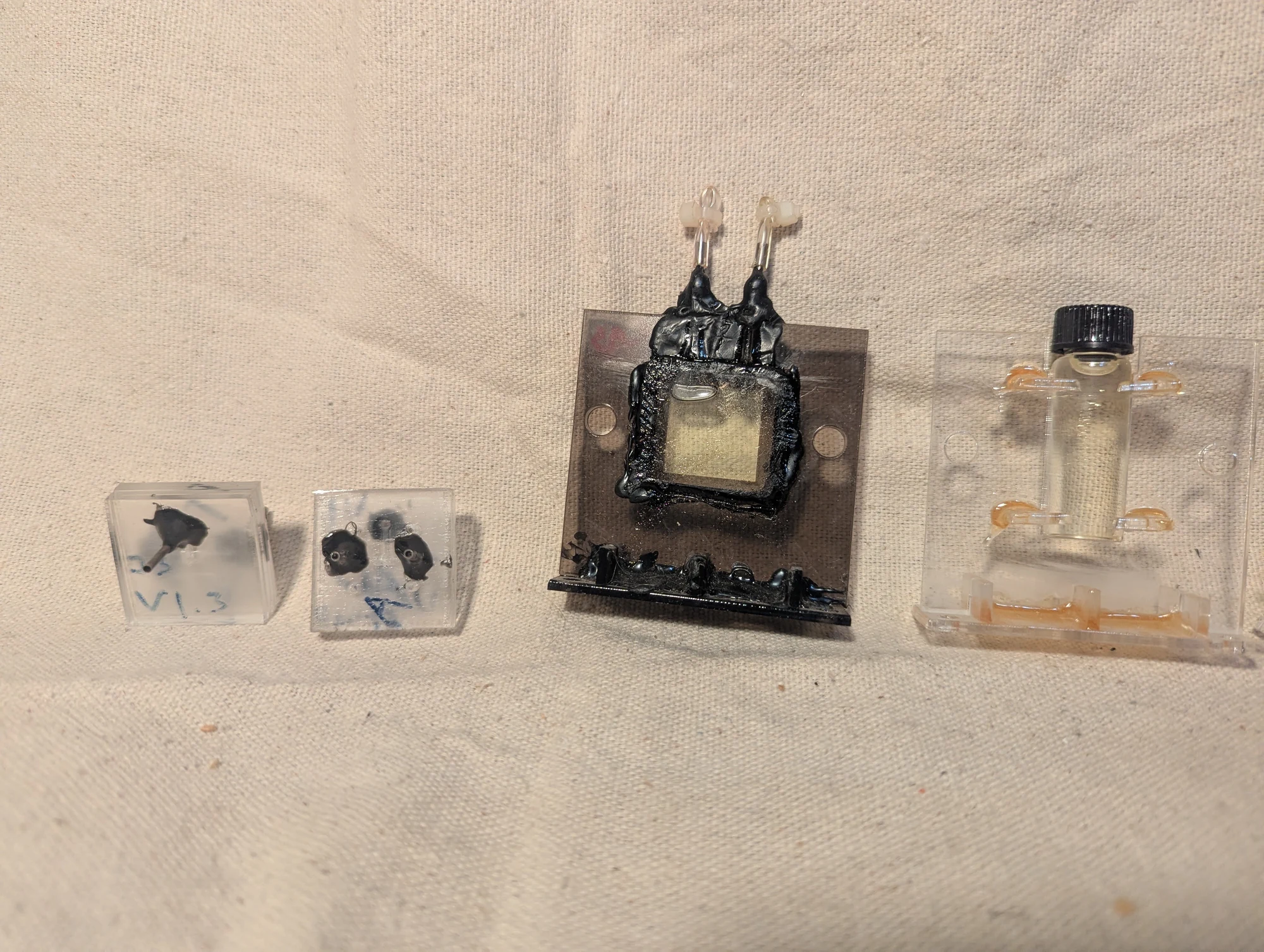
Another view of the liquid cells used in the Faraday-effect apparatus. The goal was to detect a small change in light polarization as a magnetic field was applied to the material in the light path.
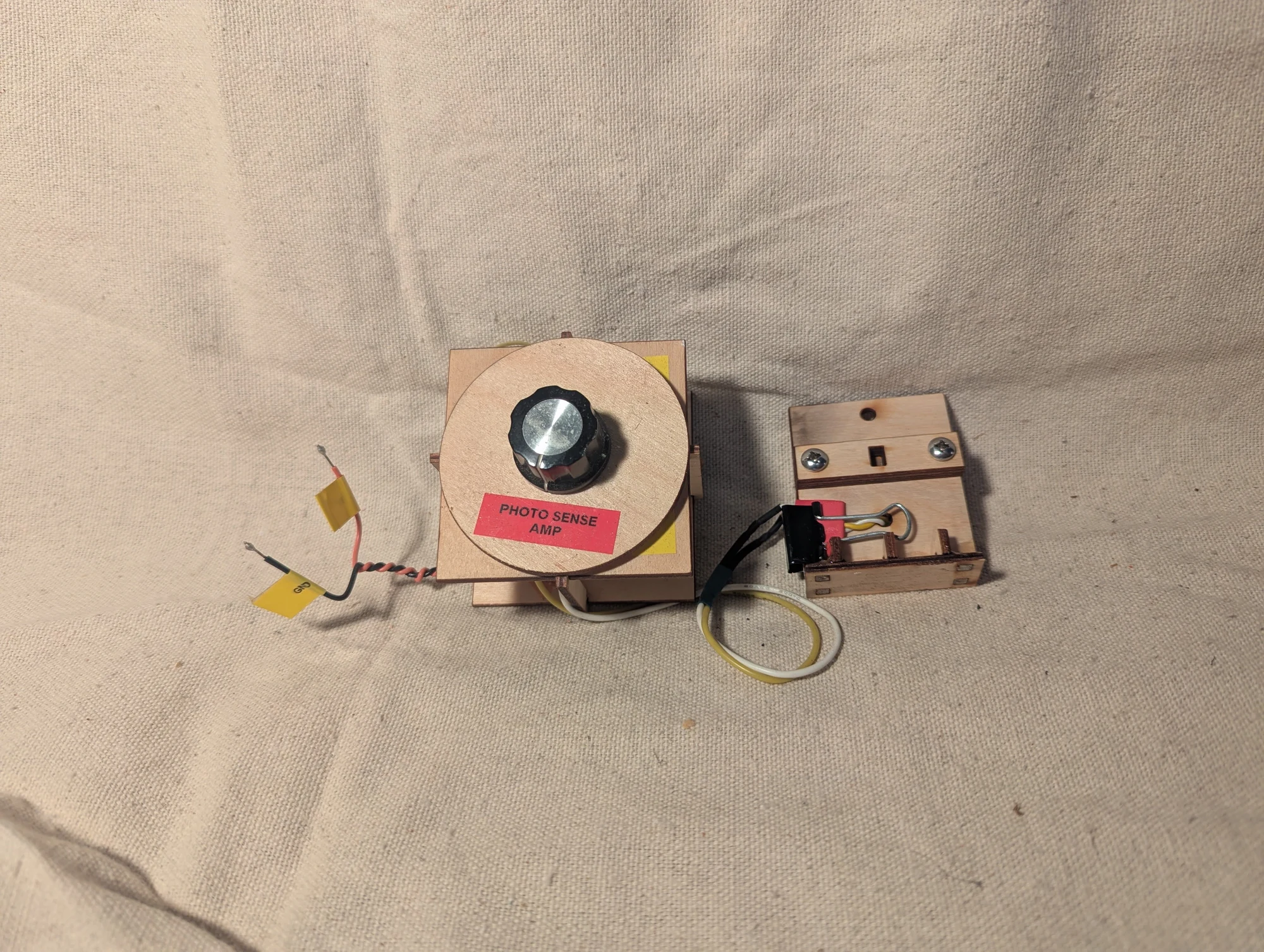
A light detector and amplifier used at the receiving end of the Faraday-effect apparatus. A polarizer before the detector converted changes in the light’s polarization into changes in brightness. The circuit amplified those small changes; I believe the sensing element was a photoresistor, though its exact type still needs confirmation.
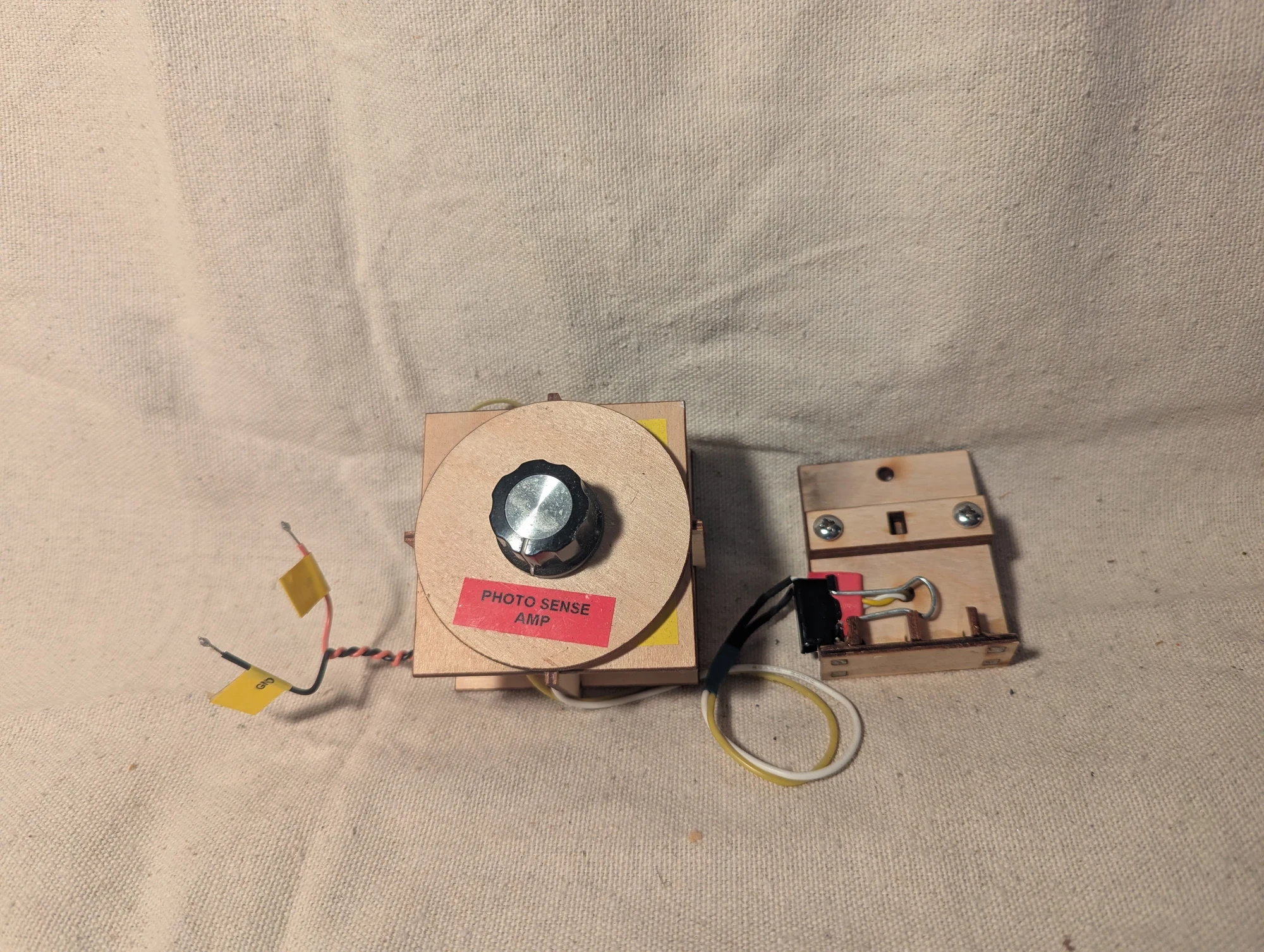
Another view of the light-sensing amplifier. It was used to look for small brightness changes after the laser beam passed through the Faraday-effect experiment and its final polarizer.
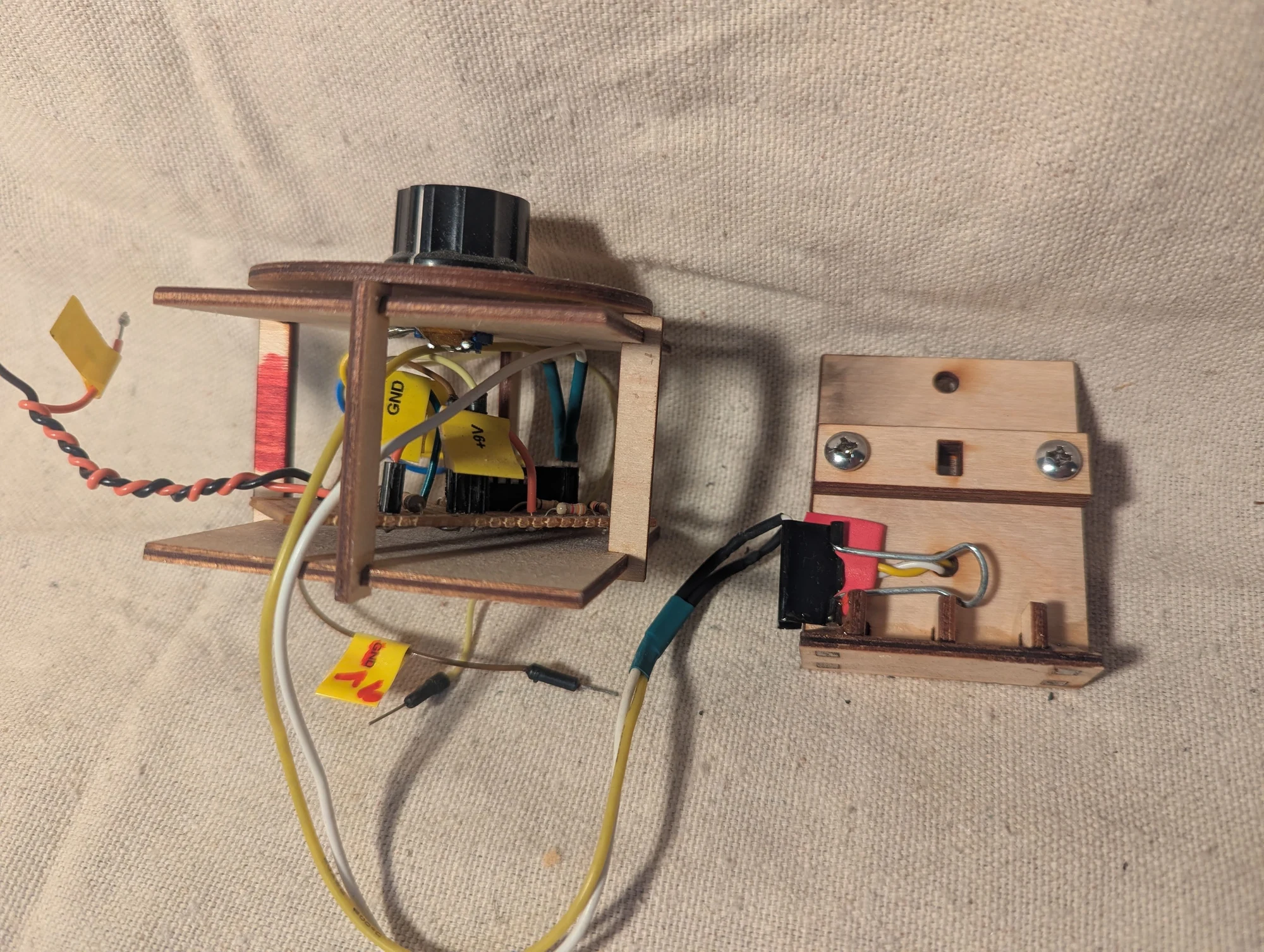
A closer view of the amplifier hardware for the optical experiment. The circuit was intended to make small changes in the detector’s signal easier to record and compare.