Personal projects / Materials & heat
Induction-heated ruby experiments
An induction-heated graphite and tungsten assembly used to heat alumina and chromium-oxide feedstock.
Open the numbered review →Furnace and crucible arrangement
Photos 61–65
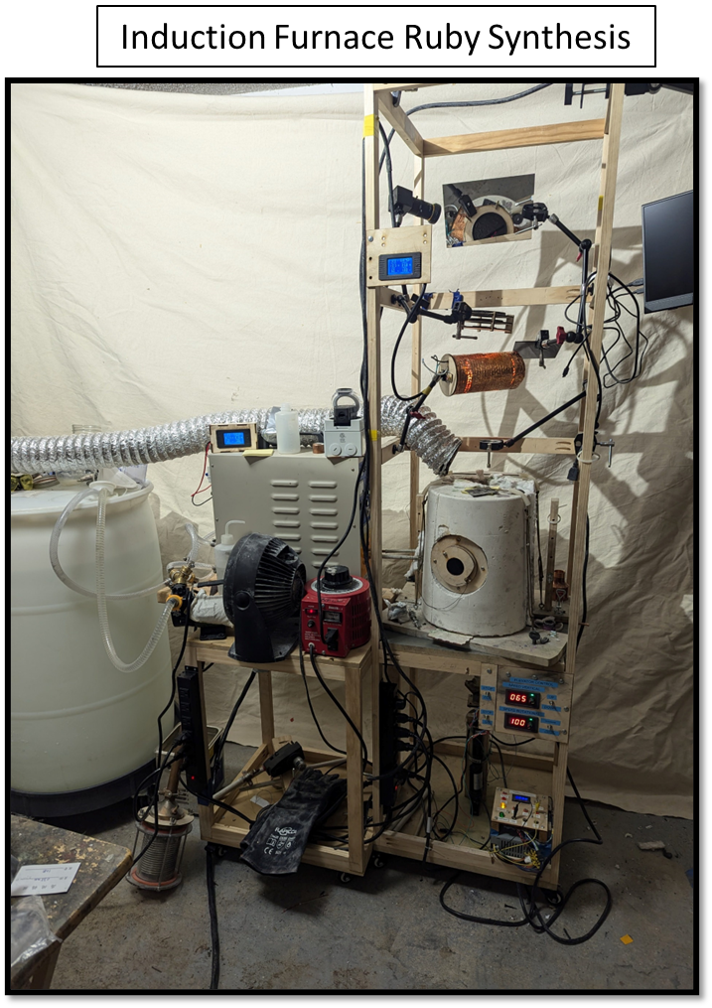
An earlier attempt to melt ruby feedstock using induction heating. The setup brought together the furnace, power equipment, cooling, and an optical pyrometer. I never achieved a full melt with this version, but the project included several mechanisms and measurement tools that I could carry into later experiments.
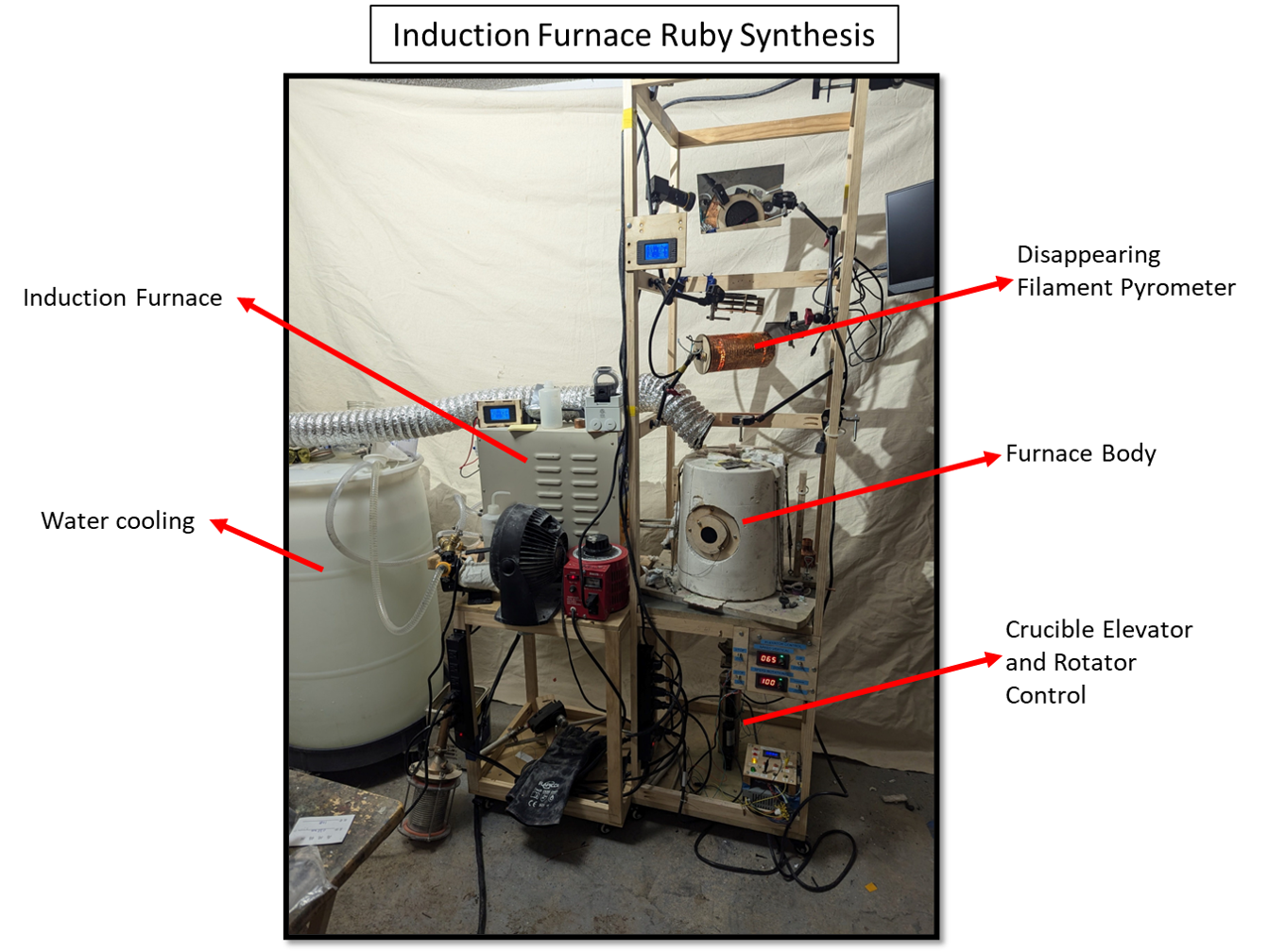
An overview of the induction-furnace setup, with arrows highlighting its main assemblies. The furnace and its supporting power, cooling, and measurement equipment were arranged together so I could investigate the heating process and monitor the experiment.
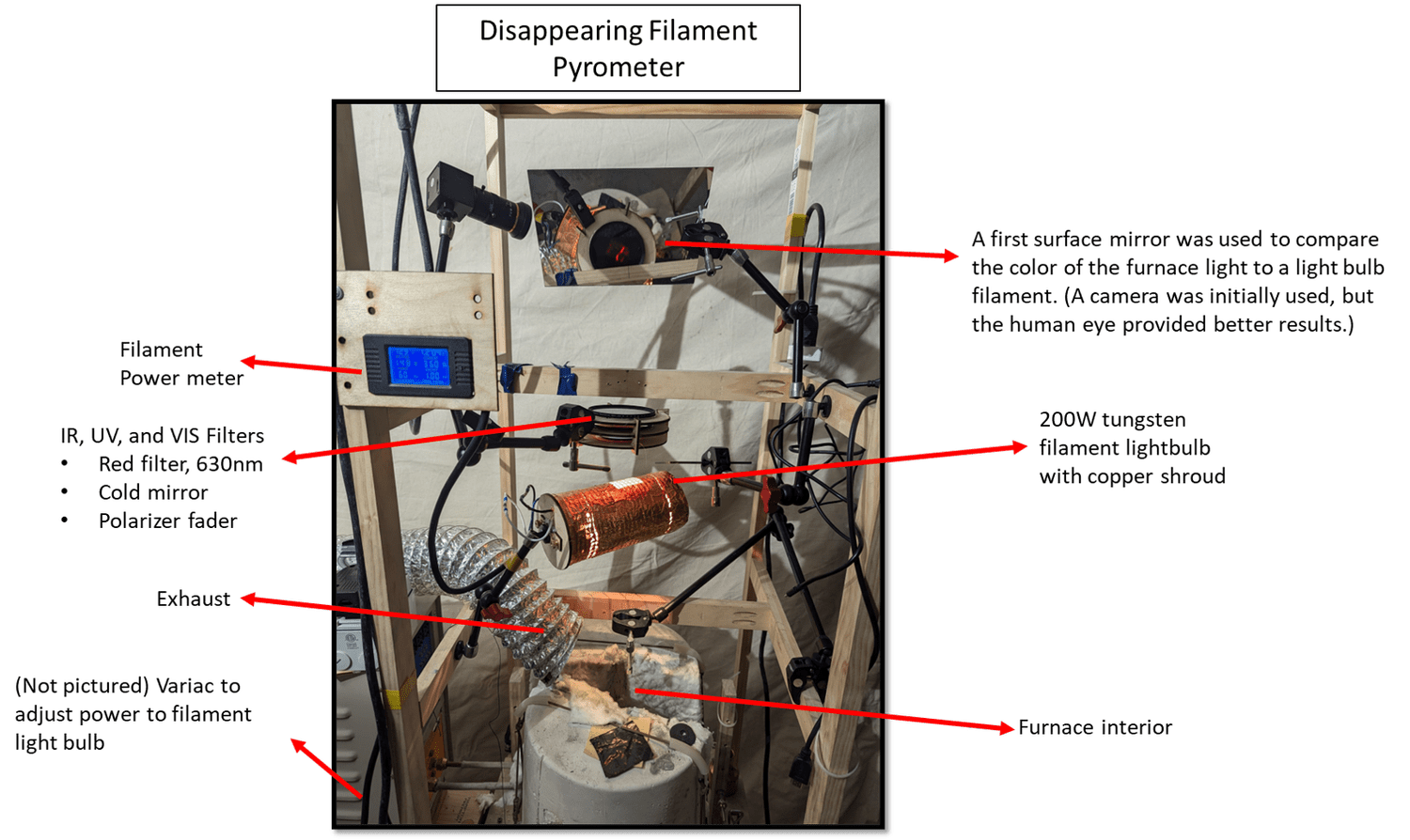
An annotated view of the disappearing-filament pyrometer used with the induction furnace. It identifies the reference lamp, lamp-power meter, optical filters, and viewing mirror. The instrument compared the target’s glow with an adjustable reference filament to estimate temperature.
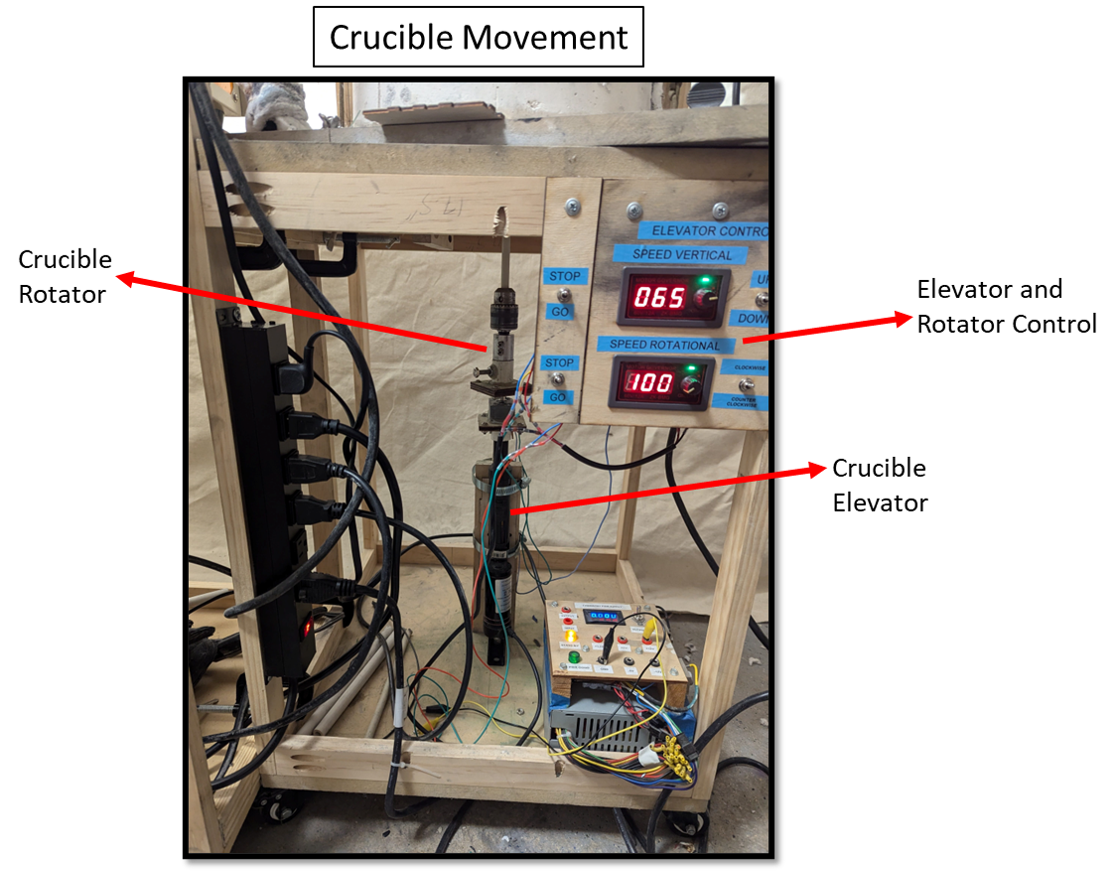
The elevator and rotation mechanism I built to move the crucible as the feedstock melted. Because this furnace never produced a full melt, I did not use the mechanism during the intended melting process. I kept the assembly for possible use in a later project.
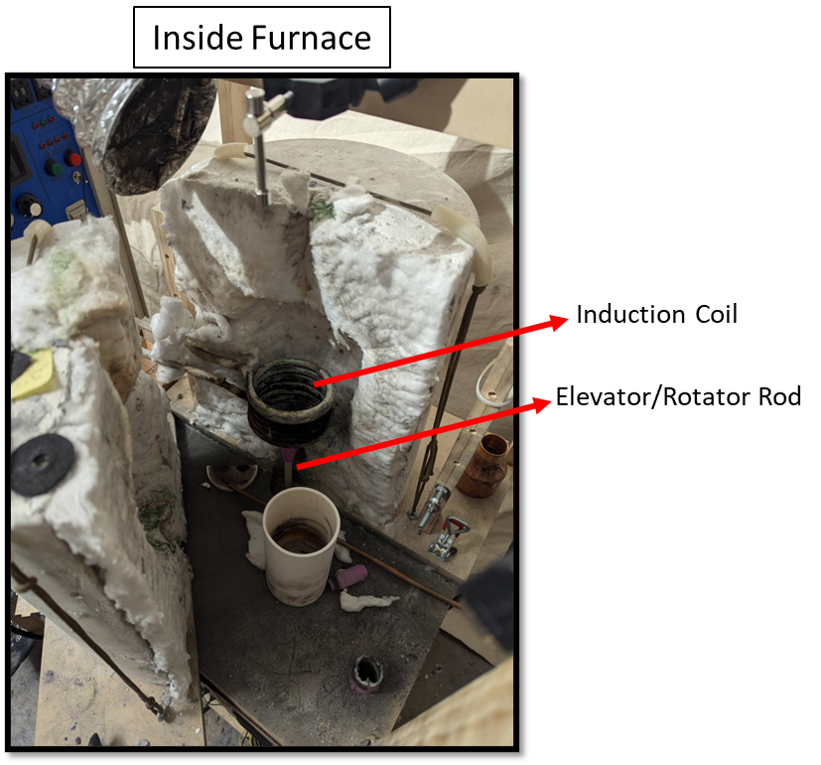
Inside the induction coil, a graphite puck heated an adjacent tungsten plate, which supported the alumina and chromium-oxide feedstock. An inverted smaller crucible covered the feedstock, forming walls and a ceiling over the tungsten floor. The surrounding crucible assembly was insulated with high-temperature ceramic wool. The aim was to concentrate heat in the sample while keeping it enclosed.
Resulting samples
Photos 66–69
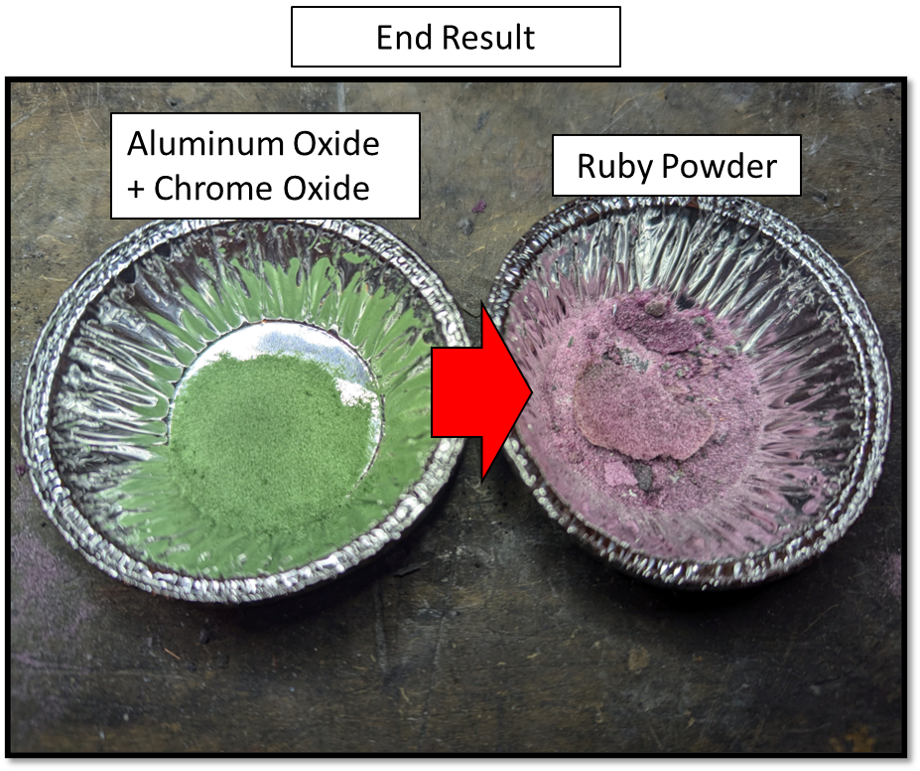
The heating trials produced a powdery material that I identified as ruby, but it broke apart easily by hand. The particles had not bonded into a strong, dense body. I wondered whether more heating time might help, but the many assembly steps made each trial slow and tedious, so I moved on to other furnace designs.
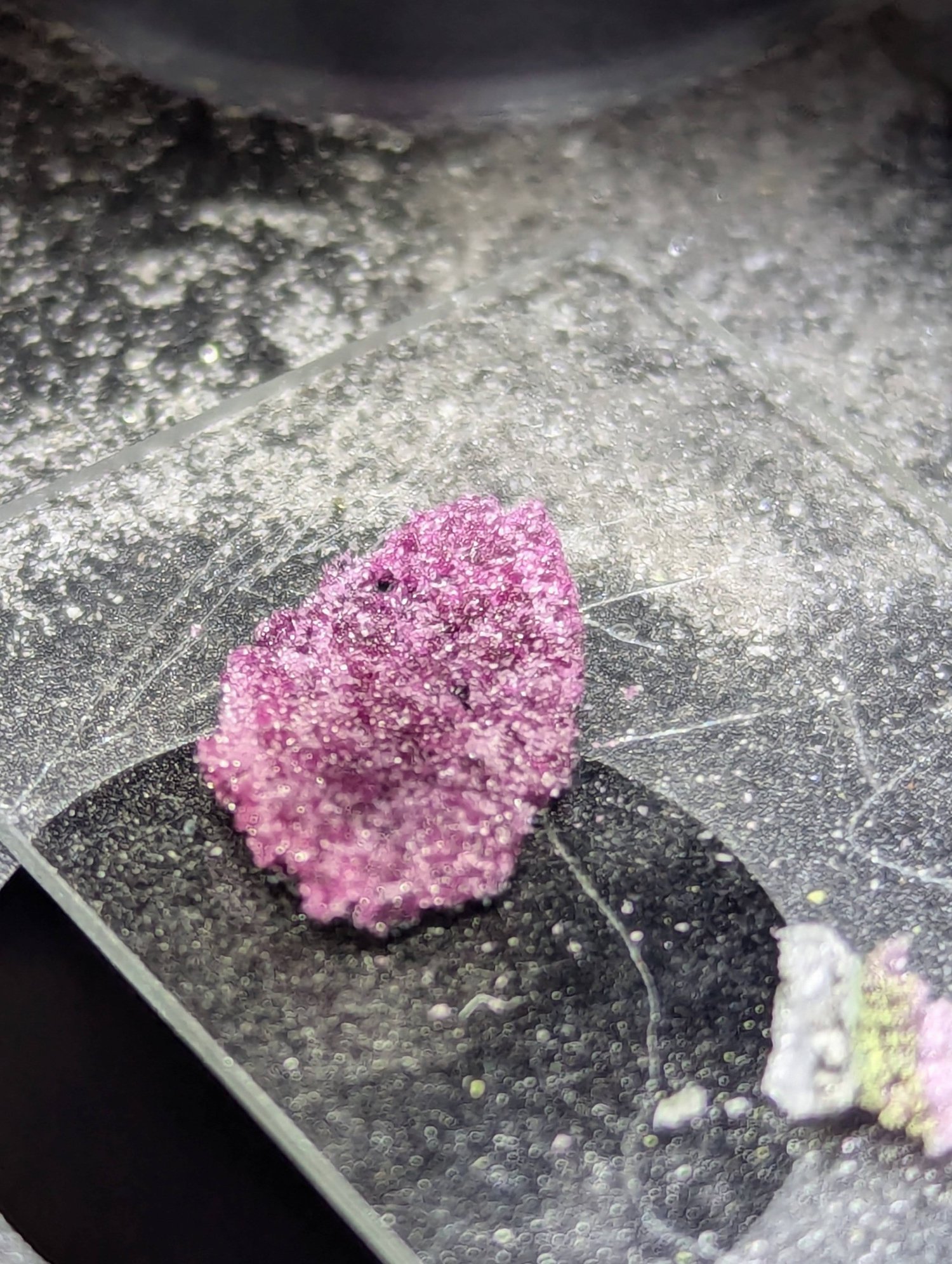
One of the larger pieces recovered from the induction-heating process. Although the material held together enough to remove as a fragment, it remained fragile. It was an intermediate result in the effort to turn alumina and chromium oxide into a consolidated ruby sample.
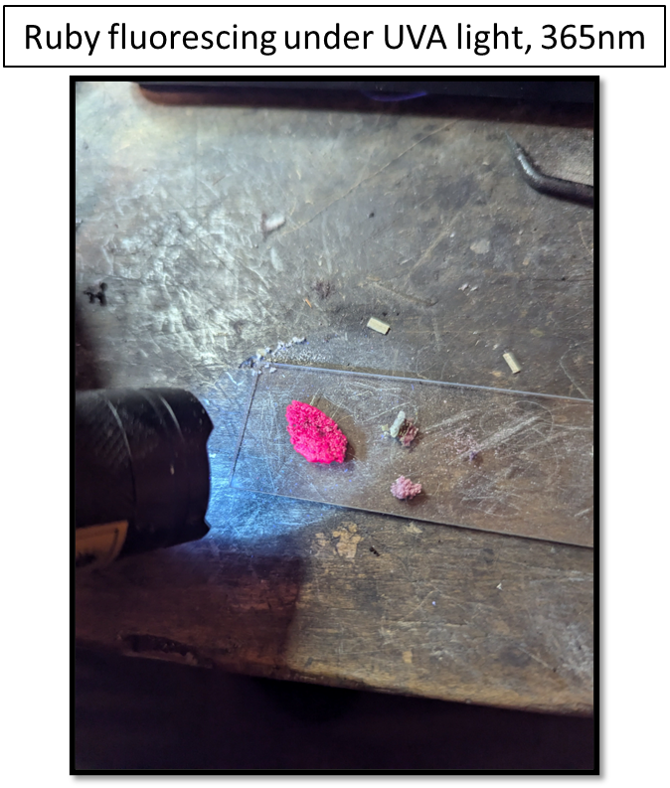
The sample fluorescing under ultraviolet light. I used this glow as a quick visual check and took it as encouraging evidence of ruby formation in the heated feedstock. These images document the fluorescent response of the experimental material.
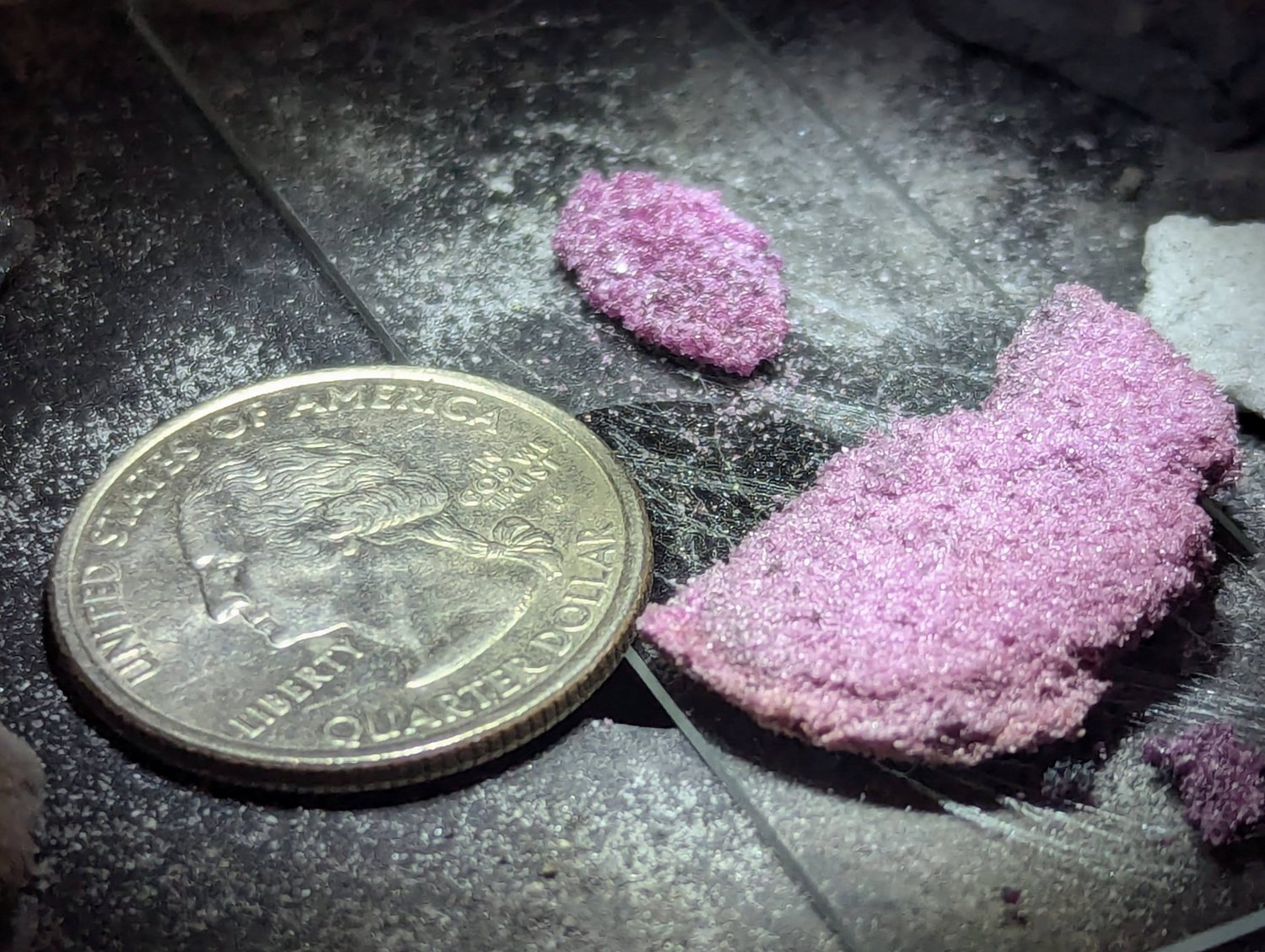
A piece of the recovered material beside a U.S. quarter for scale. This records the size of the sample produced by the nested-crucible induction experiment.
Remote control for the rotating lift
Photos 426–427
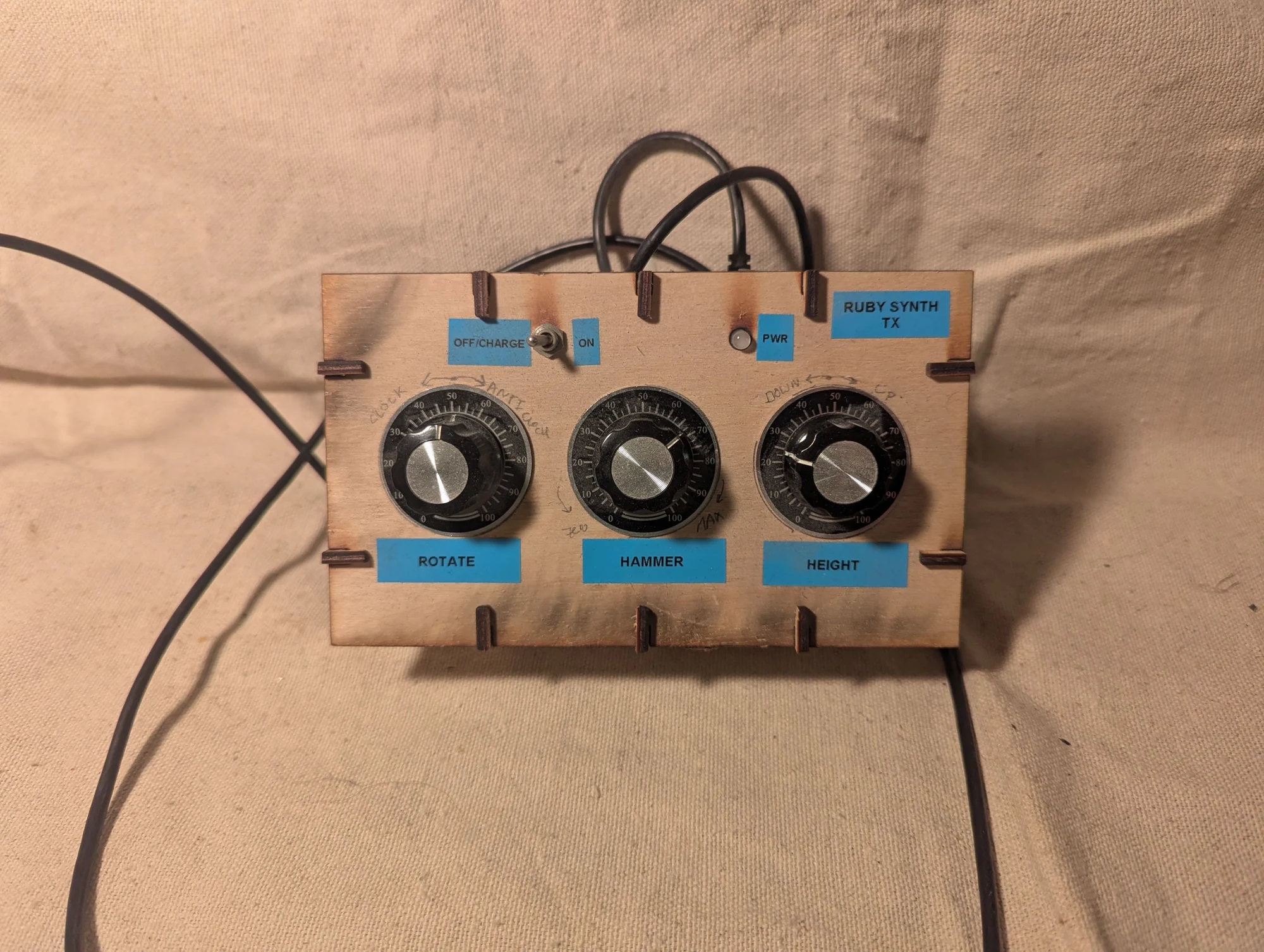
A remote controller for a mechanism in an early ruby project. The mechanism combined rotation with vertical movement, raising or lowering a small piston-like part while it turned. Remote operation let me control the motion from farther away while the high-voltage, high-power equipment was running.
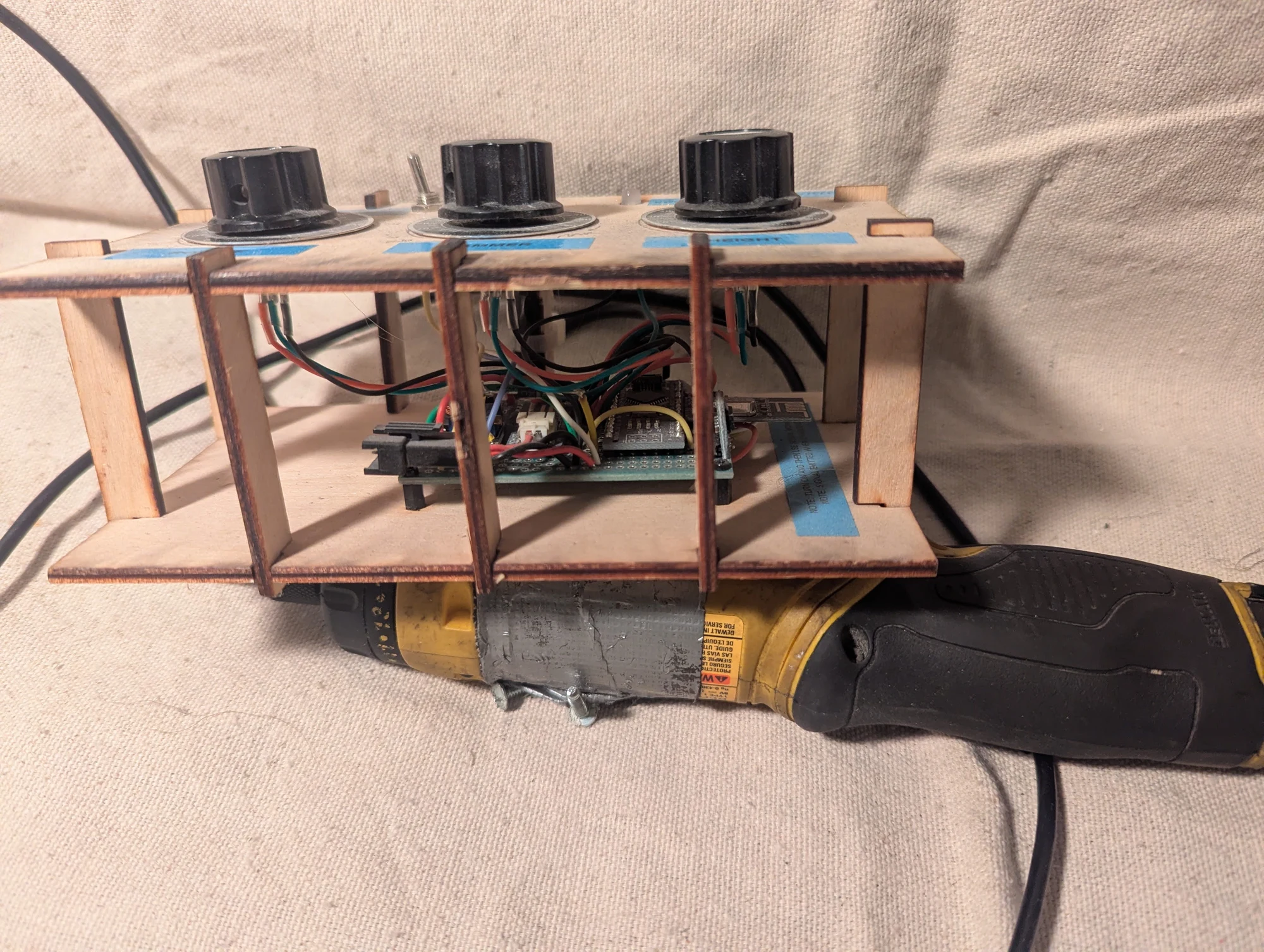
Another angle on the remote controller and its supporting frame. It controlled the combined rotating and lifting motion used in the earlier ruby experiment.