Personal projects / Materials & heat
Infrared mirror oven
A polished copper chamber and halogen lamps used to explore radiant heating.
Open the numbered review →Oven and measurements
Photos 38–43
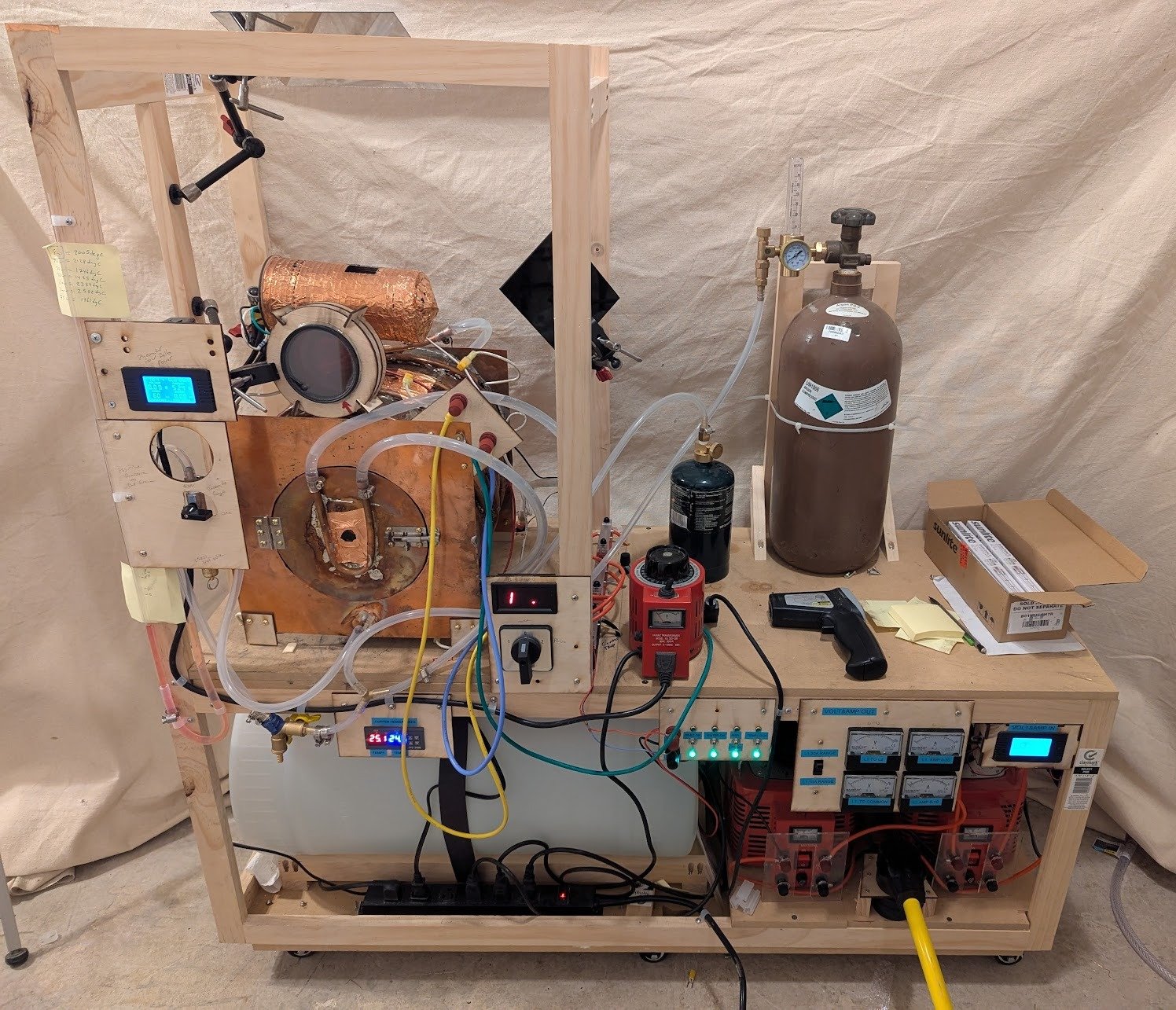
An infrared oven built around a copper cylinder and, as I recall, four halogen lamps rated at about 1,500 watts each. Two variable transformers, or Variacs, controlled the power, while water cooling helped manage the copper body’s temperature. The idea was to direct the lamps’ radiant heat toward a graphite platform or crucible suspended in the center on tungsten wire.
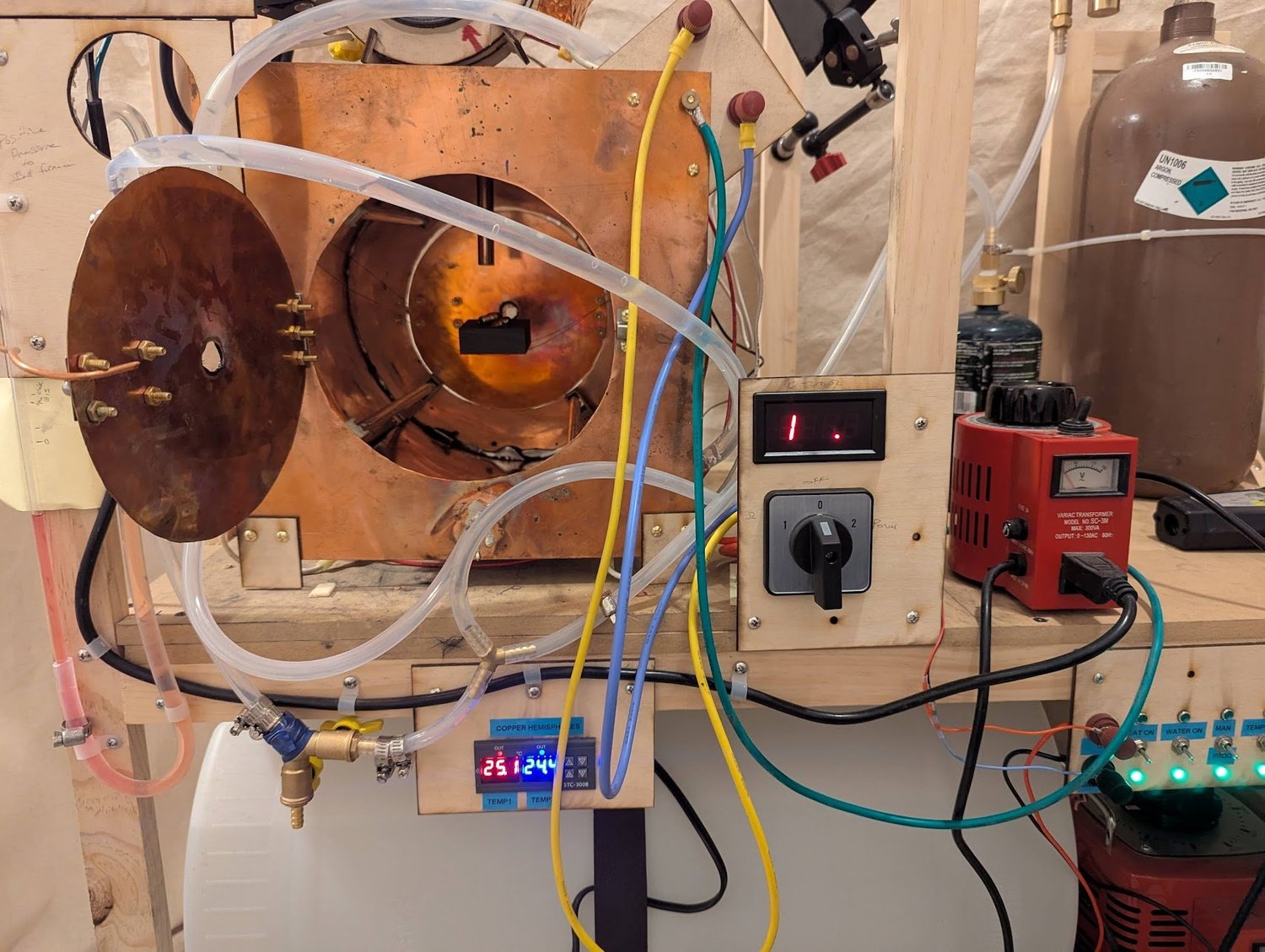
A view inside the infrared oven, showing the graphite platform suspended near the center of the copper cylinder. Tungsten wire supported the platform while leaving it exposed to light from the surrounding lamps. I also added thermocouples—small temperature sensors—to monitor heating in the oven and cooling system.
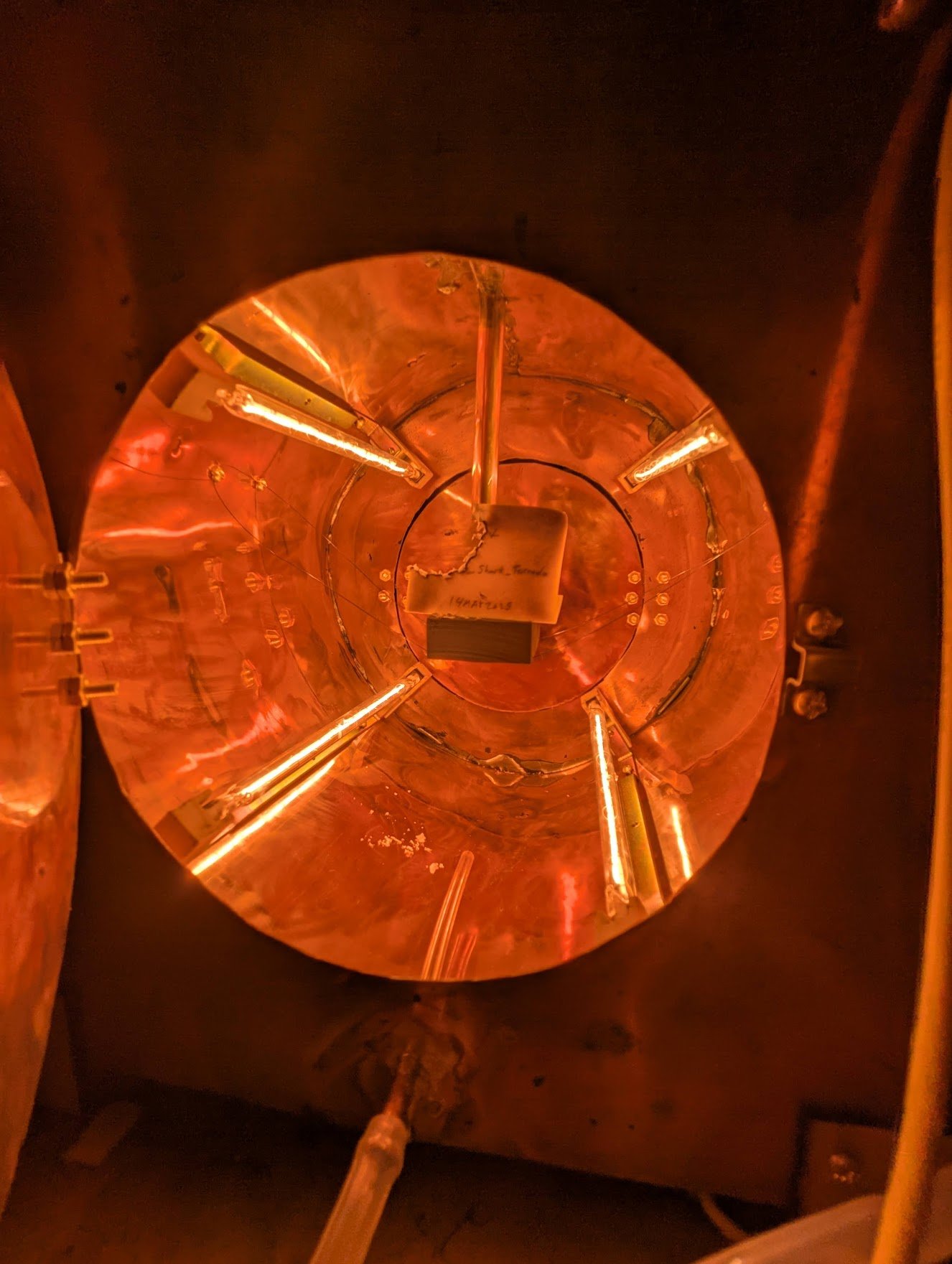
The lamps glowing during a low-power test. I polished the copper interior to reflect more light toward the central graphite platform. The oven looked striking, but its heating performance did not make it useful for the melting experiments I had in mind. Building it was a valuable exercise in forming and working with copper.
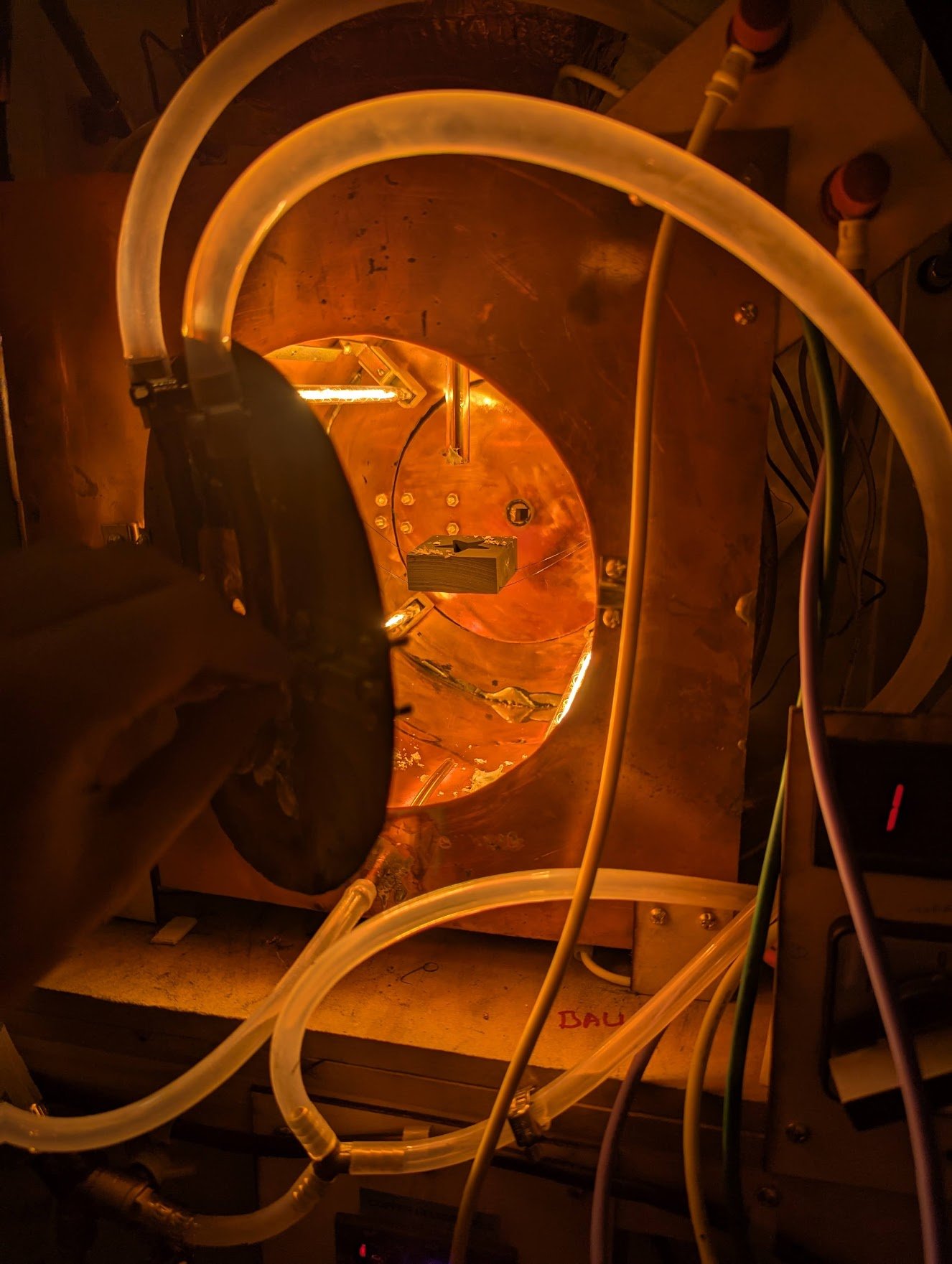
Another view of the infrared oven during testing. The copper body became very hot, so the water cooling needed improvement. I was also concerned about the lamps overheating and about how to add radiant heat shielding around the central sample without blocking the light intended to heat it. These constraints limited the design’s usefulness for melting materials.
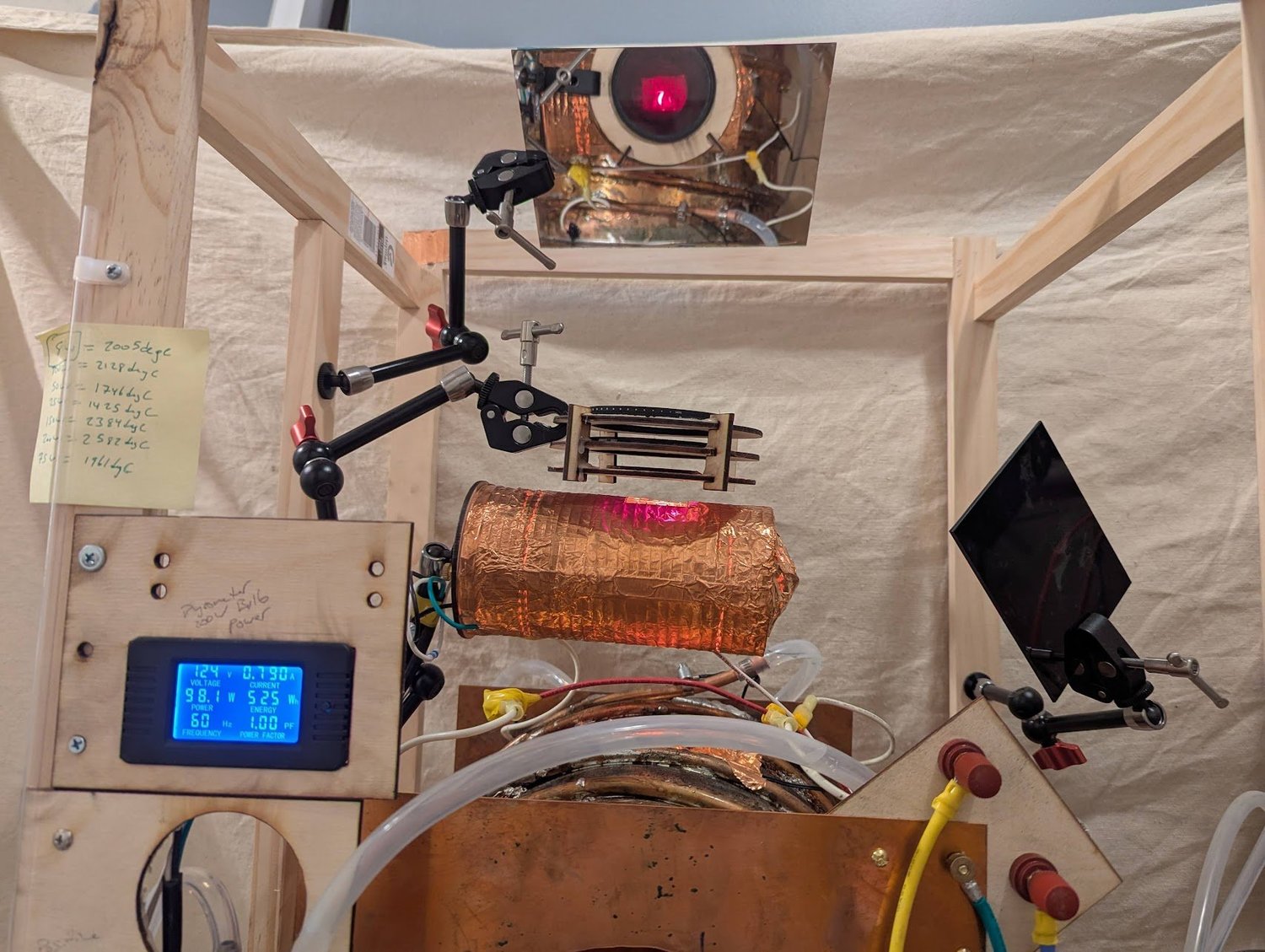
The pyrometer was aimed through a small opening in the top of the copper cylinder toward the graphite platform. This optical instrument compares a hot object’s glow with a reference filament. In these tests, the platform did not glow visibly enough to make a useful comparison, so the arrangement did not provide the intended temperature reading.
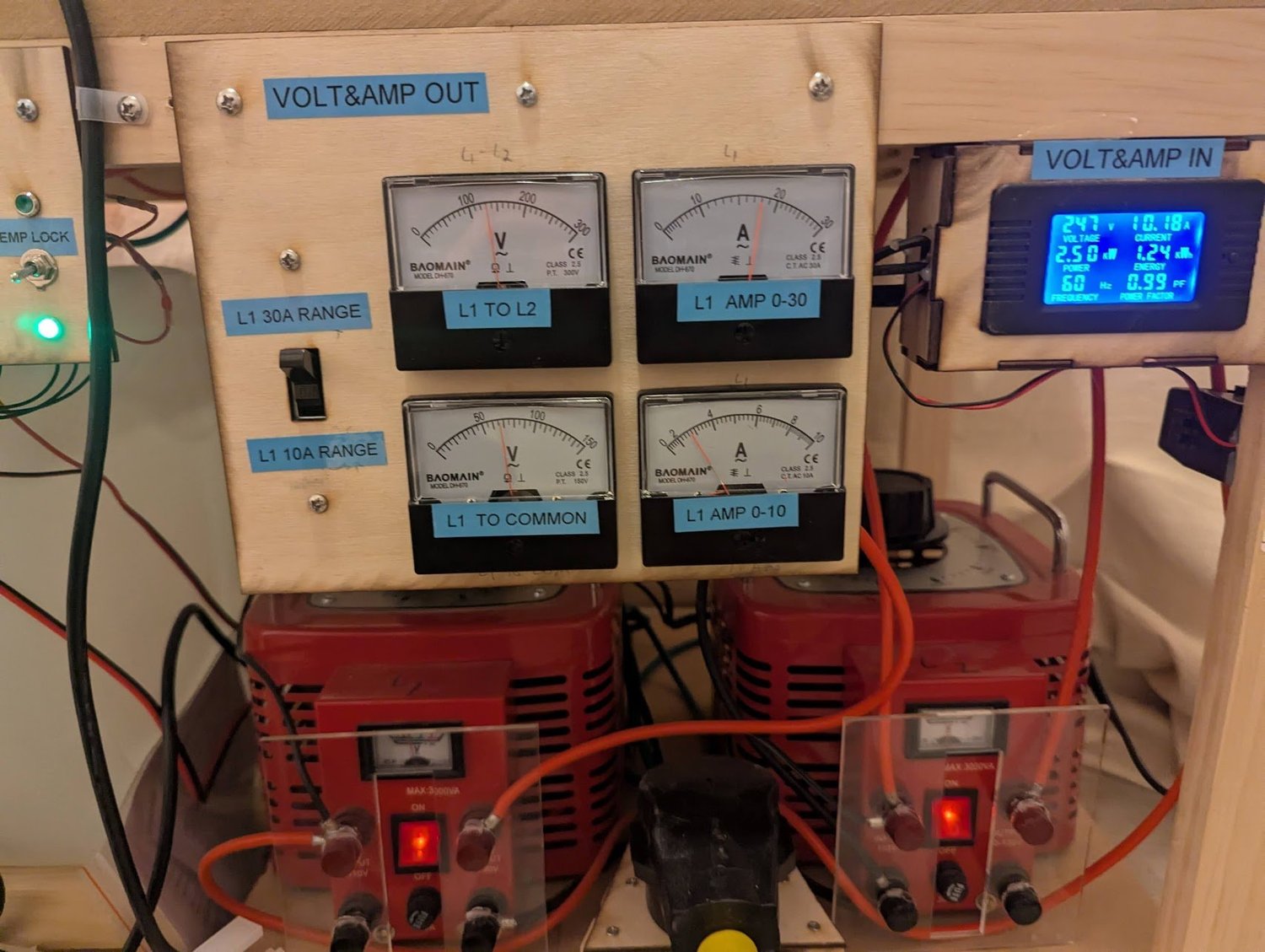
Added meters helped track the oven’s electrical conditions as I adjusted the Variacs. The measurements included combined and individual output voltages and current. The illuminated display on the right monitored input voltage, current, and power, making it easier to relate the oven’s behavior to the energy being supplied.