Additional projects / Fluids & cooling
Laminated fluid channels and actuators
Thin plastic sheets patterned into fluid paths, flexible actuators, and reinforced chambers.
Open the numbered review →Reinforced chambers
Photos 465–467
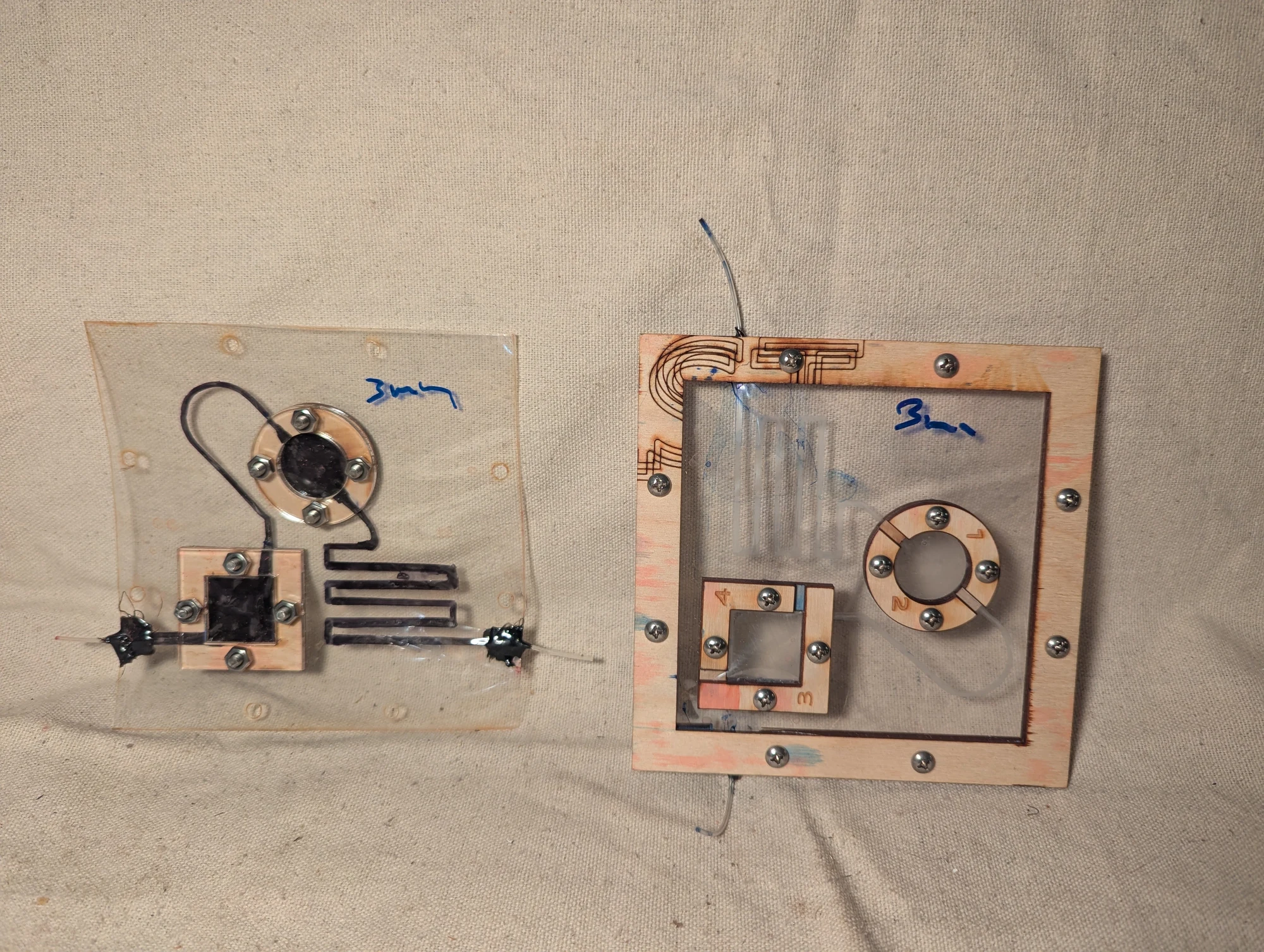
Larger laminated chambers were more prone to the layers separating under pressure. I added bolted wooden supports around the chambers to help retain their shape and keep the sheets pressed together. This was an experiment in reinforcing the fluid structures.
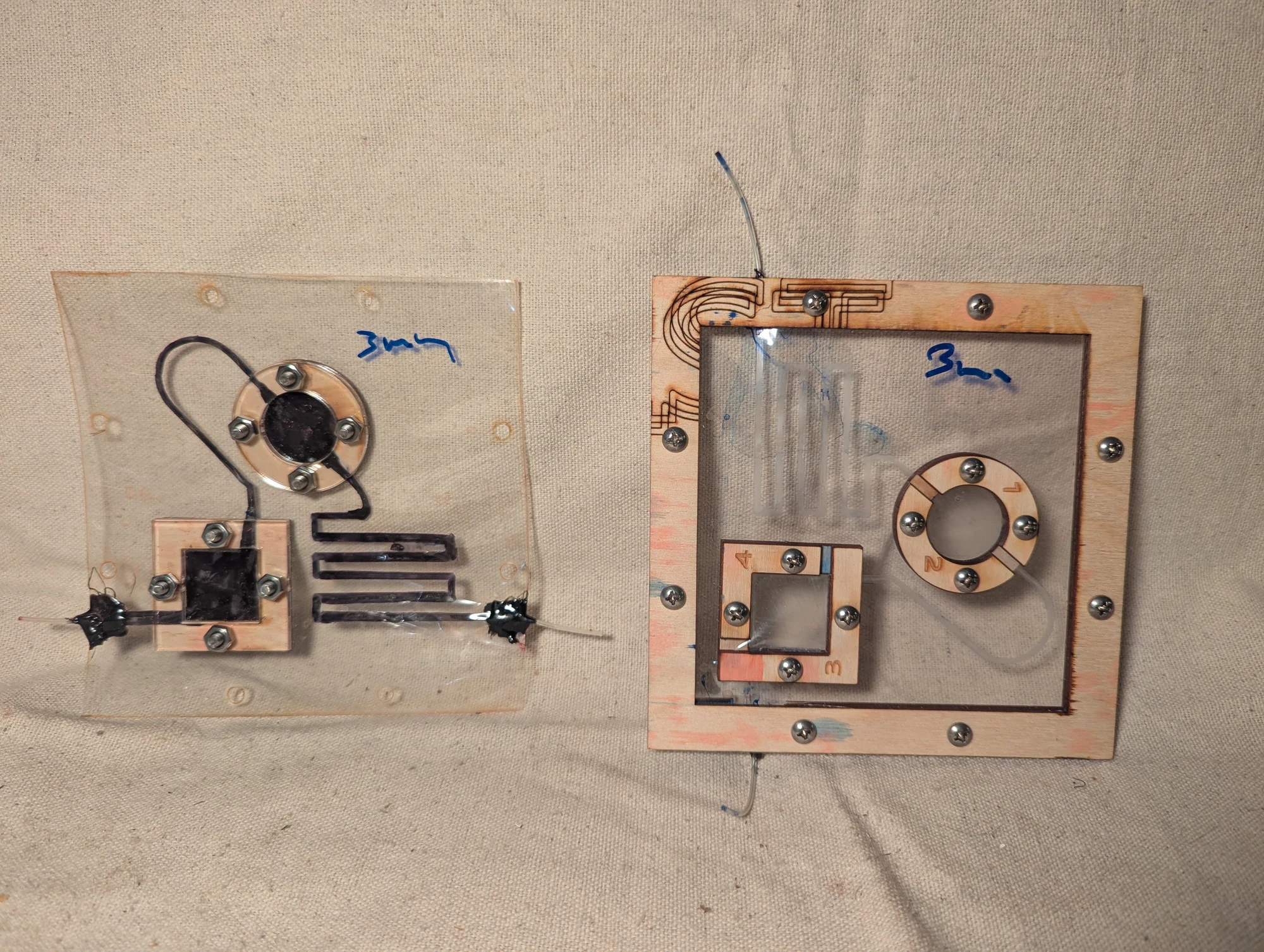
Another view of the laminated fluid chambers and their wooden supports. The supports were intended to reduce separation of the bonded sheets as the internal pressure increased.
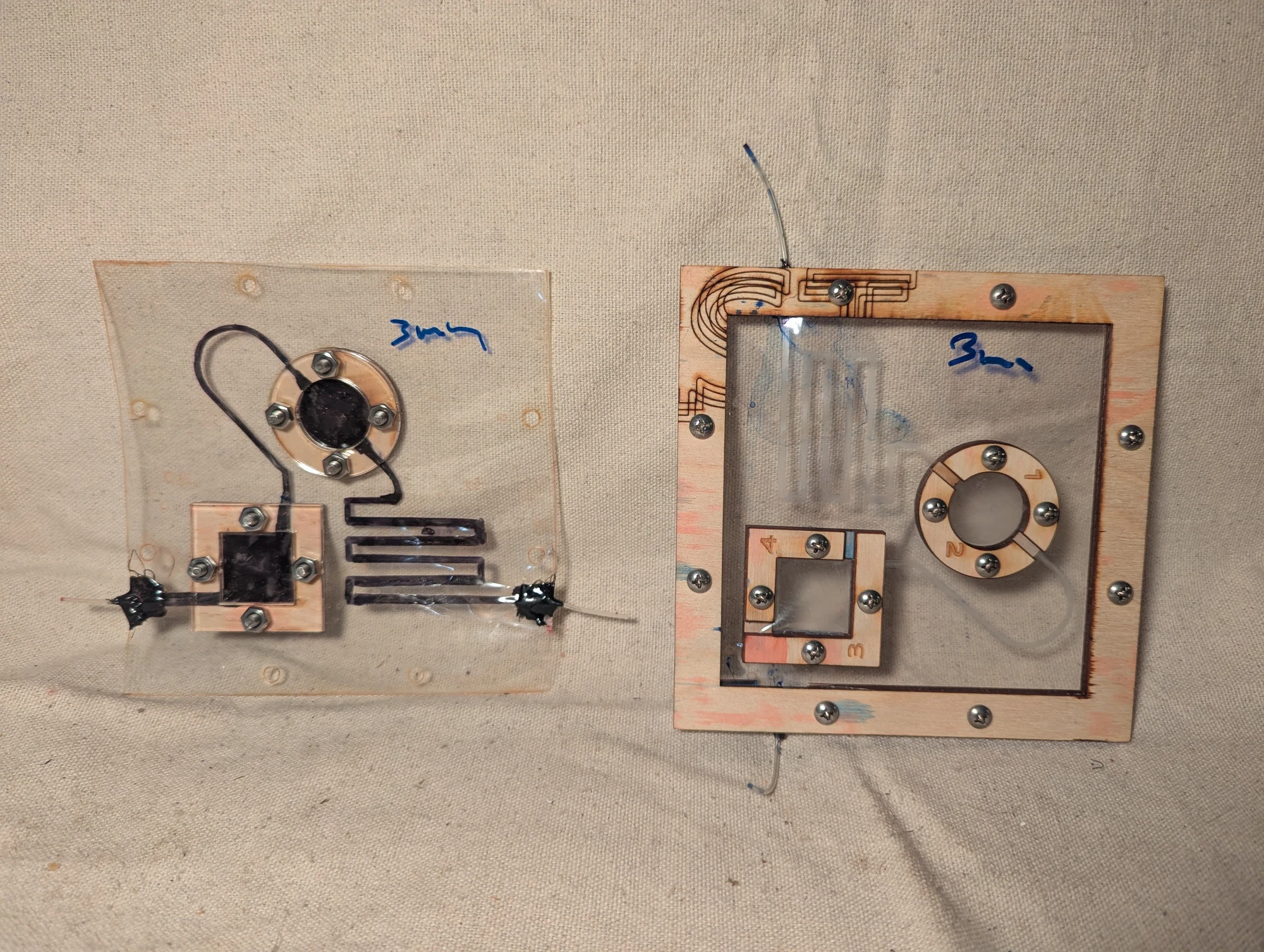
A further view of the reinforcement experiment, showing the supports used to hold the laminated chambers together.
Patterns, joints, and inflatable shapes
Photos 458–460
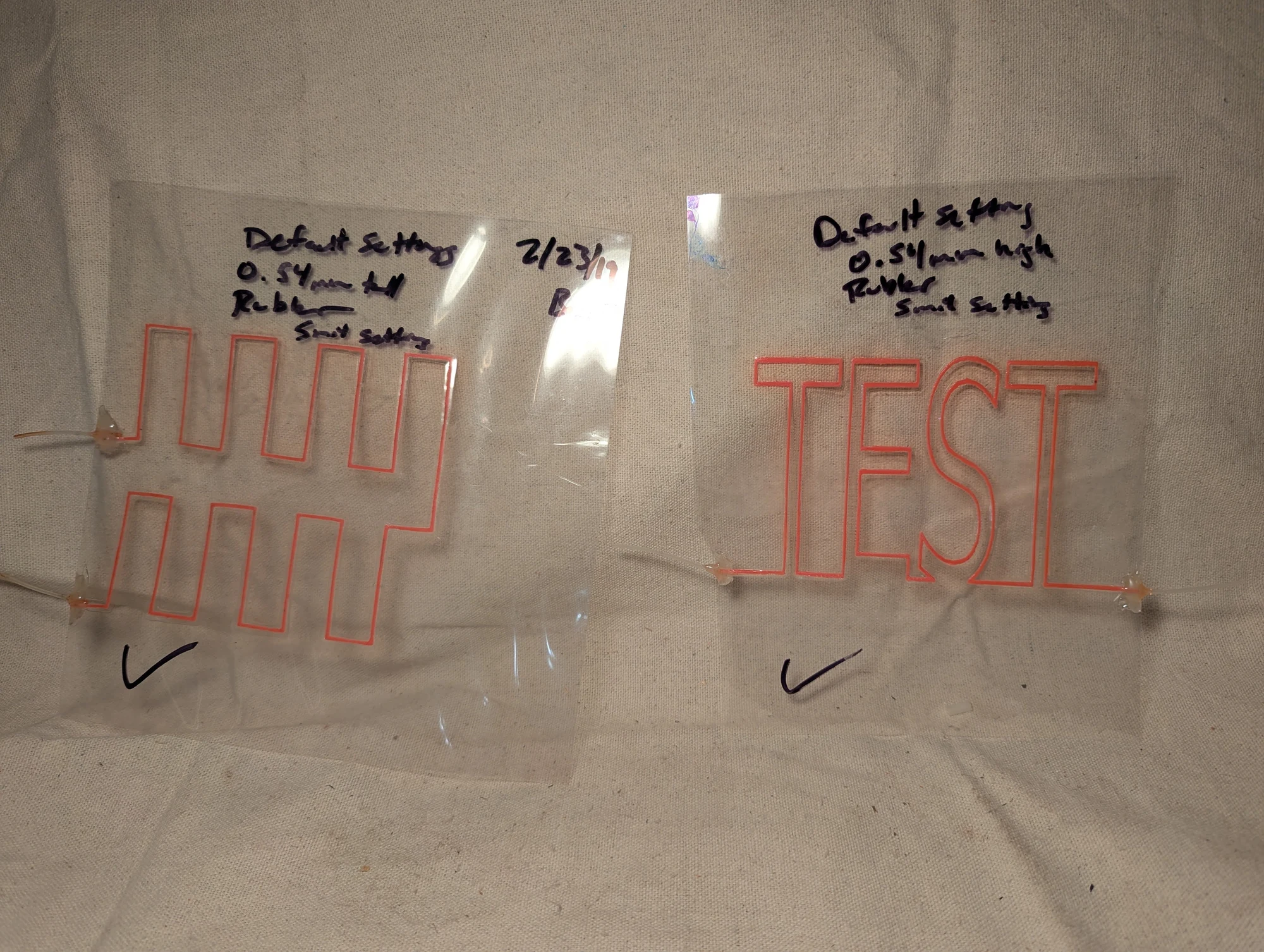
An experiment from around 2019 using a single-layer 3D-printed pattern between laminated sheets. The printed material acted as a spacer, holding the sheets slightly apart to create a path for air or liquid. I tried winding, serpentine patterns as possible heat-exchanger channels; the notes on these samples record the early tests.
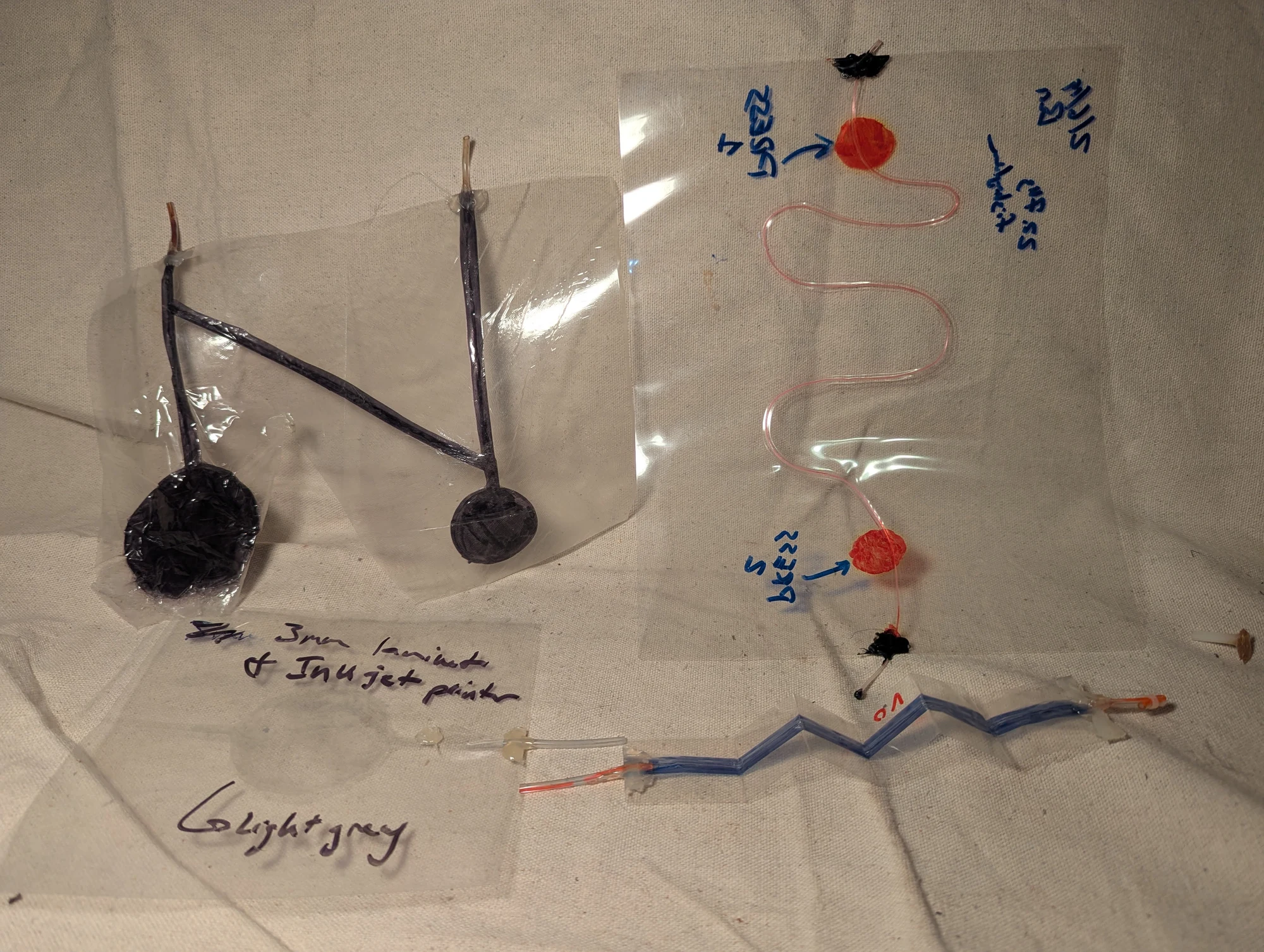
Samples exploring two ways to form channels: a filament could hold the sheets apart, or a marker line could prevent them bonding along a drawn path. The collection also includes a distillation concept, intended to evaporate liquid in one chamber and collect condensate in another, and flexible structures that expanded when filled with air.
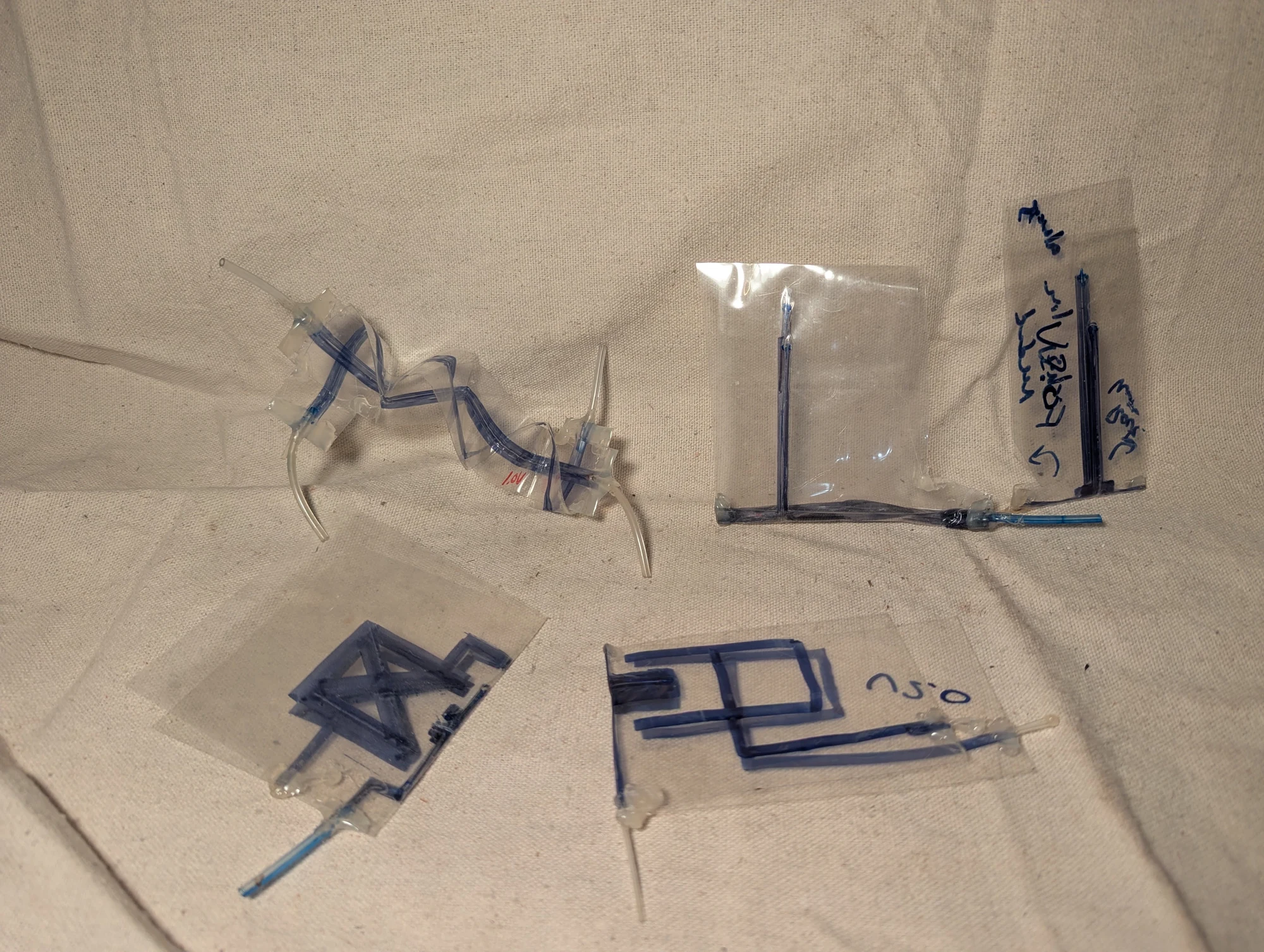
Laminated patterns designed to change shape when pressurized. Accordion-like folds could collapse when empty and expand when inflated. I tried different layouts as possible pneumatic muscles and joints, exploring motion produced by air pressure.
Flexible heat-exchanger materials
Photos 461–464
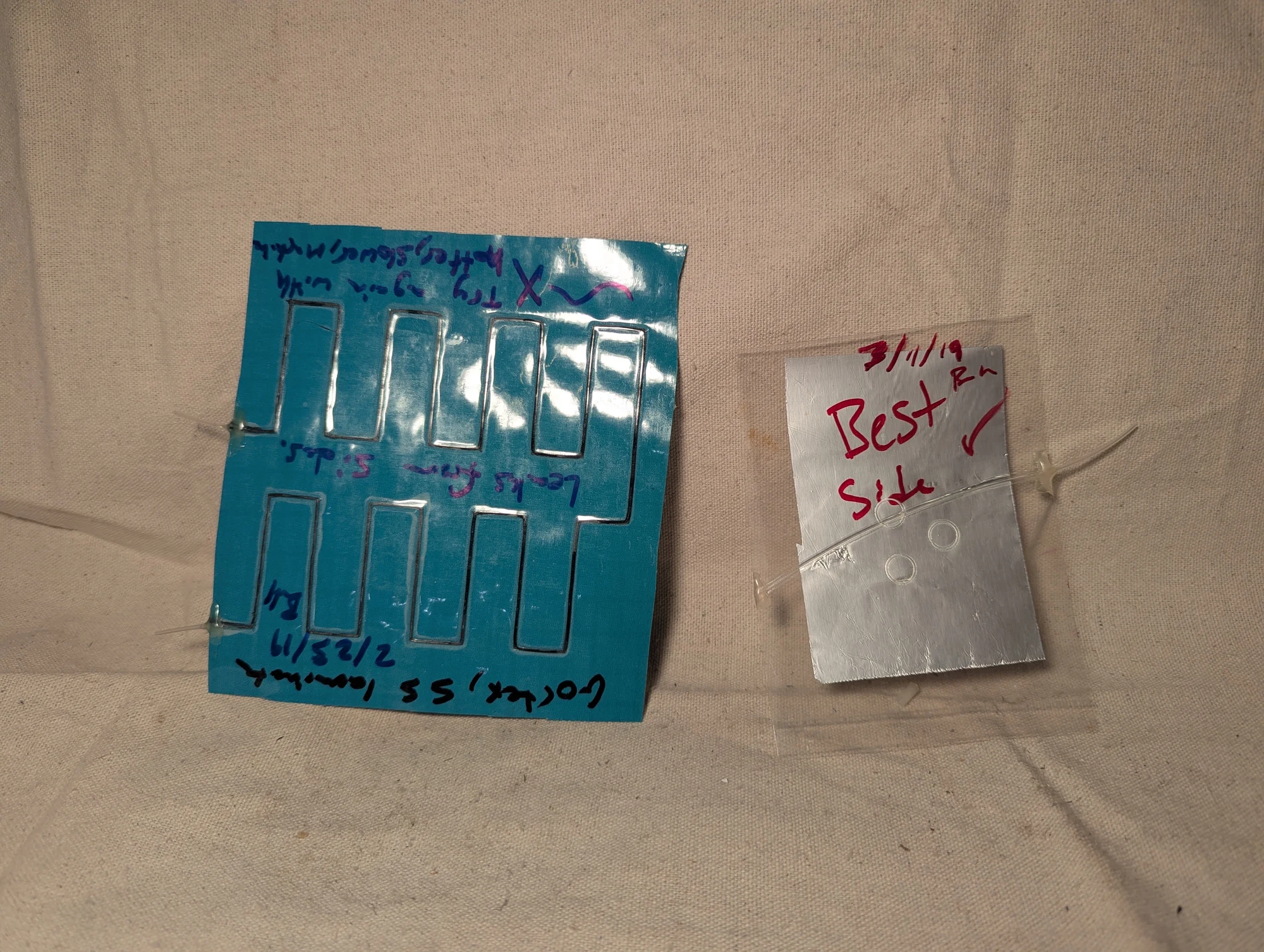
Experiments toward a thin, flexible panel that could carry water to move heat in a wearable garment. I compared laminated sheets with samples incorporating foil and Gore-Tex, aiming for comfort and a useful fluid path. In these trials, the added materials did not bond as reliably as the laminated sheets bonded to one another.
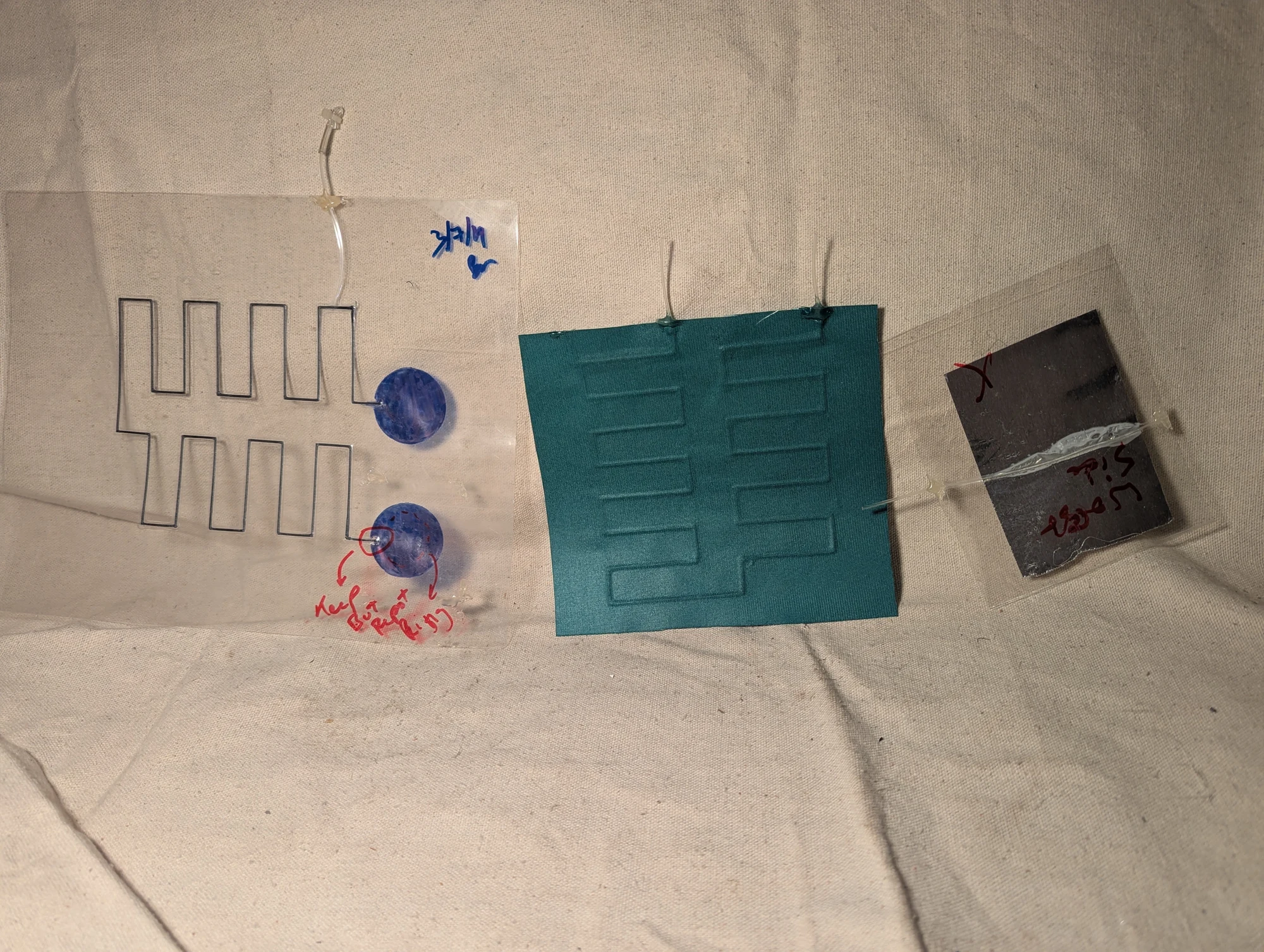
A collection of channel patterns and material samples from the wearable-cooling experiments. I was comparing how thin sheets could enclose a water path while remaining flexible and holding together under pressure.
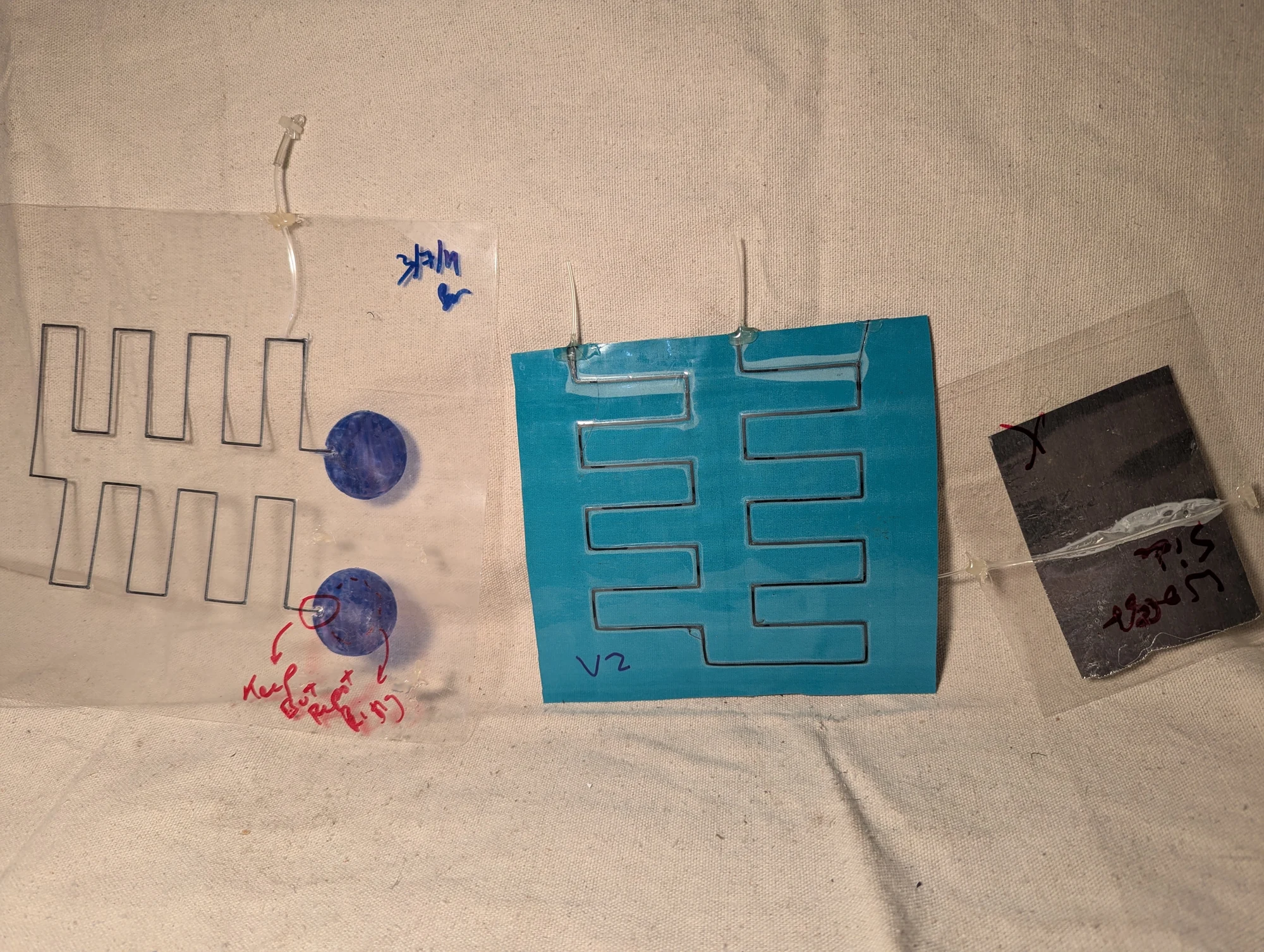
Another view of the flexible channel samples. These were exploratory tests of construction methods and bonding for a potential wearable cooling panel.
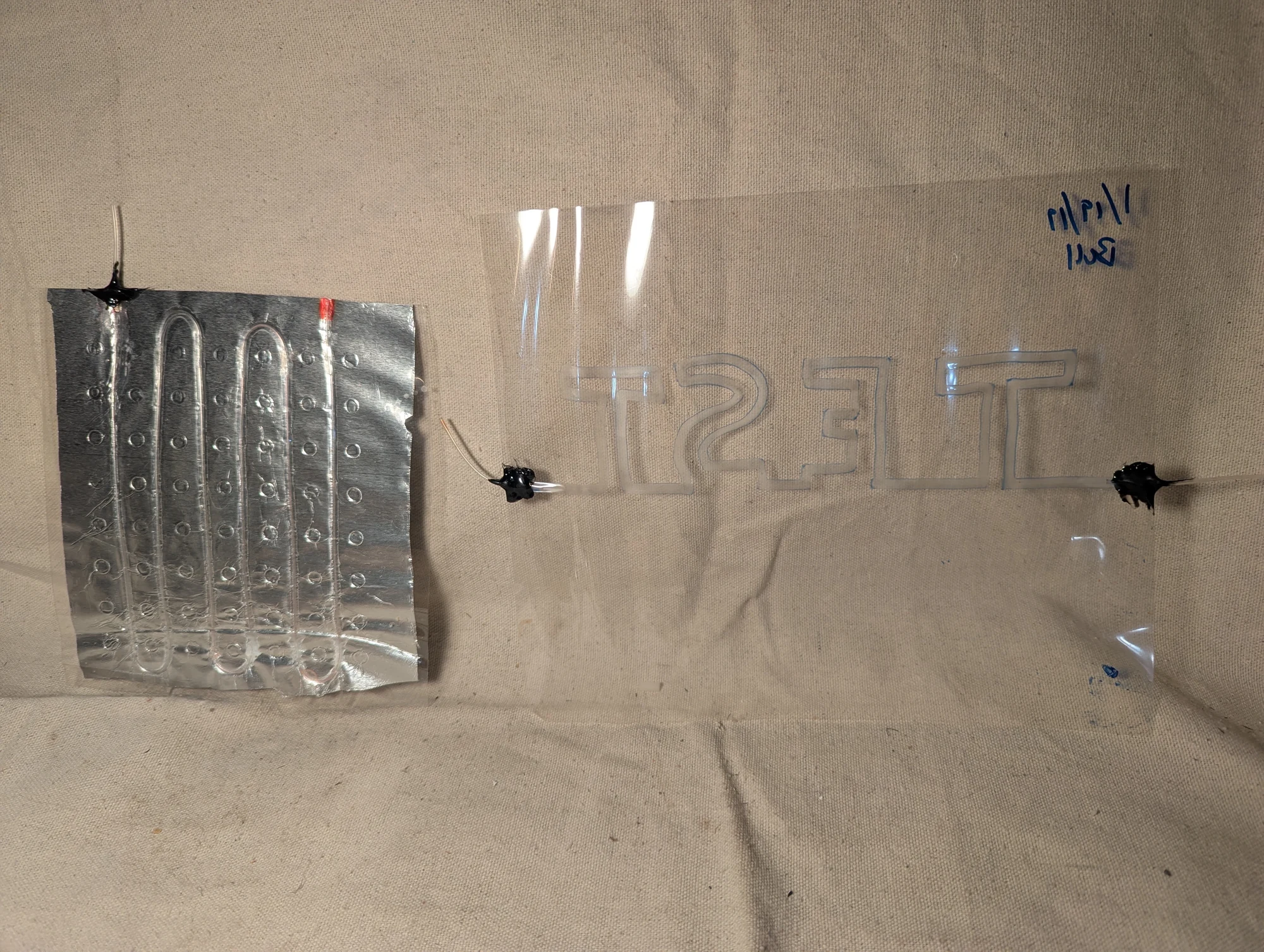
A thin heat-exchanger prototype incorporating foil. I remember it working reasonably well as an early experiment, but I did not pursue this version further and no longer recall why.
Material comparisons
Photos 468–471
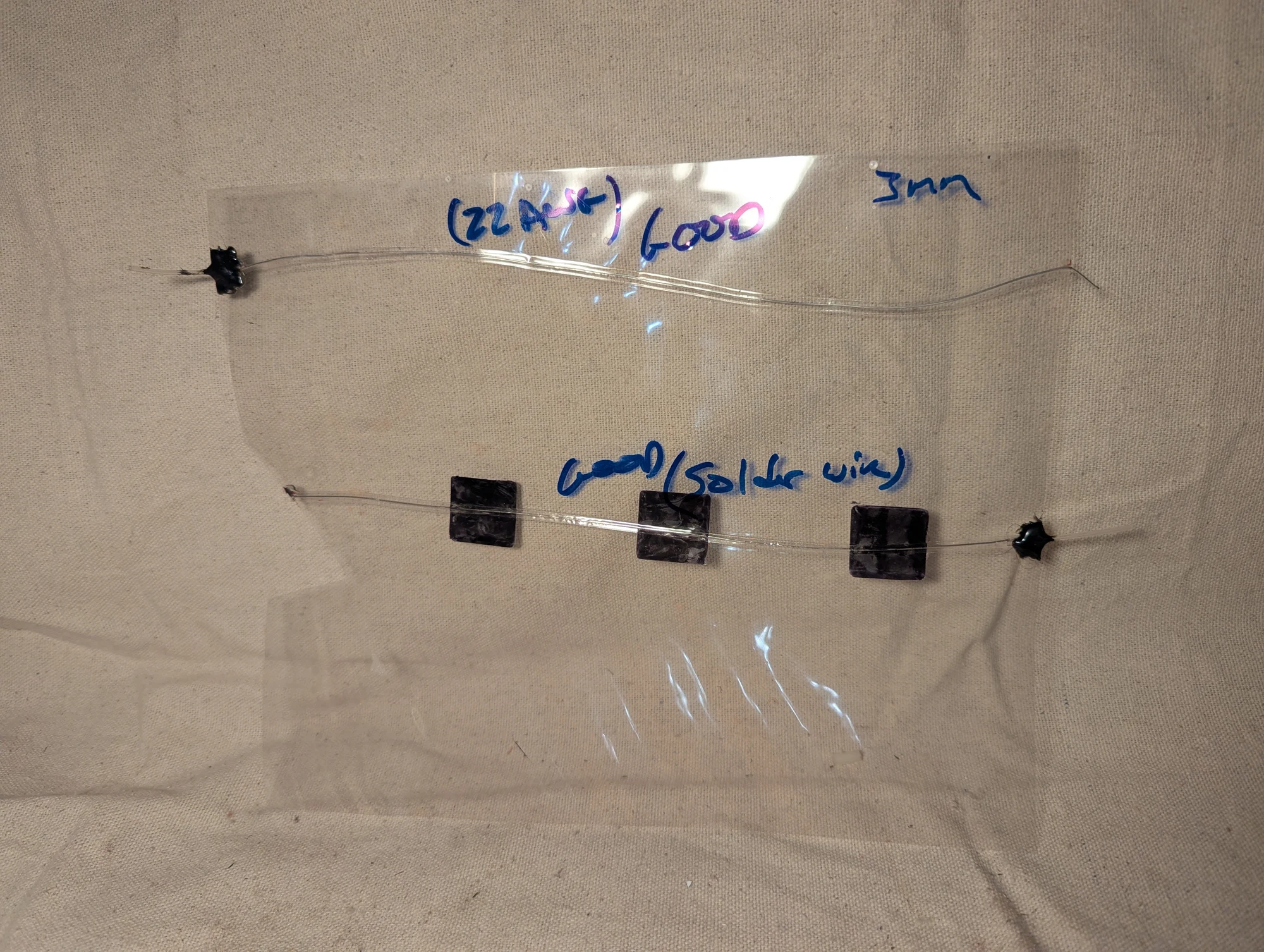
Fluid-channel experiments with fishing line sandwiched between laminated sheets. The line held the sheets apart along its path, leaving a small passage for air or liquid.
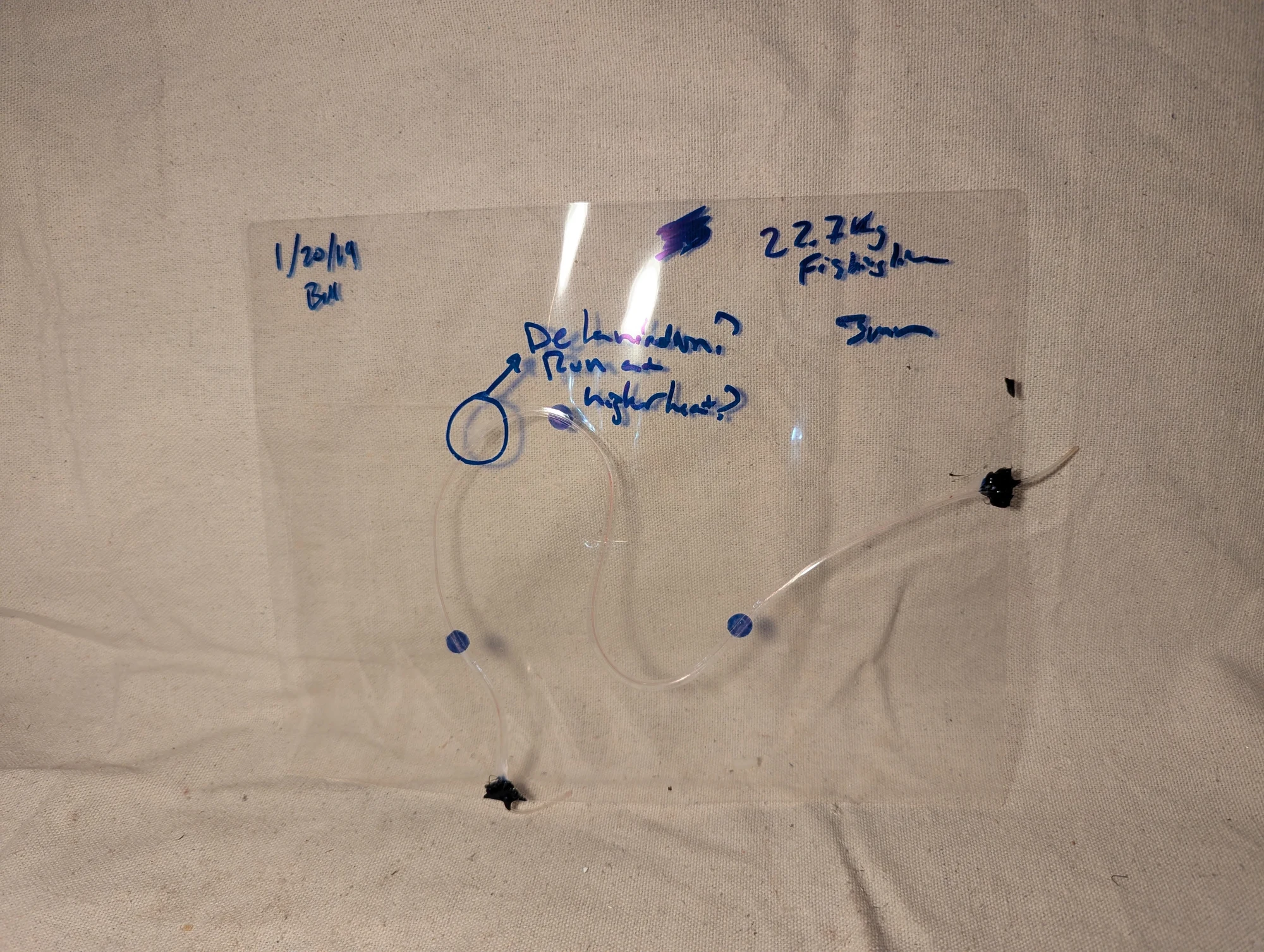
Further experiments with patterns and connections in laminated sheets. These samples explored different ways to form and connect small fluid passages.
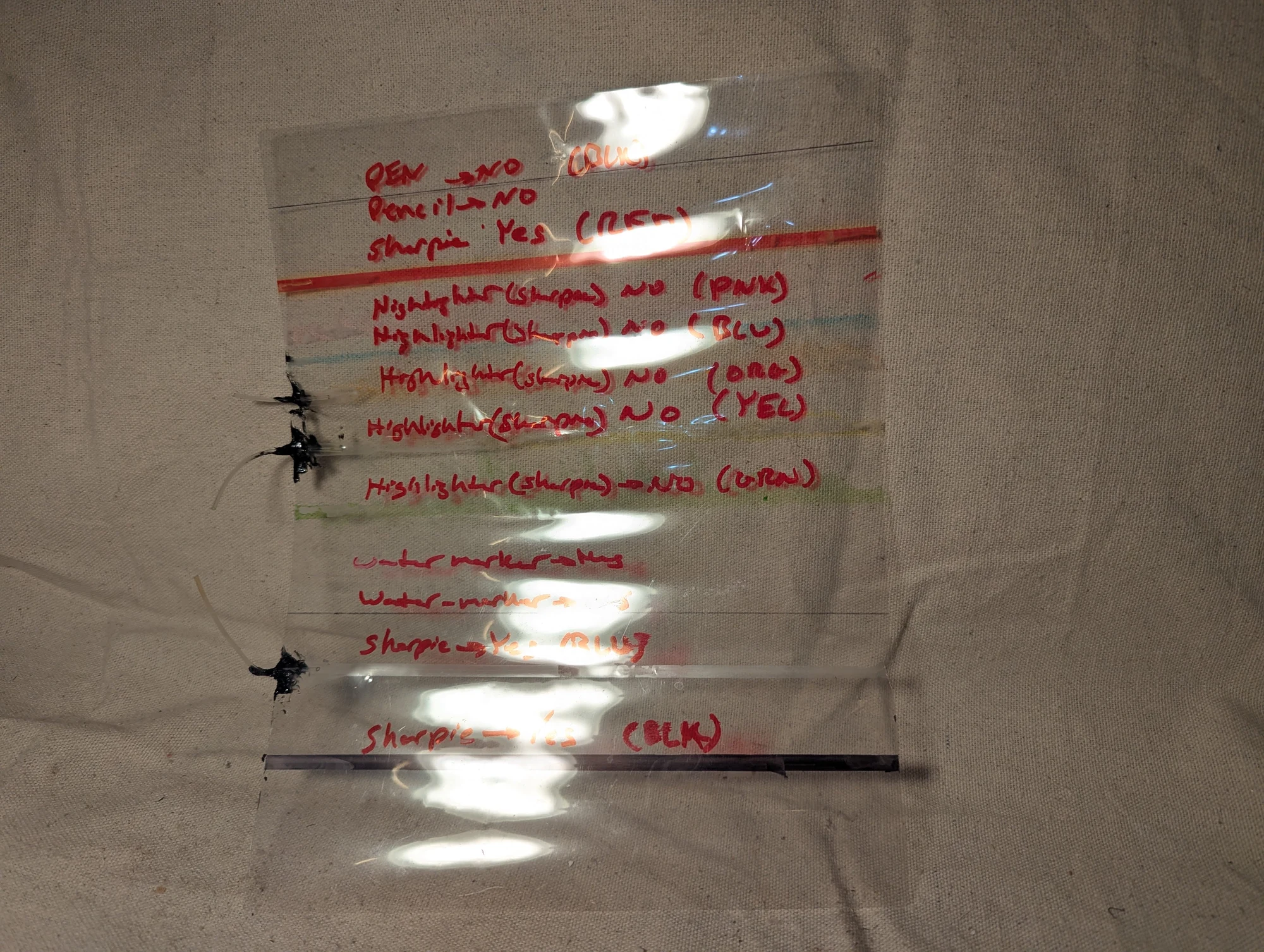
Test samples with handwritten notes comparing different inks and filament materials. In my trials, Sharpie worked best for drawn channels because the marked areas resisted bonding when the sheets were laminated together.
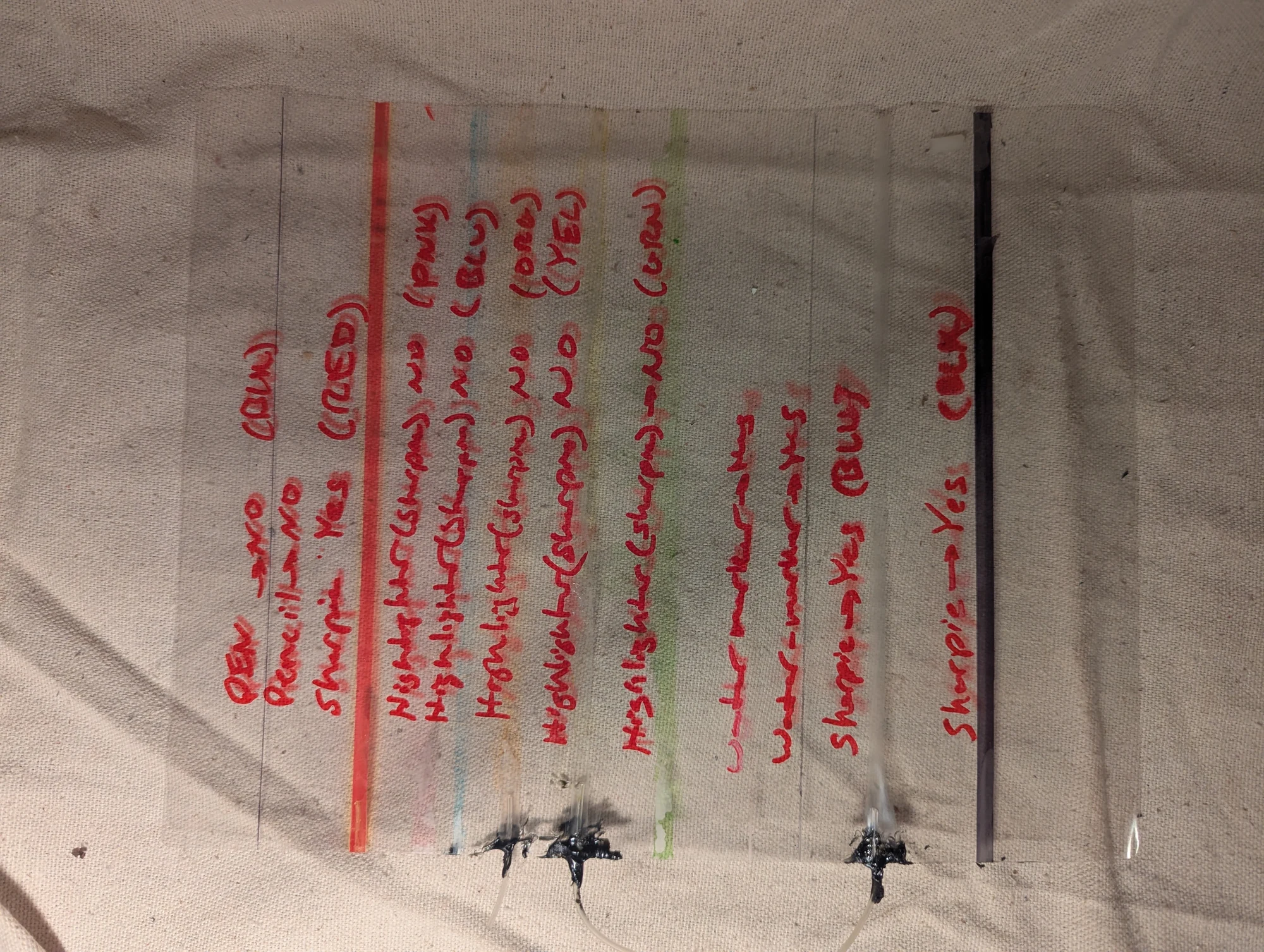
Another view of the notes and samples from the marker-and-filament comparison. These tests helped me choose materials for making fluid paths within laminated sheets.
Early channel-making trials
Photos 258–259, 415
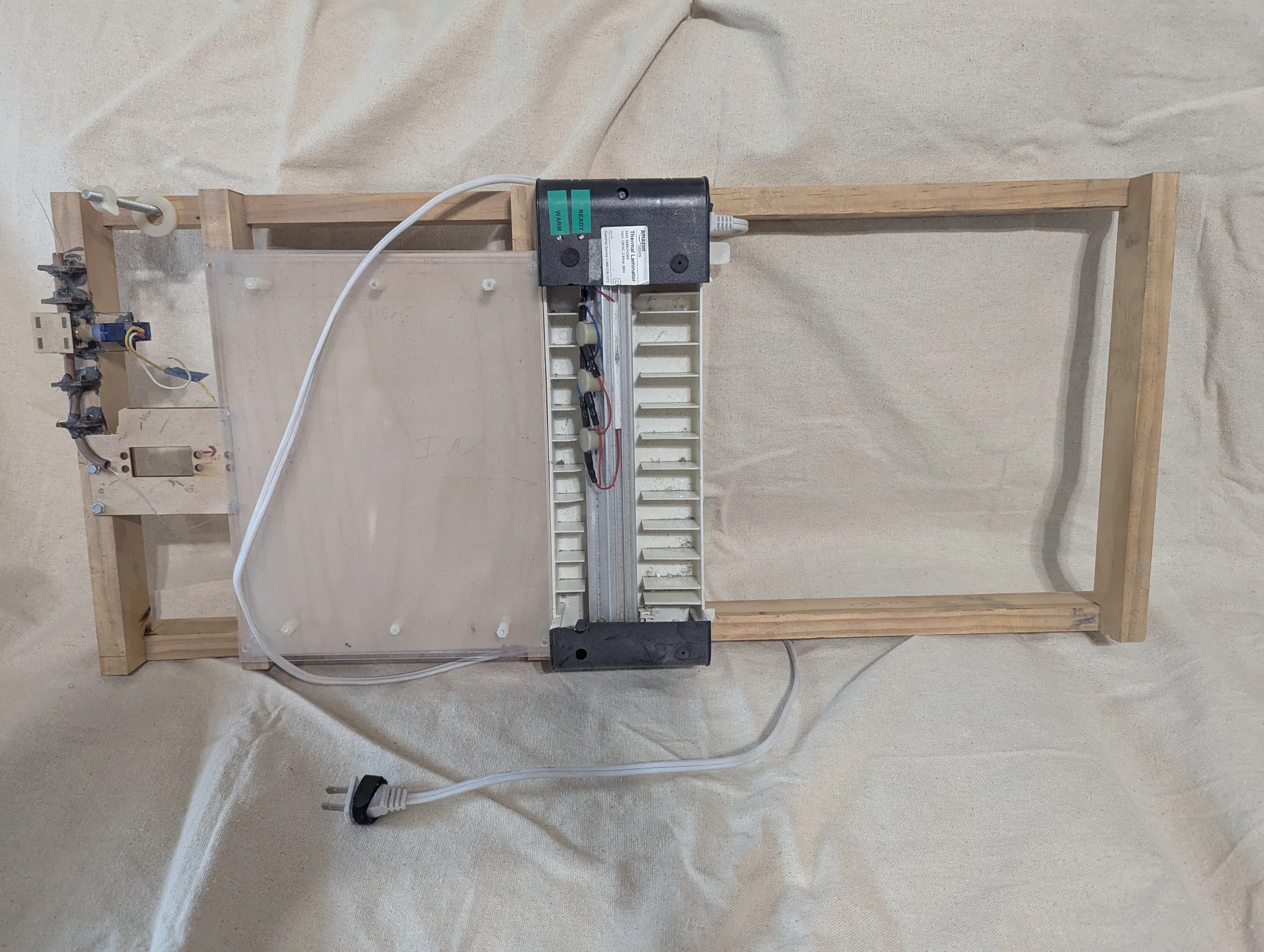
An experiment in making long, narrow channels for water or air inside laminated plastic. I tried feeding fishing line between the sheets as they passed through a laminator to form the channels. I also found that Sharpie ink could keep selected areas from bonding.
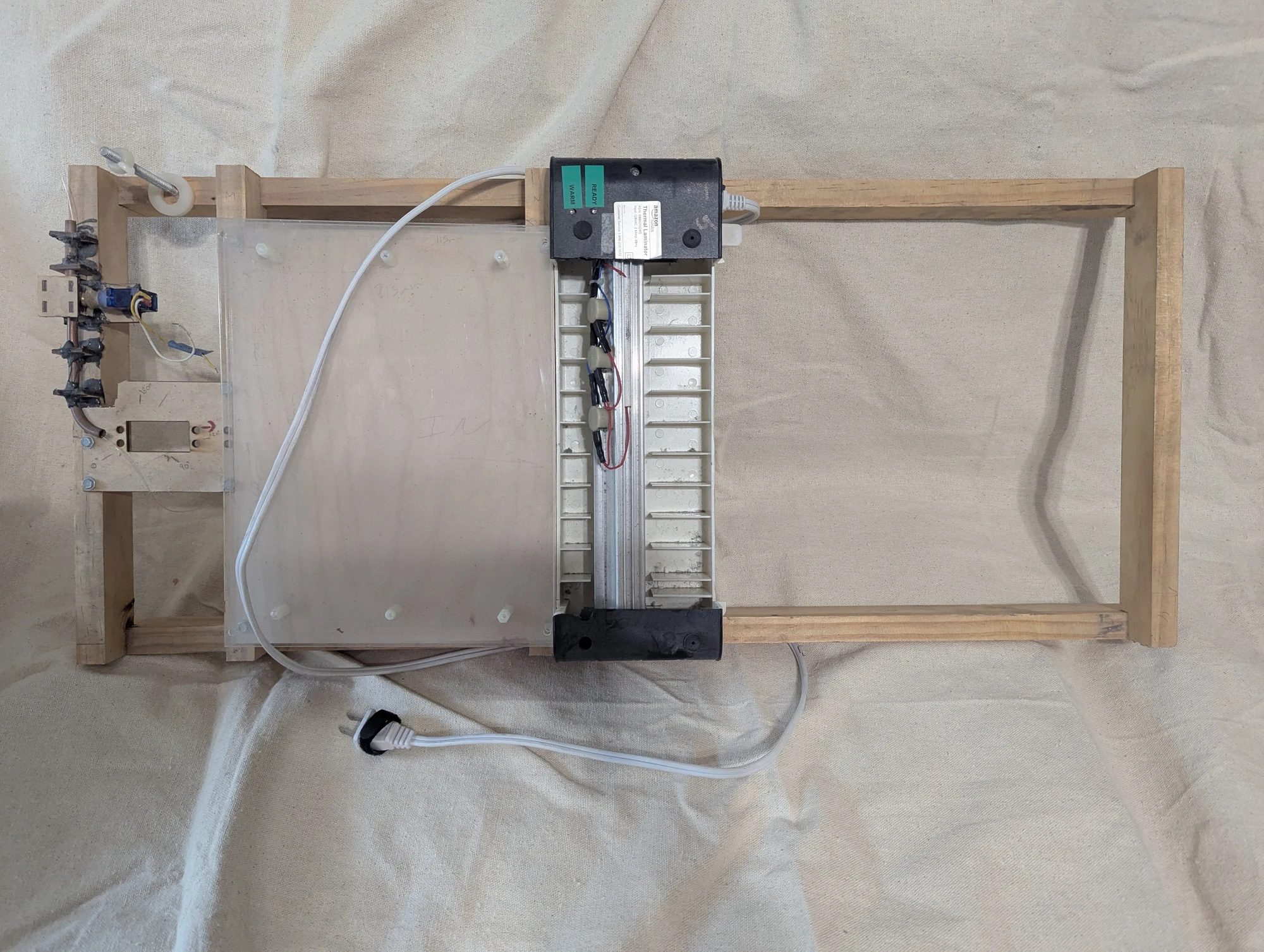
Another view of the laminator setup. Drawing Sharpie patterns on the plastic kept those areas from sticking together, offering an alternative way to form small passages for water or air.
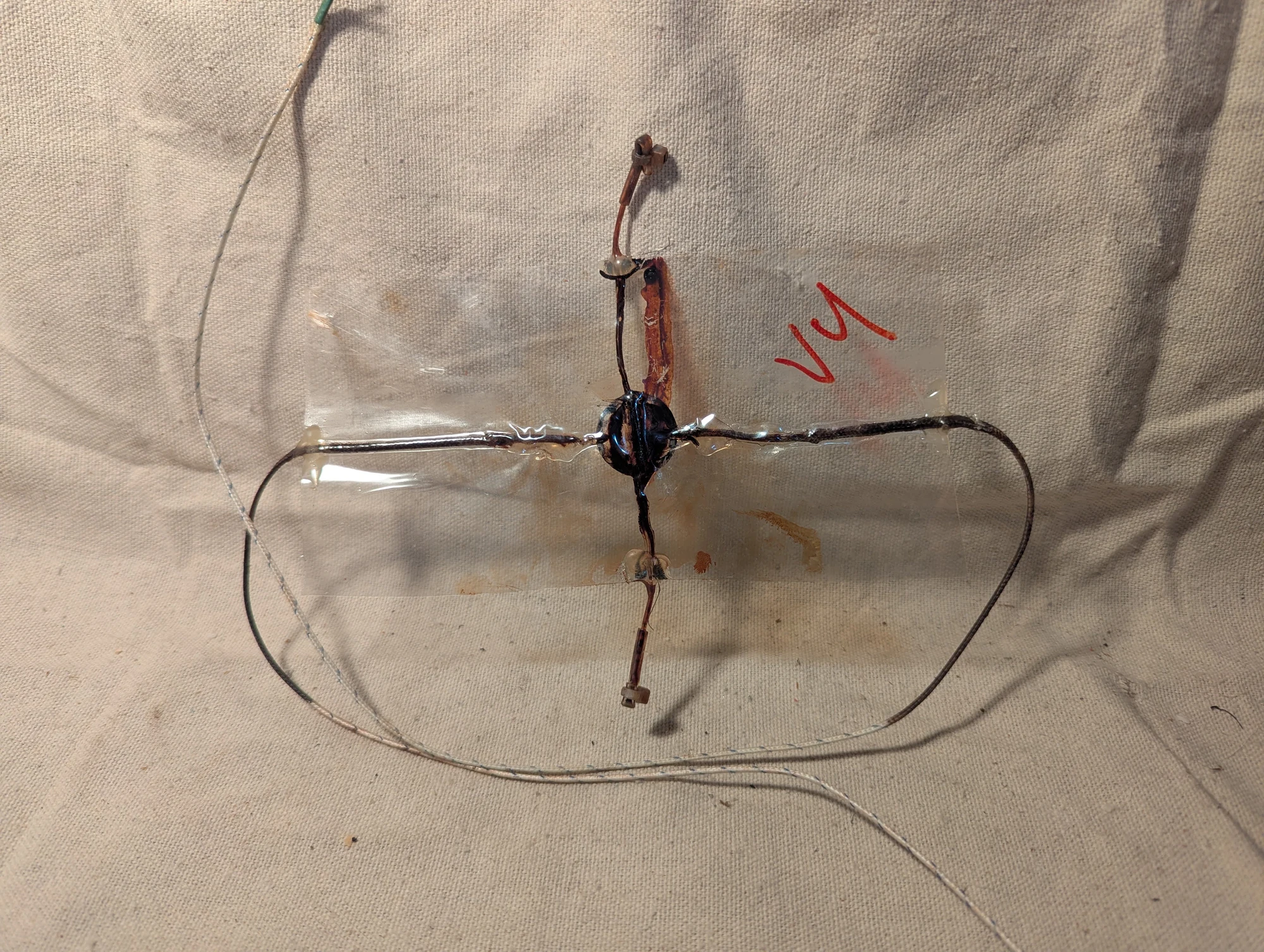
A test piece for making a four-way fluid junction from thin laminated sheets. It was part of my work on lightweight channels for ferrofluid and other microfluidic experiments.