Personal projects / Materials & heat
Noodle-pot vacuum furnace
A stainless-steel cooking pot adapted into a furnace chamber, with cooling and material-heating trials.
Open the numbered review →Chamber and heating tests
Photos 5–7, 9–10
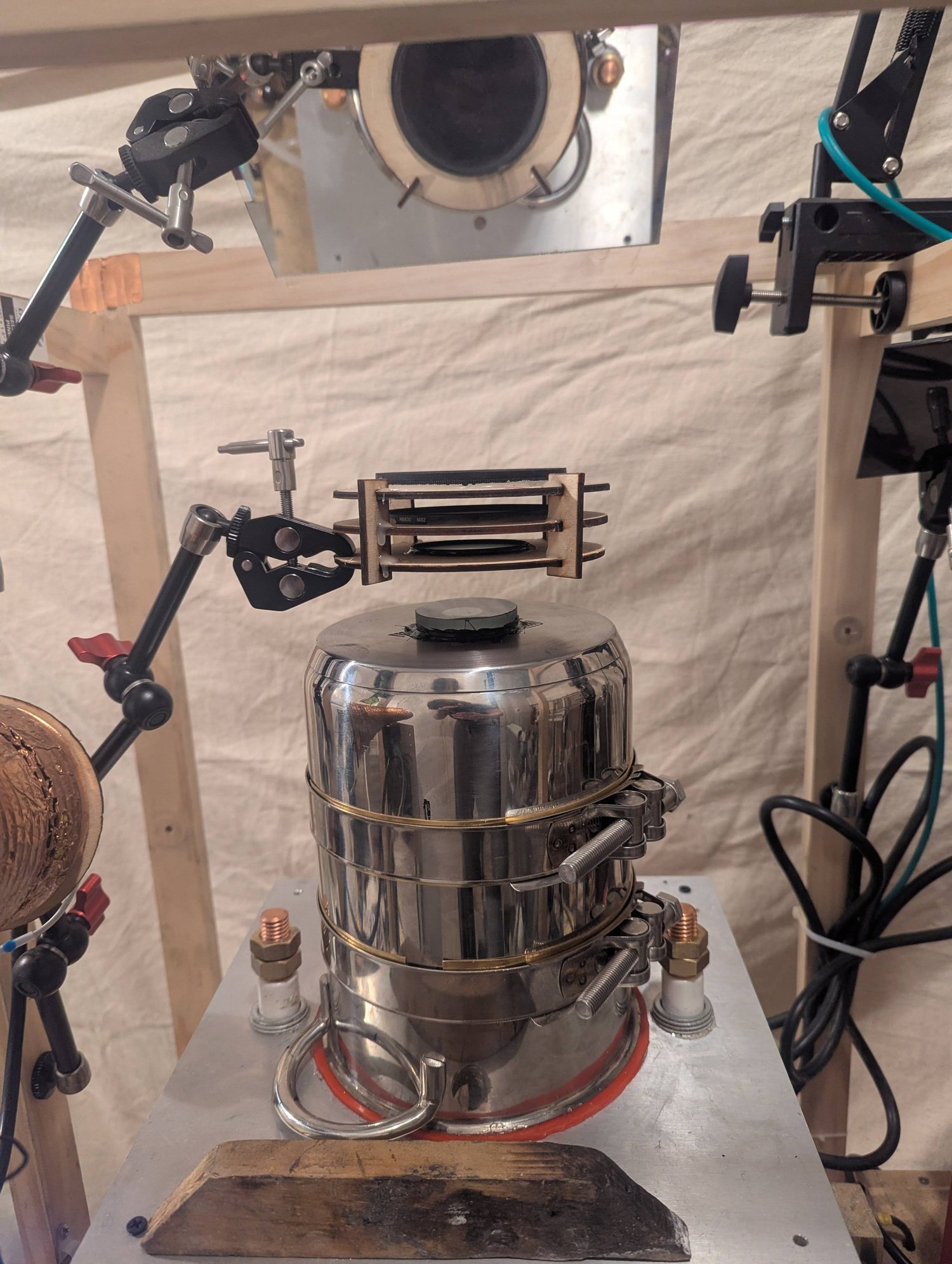
I chose this stainless steel cooking pot because its width and height fit the furnace’s filament posts. I later abandoned this cooling arrangement: if the bottom silicone seal failed, the vacuum could draw cooling water into the hot chamber and damage the tungsten and other heated parts. That possible failure drove the redesign.
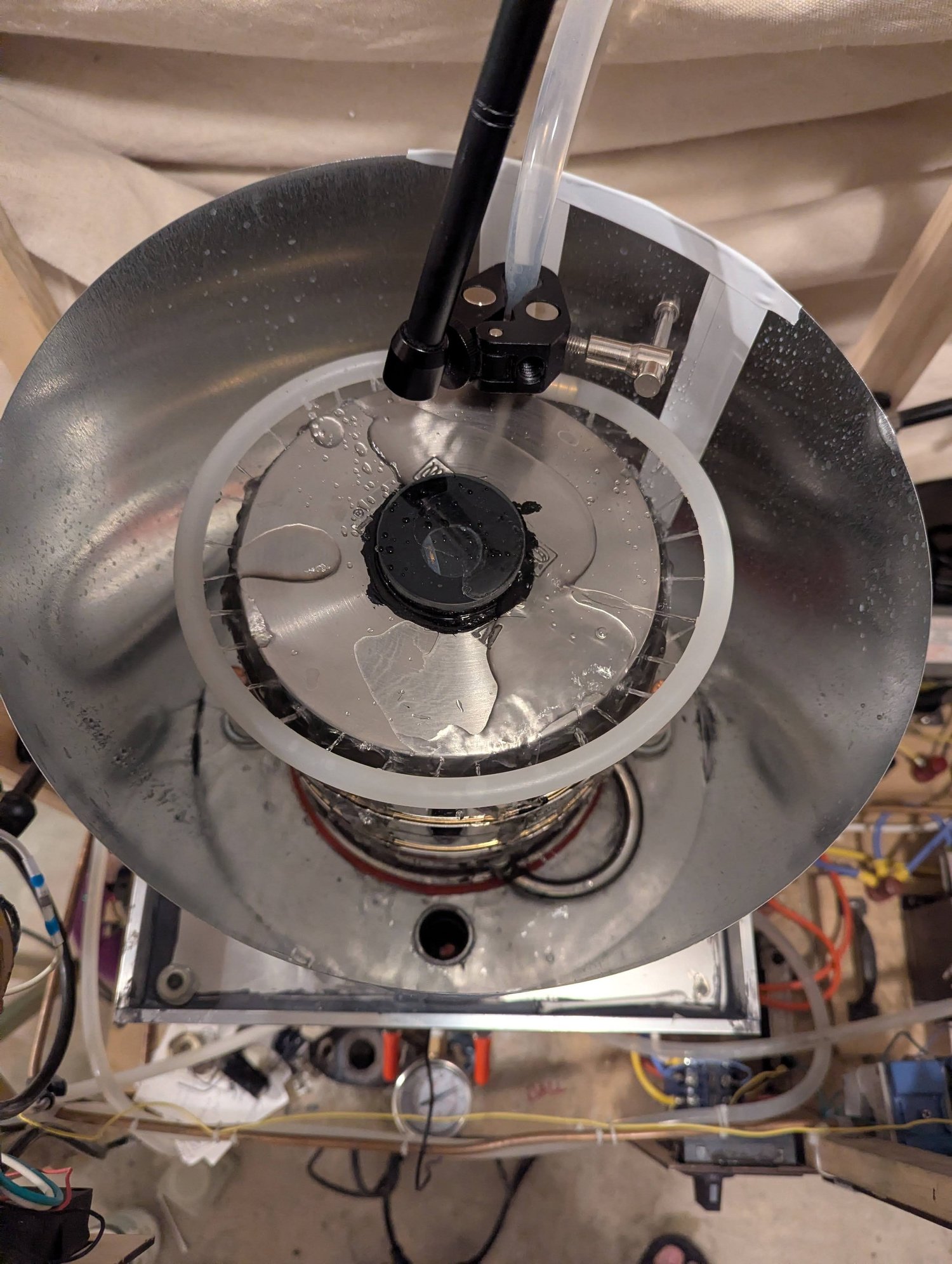
A top view of the ‘noodle pot’ chamber, including the sprinkler that sprayed cooling water onto its steel walls. I added rings around the pot to help resist inward collapse or oval distortion under vacuum. They were a precaution; I did not establish how much support they provided.
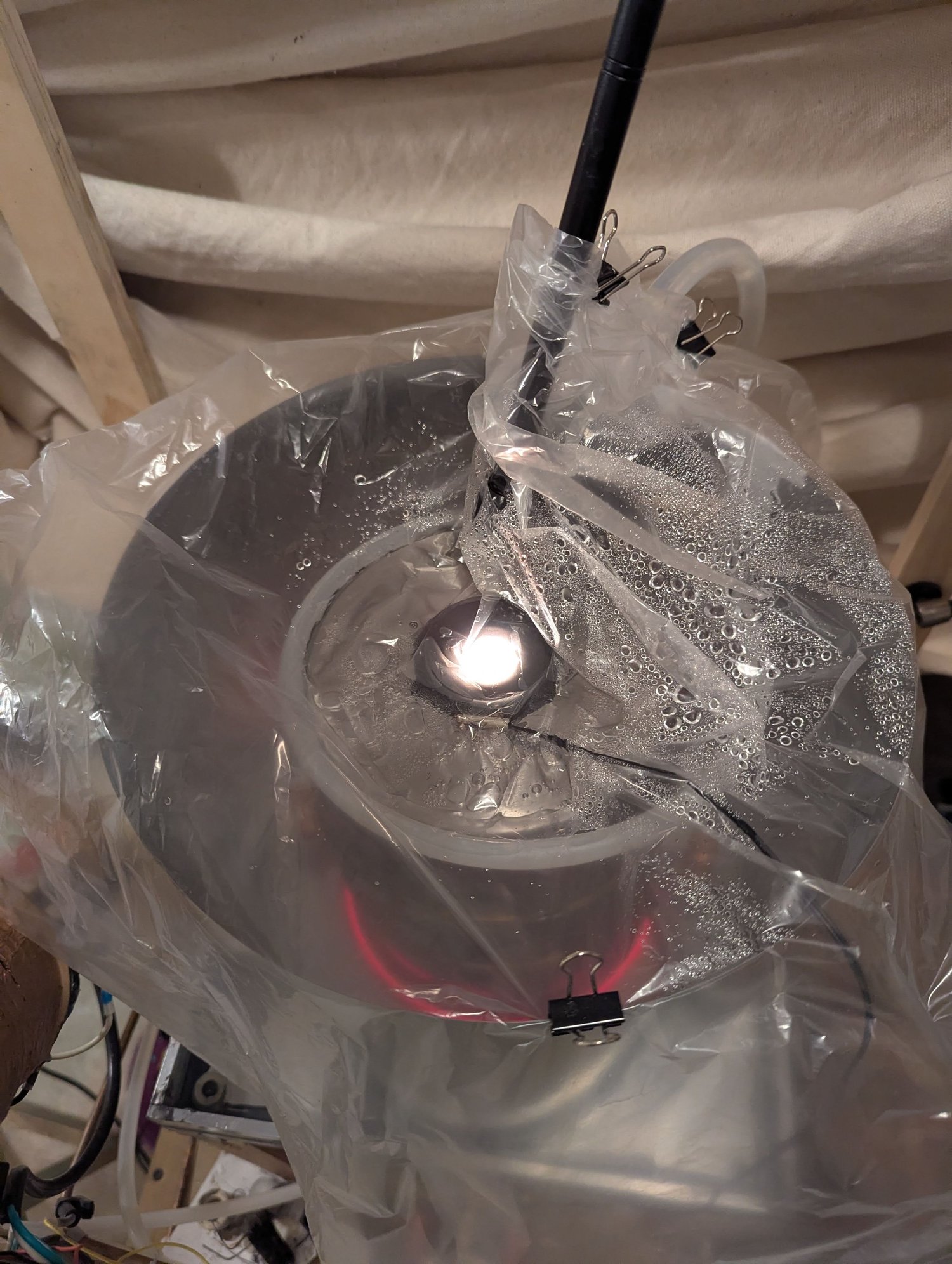
Light from the operating furnace shines through the small glass viewing port on top. A plastic sheet and galvanized shroud surrounded the chamber to contain the cooling-water spray, droplets, and vapor.
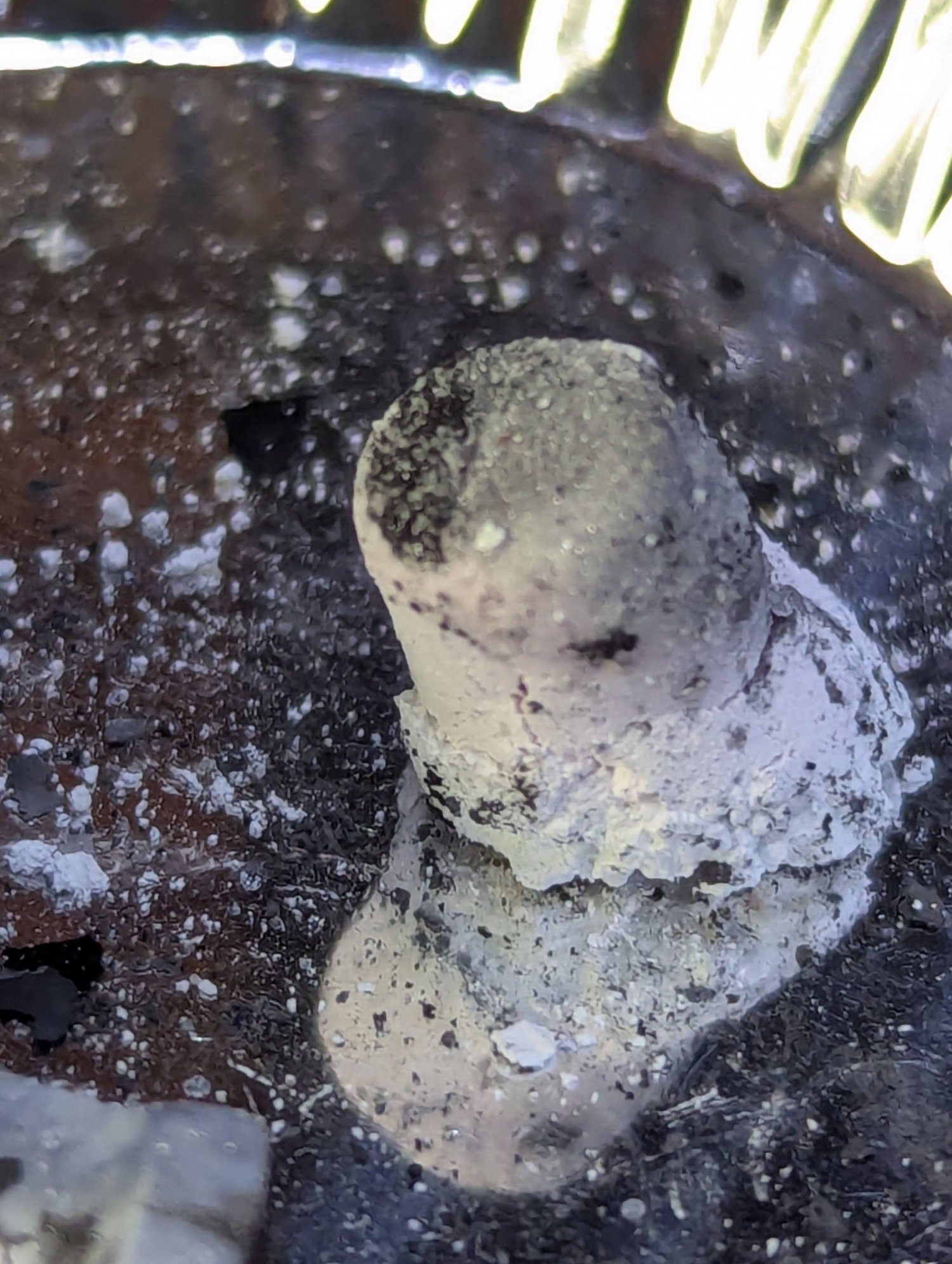
Alumina mixed with chromium oxide in a magnesium-oxide crucible, heated on the tungsten filament as an exploratory ruby-growth test. The sample shrank away from the crucible walls. I later learned that alumina can react with magnesium oxide to form spinel, raising concerns about the crucible reacting with the sample.
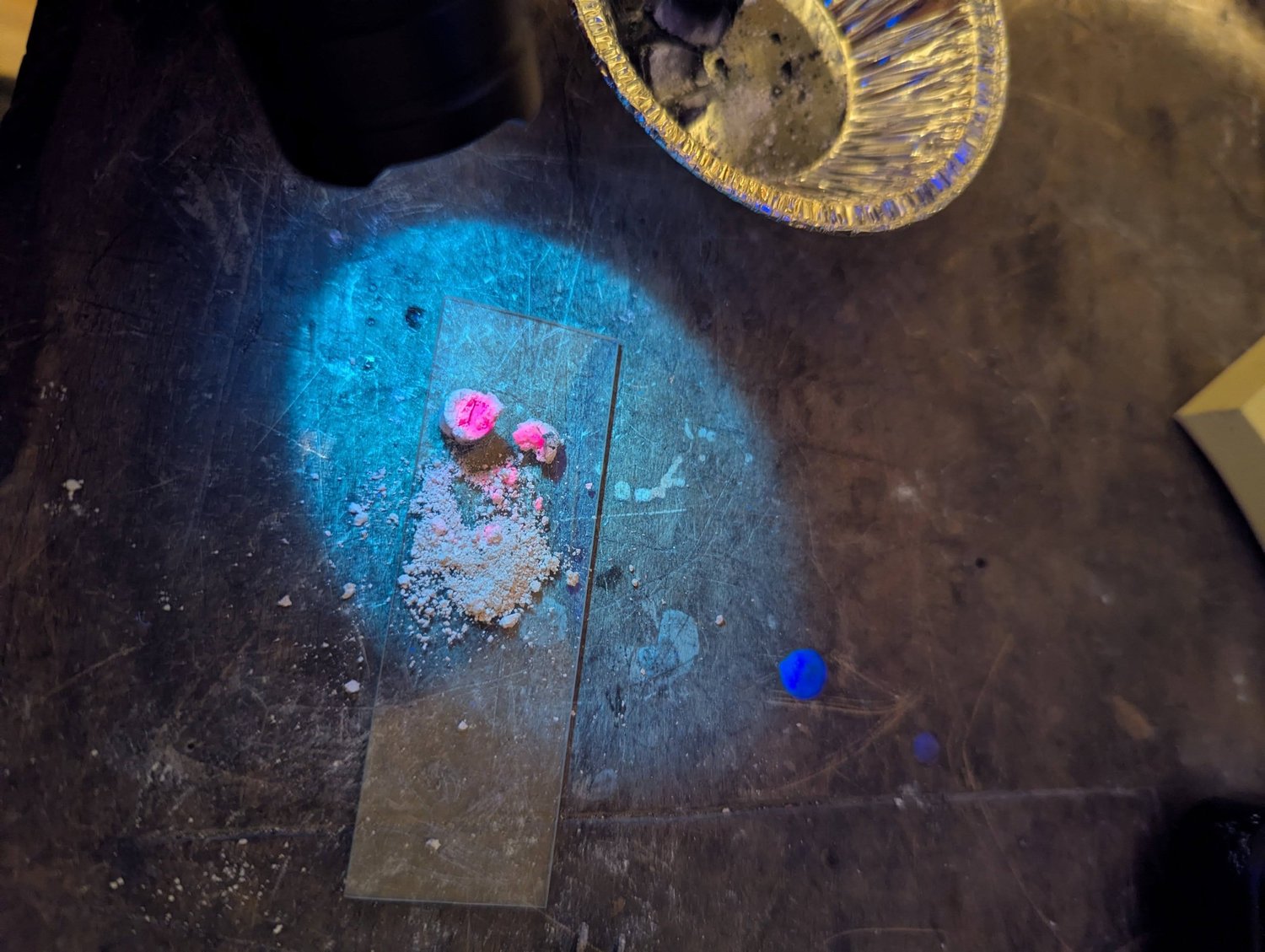
The small alumina and chromium-oxide test sample glowing red under ultraviolet light after heating. This fluorescence was an encouraging observation in my early ruby-growth experiments. The photograph documents the glow, without establishing the sample’s crystal structure or the peak temperature reached.