Contract work / Optics & light
Optical balk-alert prototype
A modulated laser and pocket receiver explored as an aid for detecting a player crossing a defined line.
Open the numbered review →Optical detector
Photos 214–216
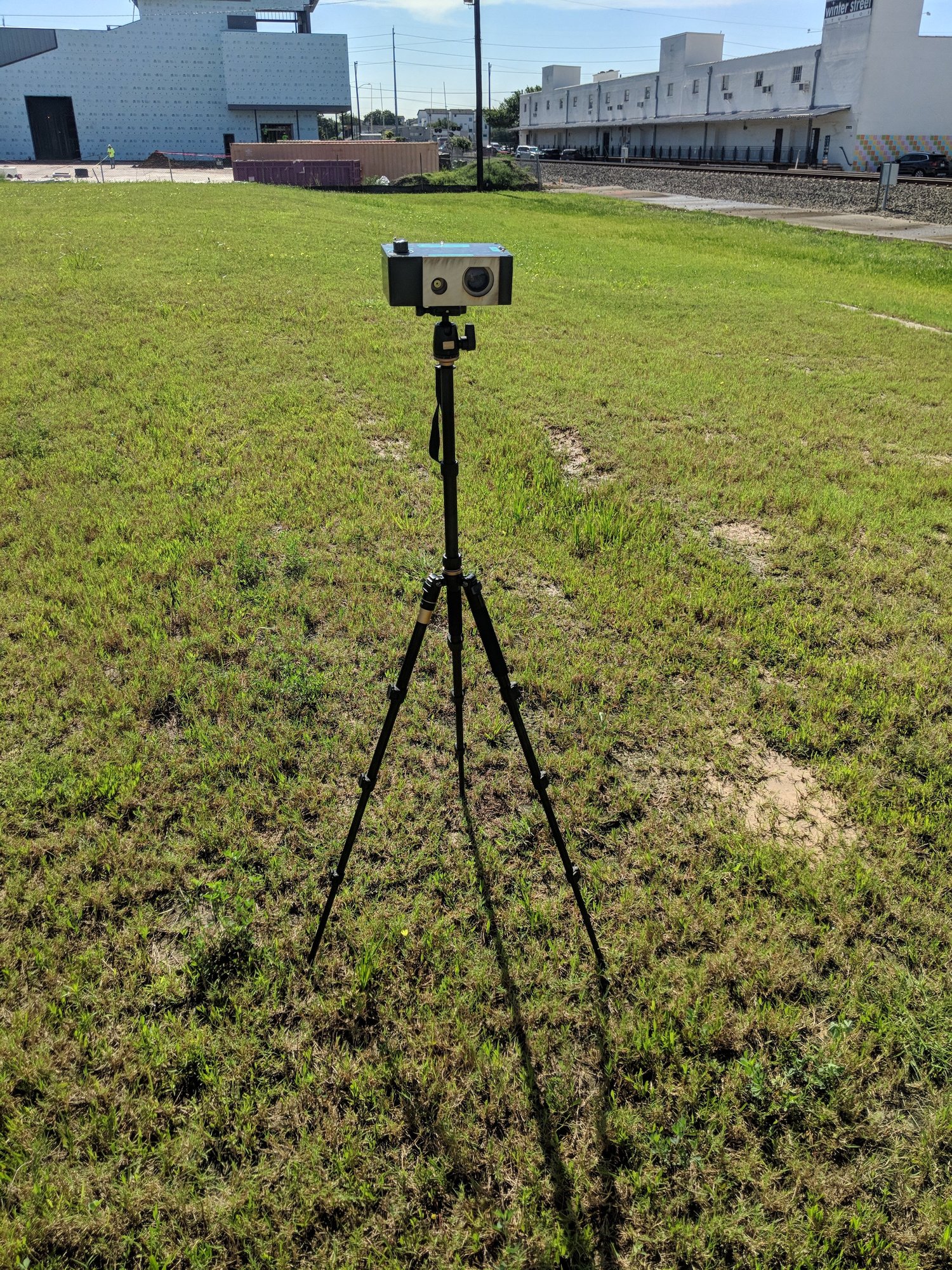
A tripod-mounted prototype I built for a freelance client who wanted to help umpires notice possible balks. The concept used a laser beam as a tripwire: a player crossing the monitored line would interrupt the returning light and trigger a wireless alert. It was intended to draw the umpire's attention to a movement that could be difficult to see from a distance.
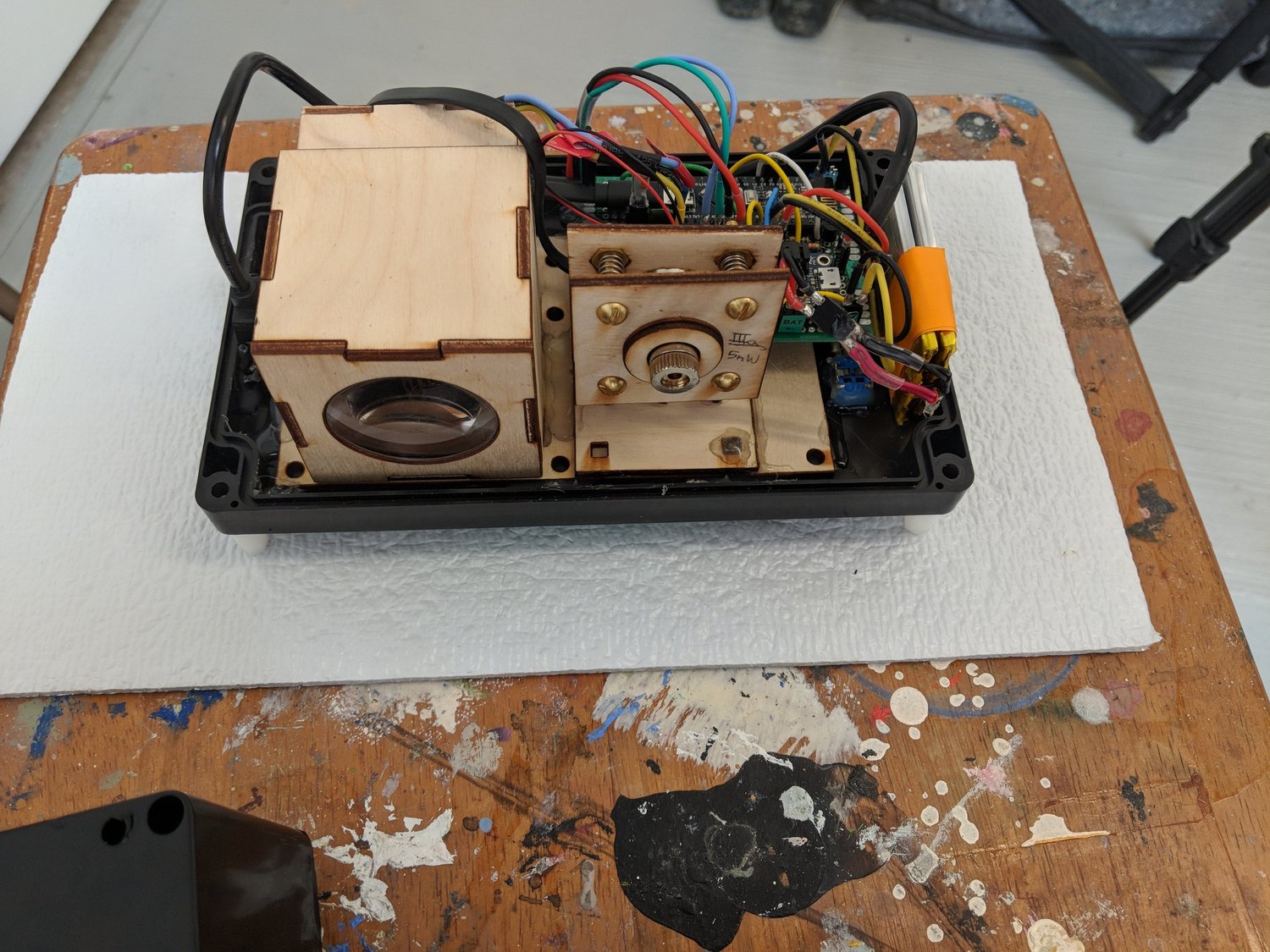
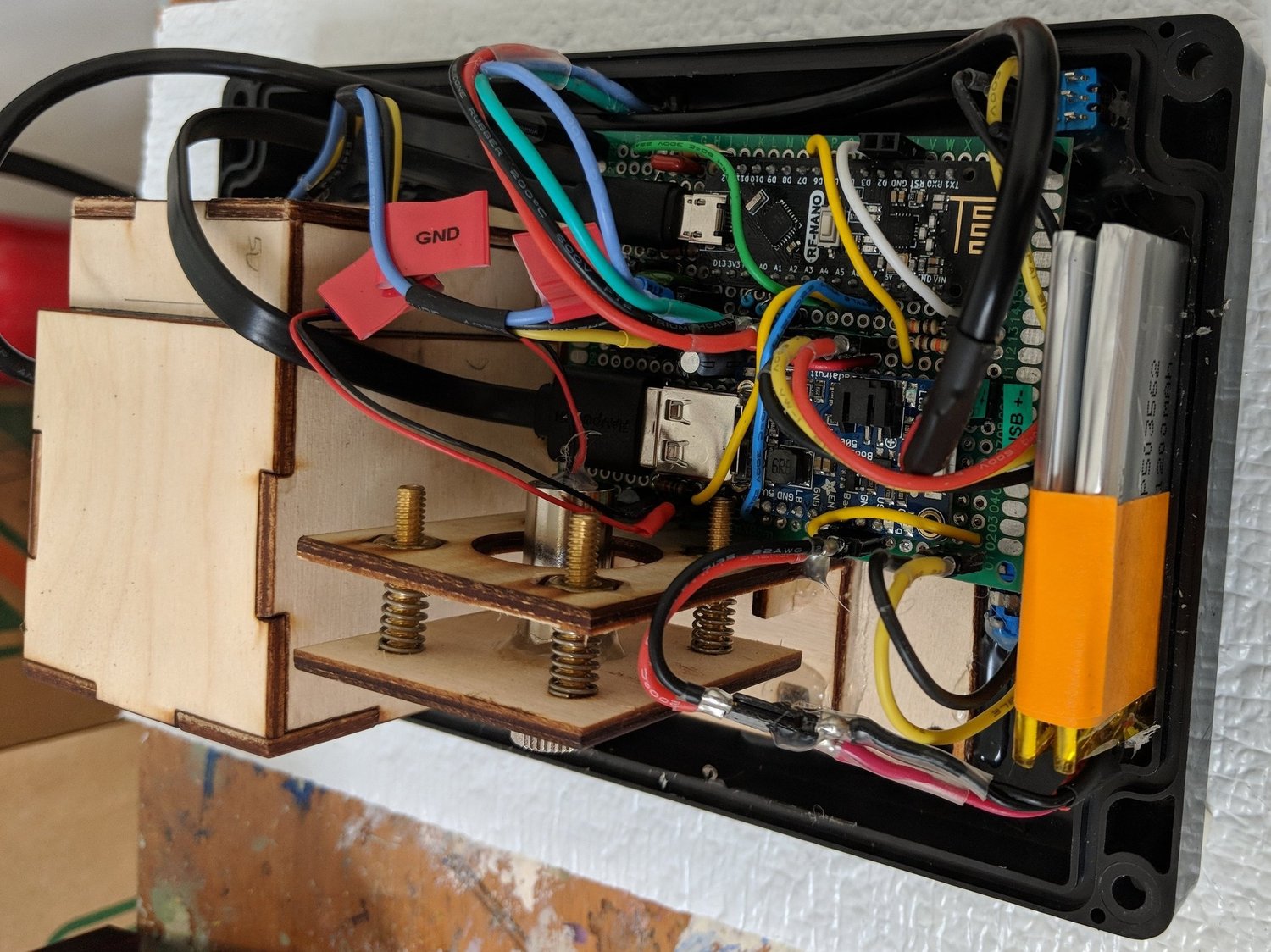
Inside the detector, the lens on the left collected returning light onto a light sensor, while the red laser on the right sent out the beam. I pulsed the laser so the receiver electronics could distinguish its pattern from background sunlight. A microcontroller handled detection and radio communication, with battery-charging electronics and sensitivity adjustments included in the assembly.
Pocket receiver and reflector
Photos 217–220
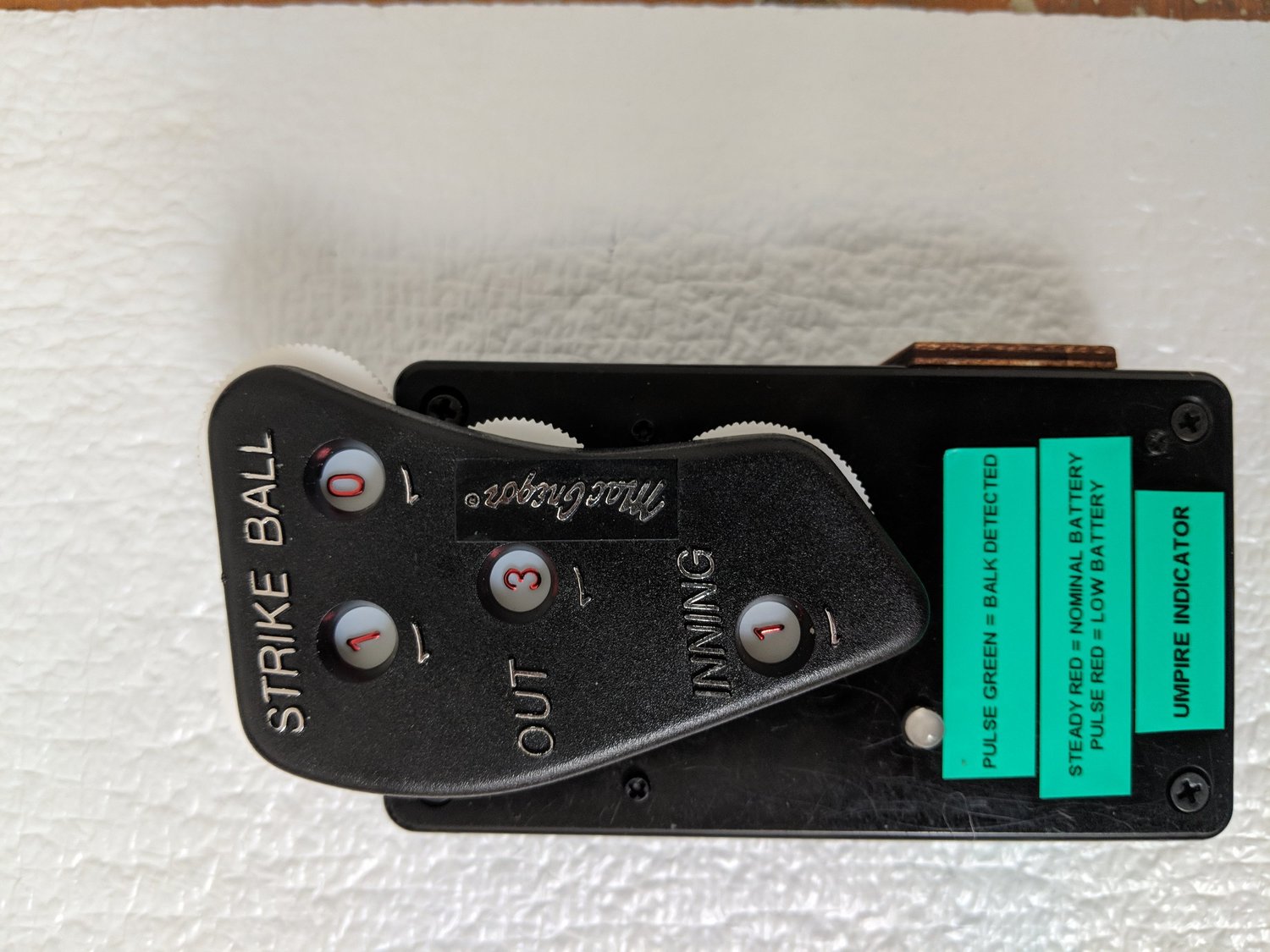
The handheld receiver intended to be carried in the umpire's pocket. It received an alert from the tripod unit when the monitored beam was interrupted, keeping the notification close to the person making the call.
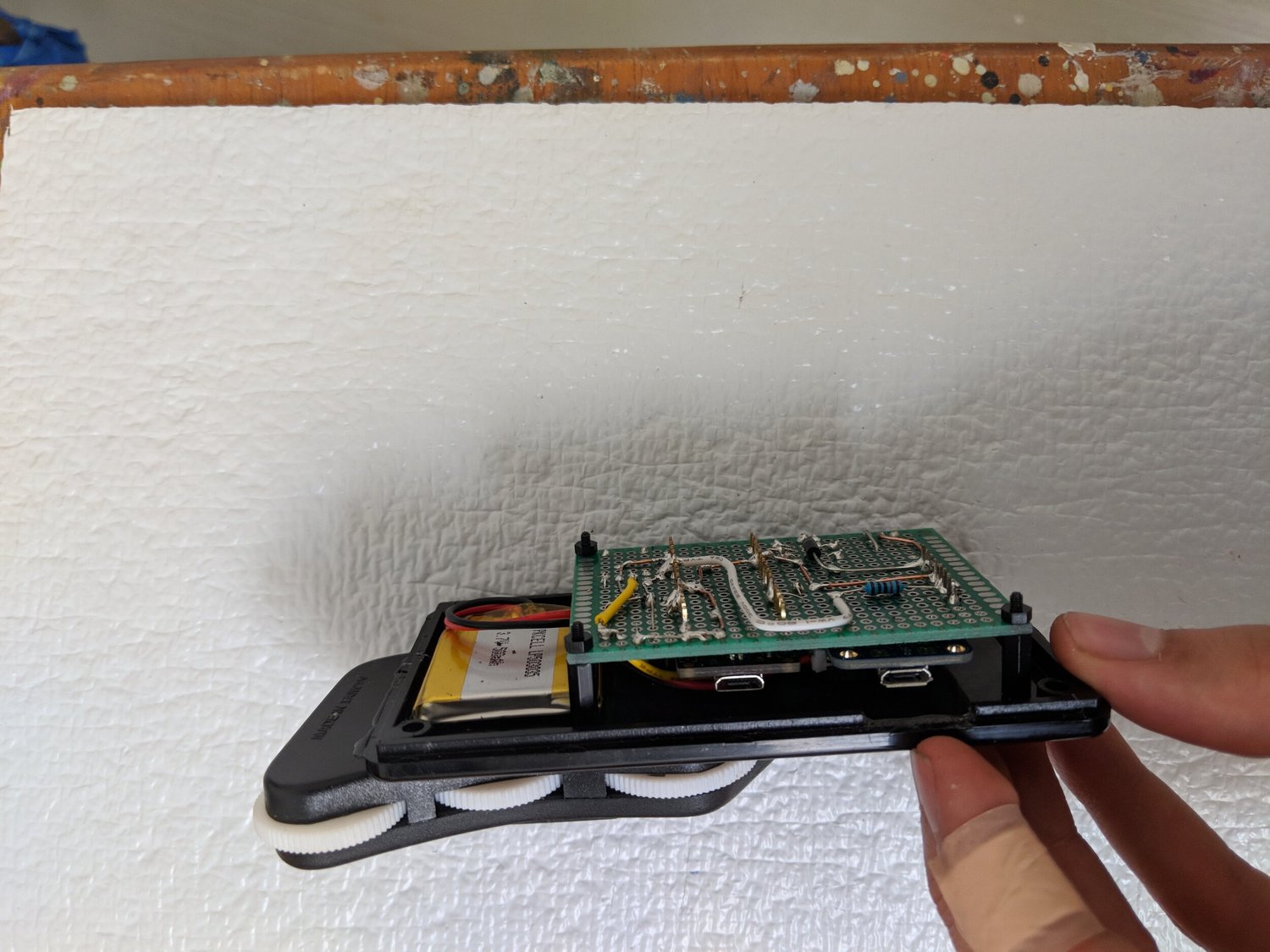
The umpire's receiver and its internal hardware, including a small rechargeable battery. I recall using a vibration motor to provide a discreet alert when the optical detector reported an interruption.
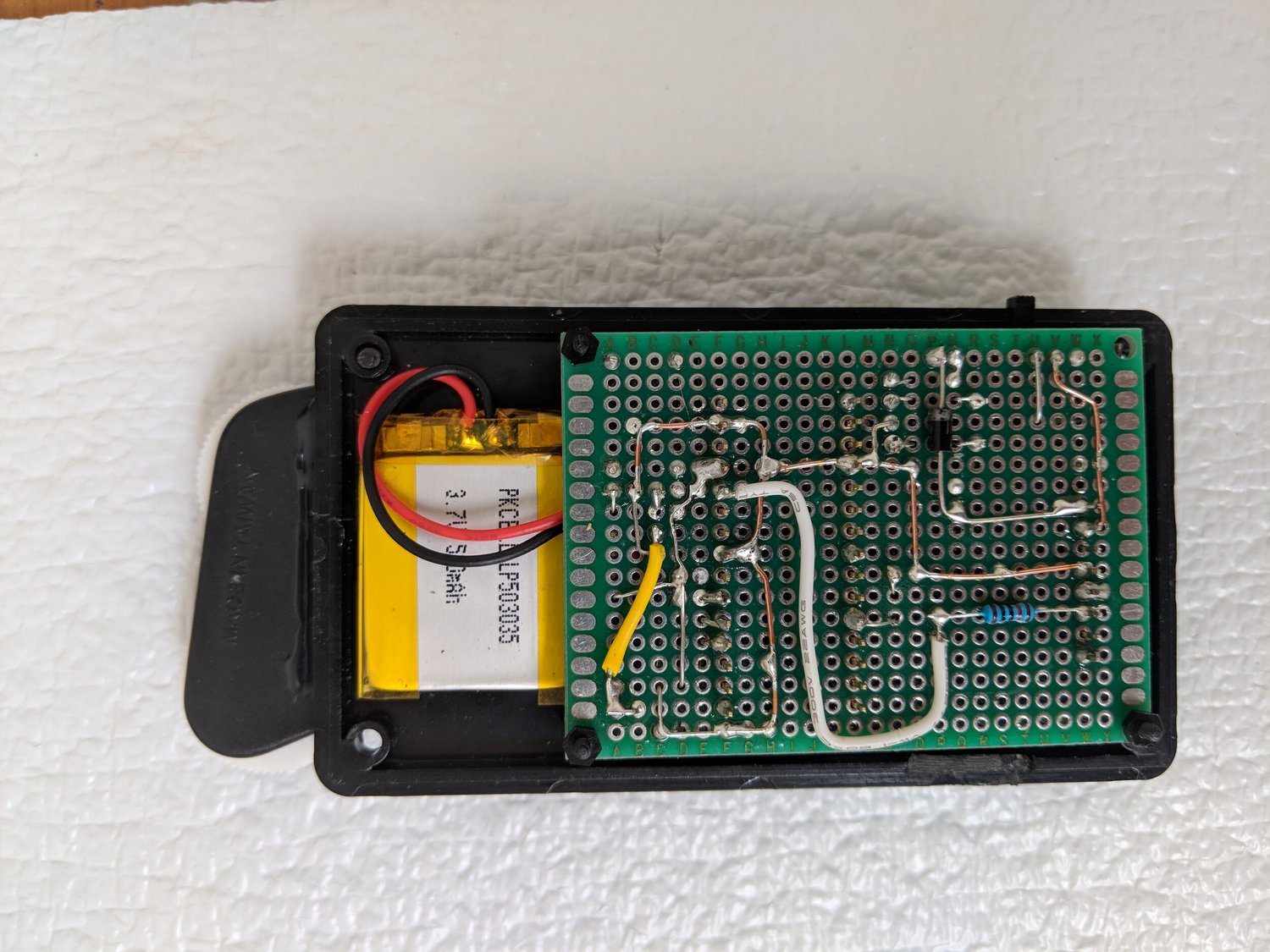
A closer view of the receiver electronics. This was the portable half of the system, handling the radio message from the optical unit and producing the local alert.
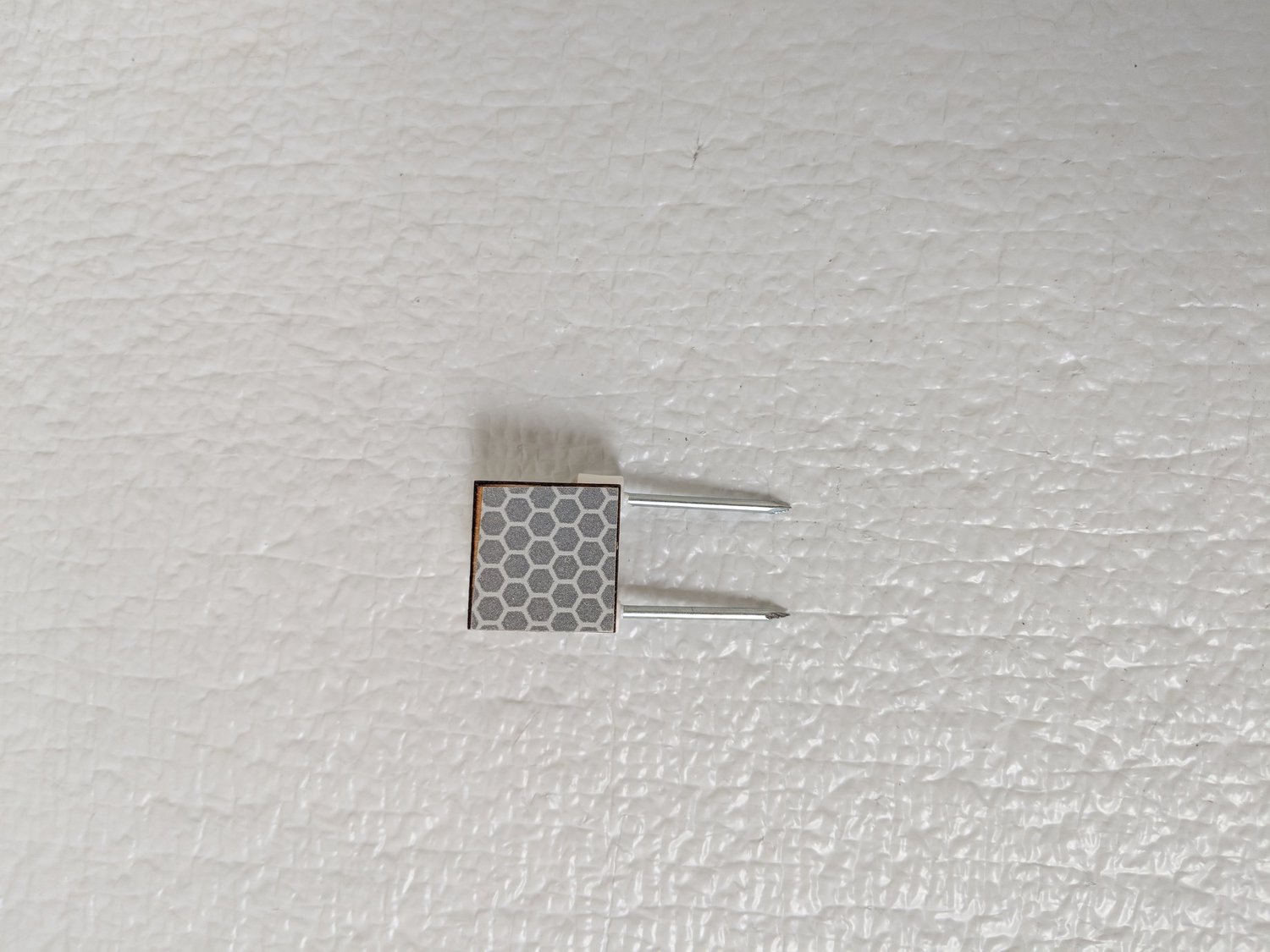
A small prismatic reflector with stakes for positioning it in the ground. During testing, I found that adding this retroreflector substantially improved the light returning to the detector's lens. It became a useful part of the optical arrangement.
Optical development and outdoor tests
Photos 221–223
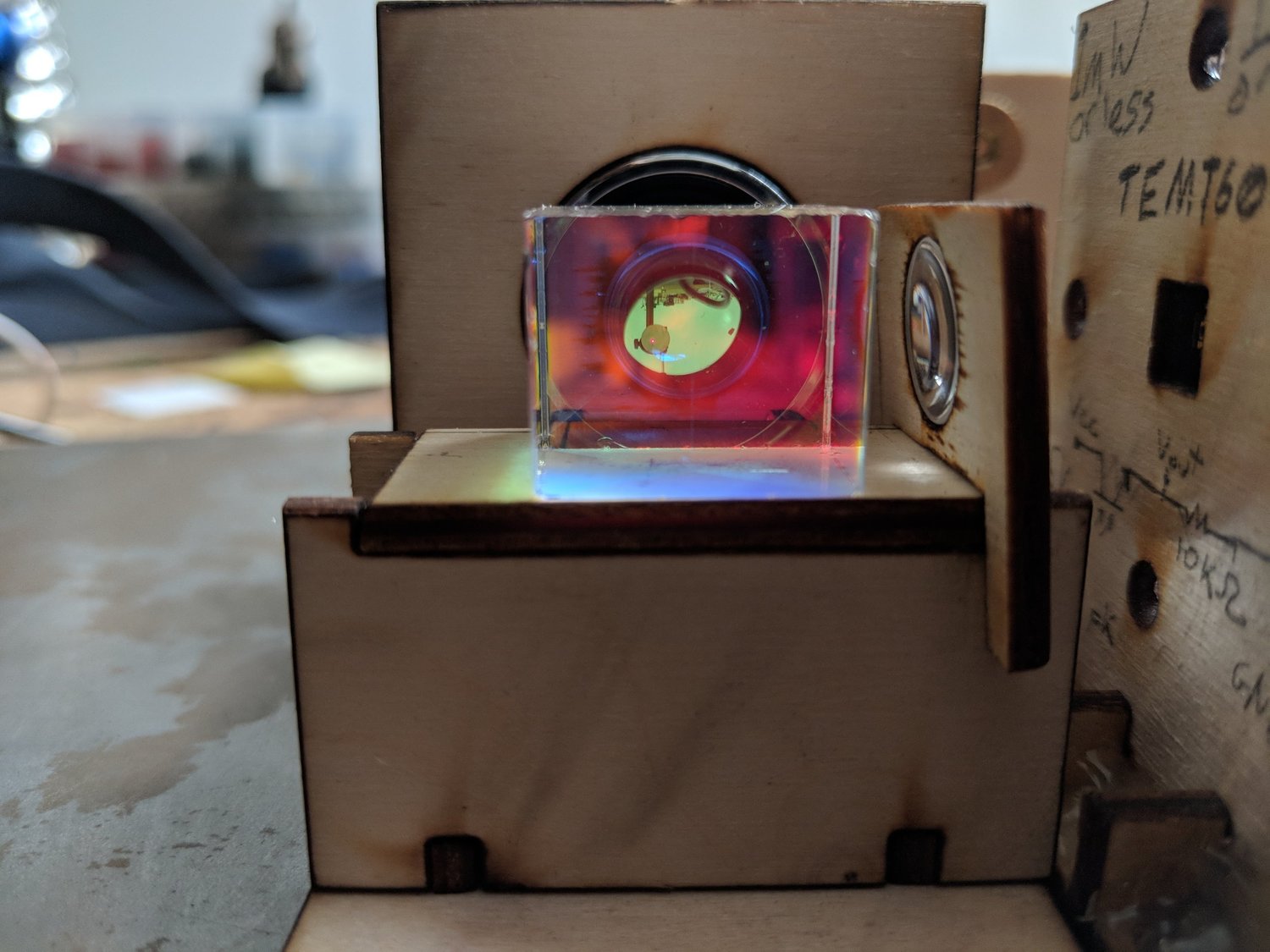
An early optical arrangement intended to select the red laser light while rejecting other wavelengths. It combined a collecting lens, a dichroic element that separates light by color, and a smaller lens directing the selected light toward a sensor. I was exploring optical filtering as another way to distinguish the signal from daylight.
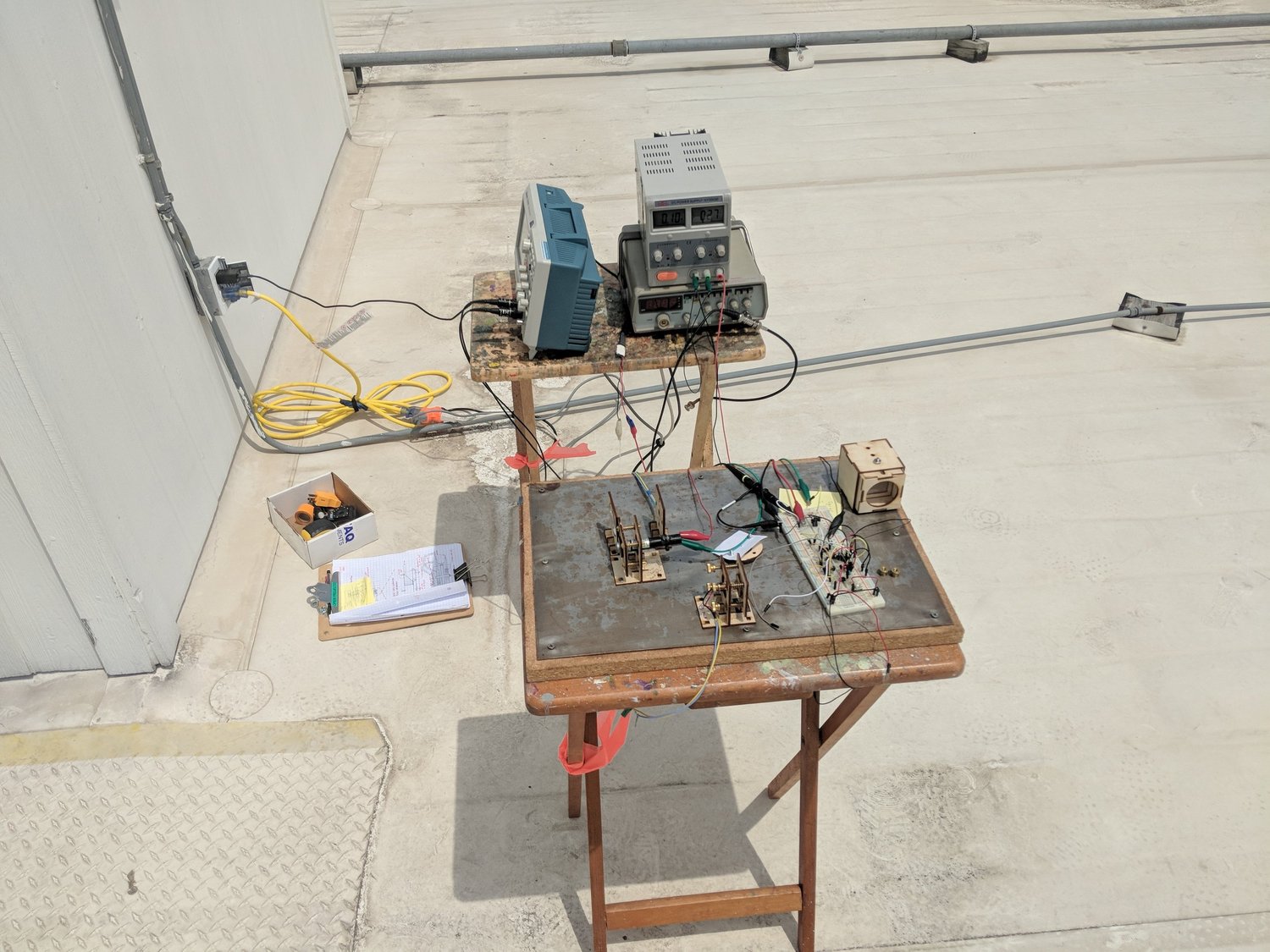
Testing the detector on the roof at Sawyer Yards in Houston, where I had a studio. The open space let me try different distances in bright sunlight—useful conditions for checking the optical system. I was grateful to have that space available while developing the project.
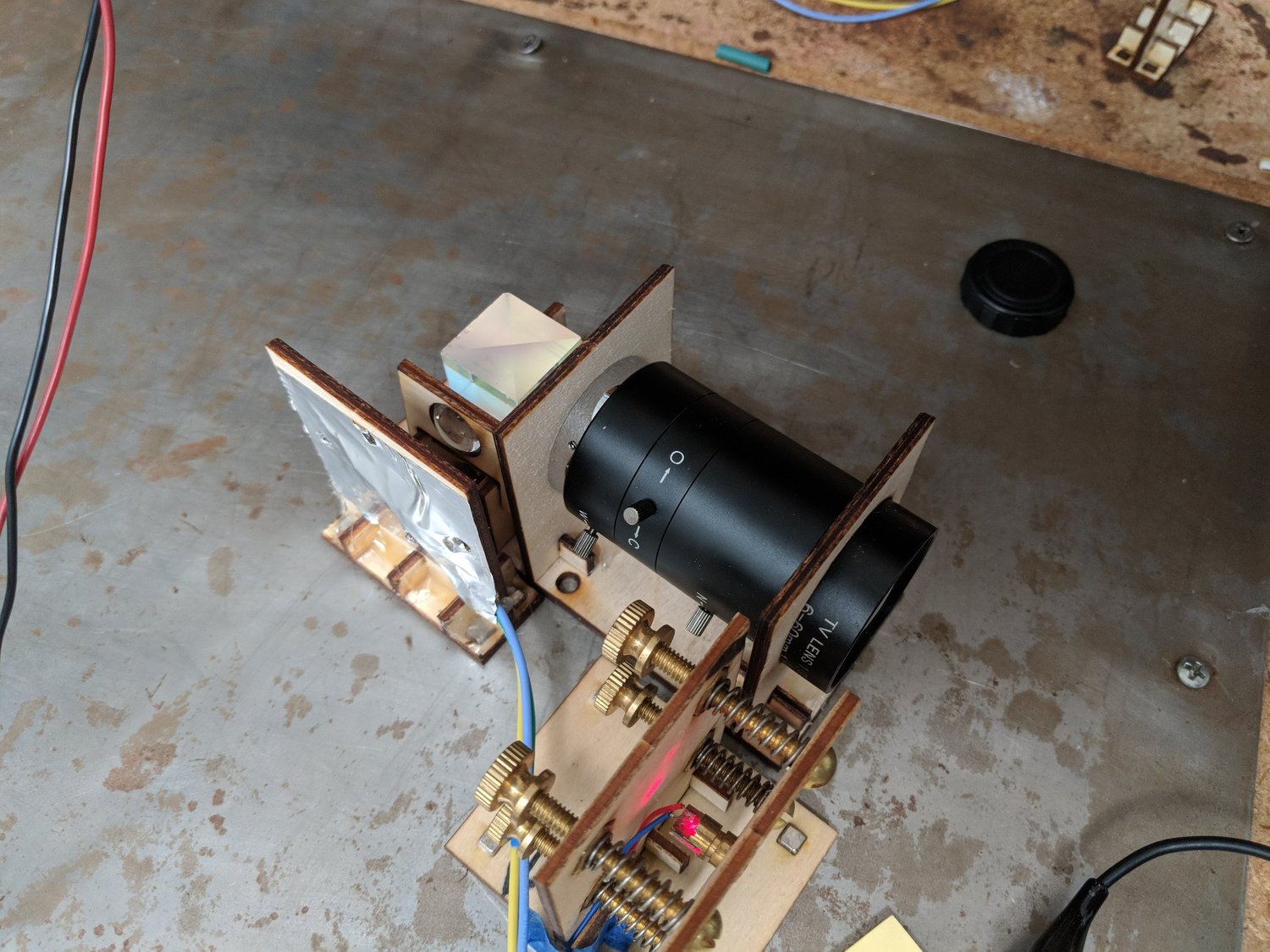
Another view of the early receiver optics, using a dichroic element to direct selected colors toward the light sensor. I ultimately left this arrangement out of the later design, but it was a useful avenue to explore while developing the detector.
Need a prototype for your project?
Tell me what you need to build and which constraints matter. We can discuss whether my experience fits your project.