Personal projects / Tools & mechanisms
Tungsten filament tooling
My current tungsten-filament winding fixture, the arbor-press forming setup, and the earlier winding method.
Open the numbered review →Current filament winding method
Photos 500–501
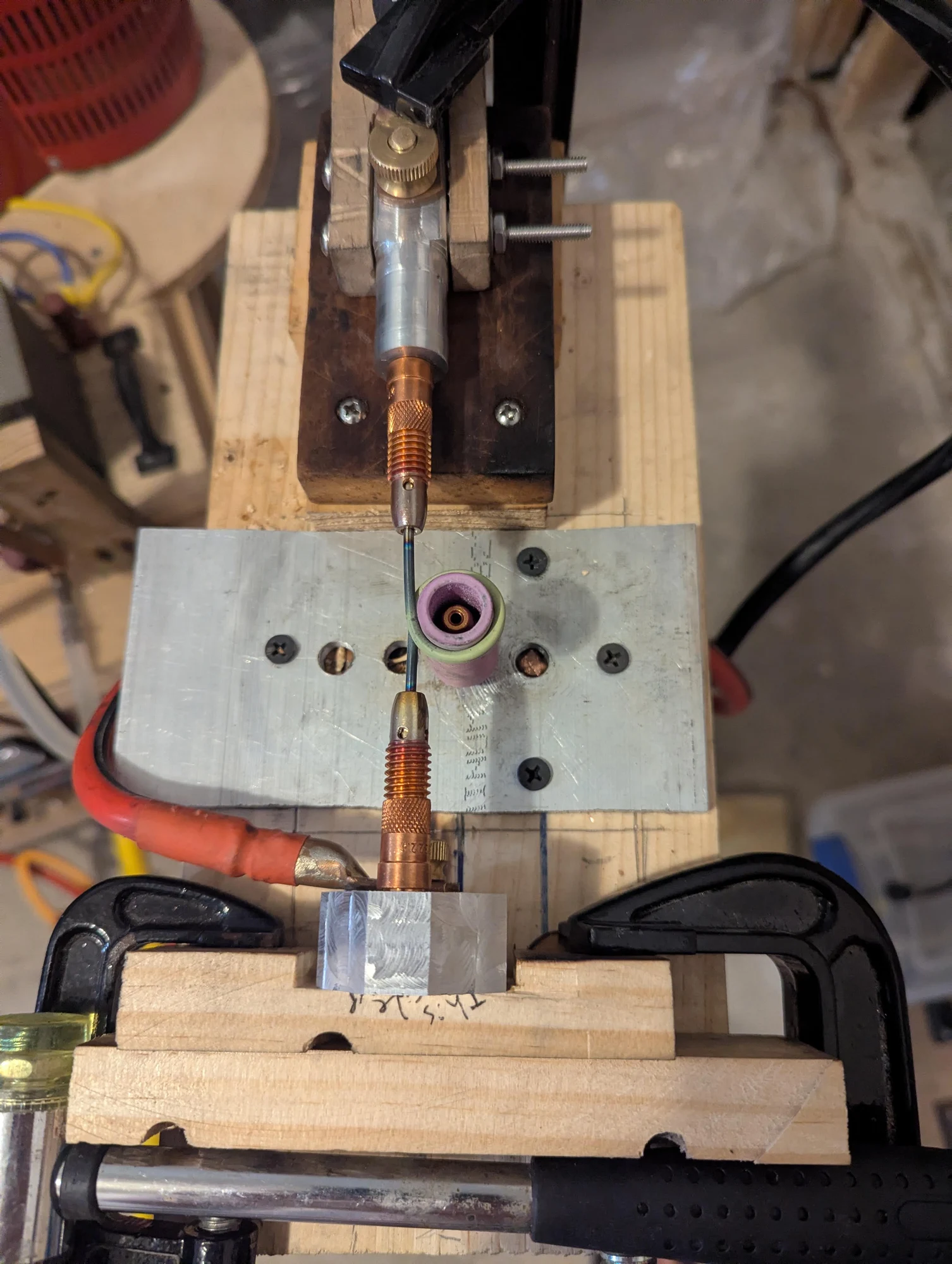
This is the fixture I currently use to wind tungsten rod into a furnace filament. It uses aluminum tooling, with one electrode holder fixed while the other moves around the mandrel that guides the bend. The fixture supports the rod as I shape it.
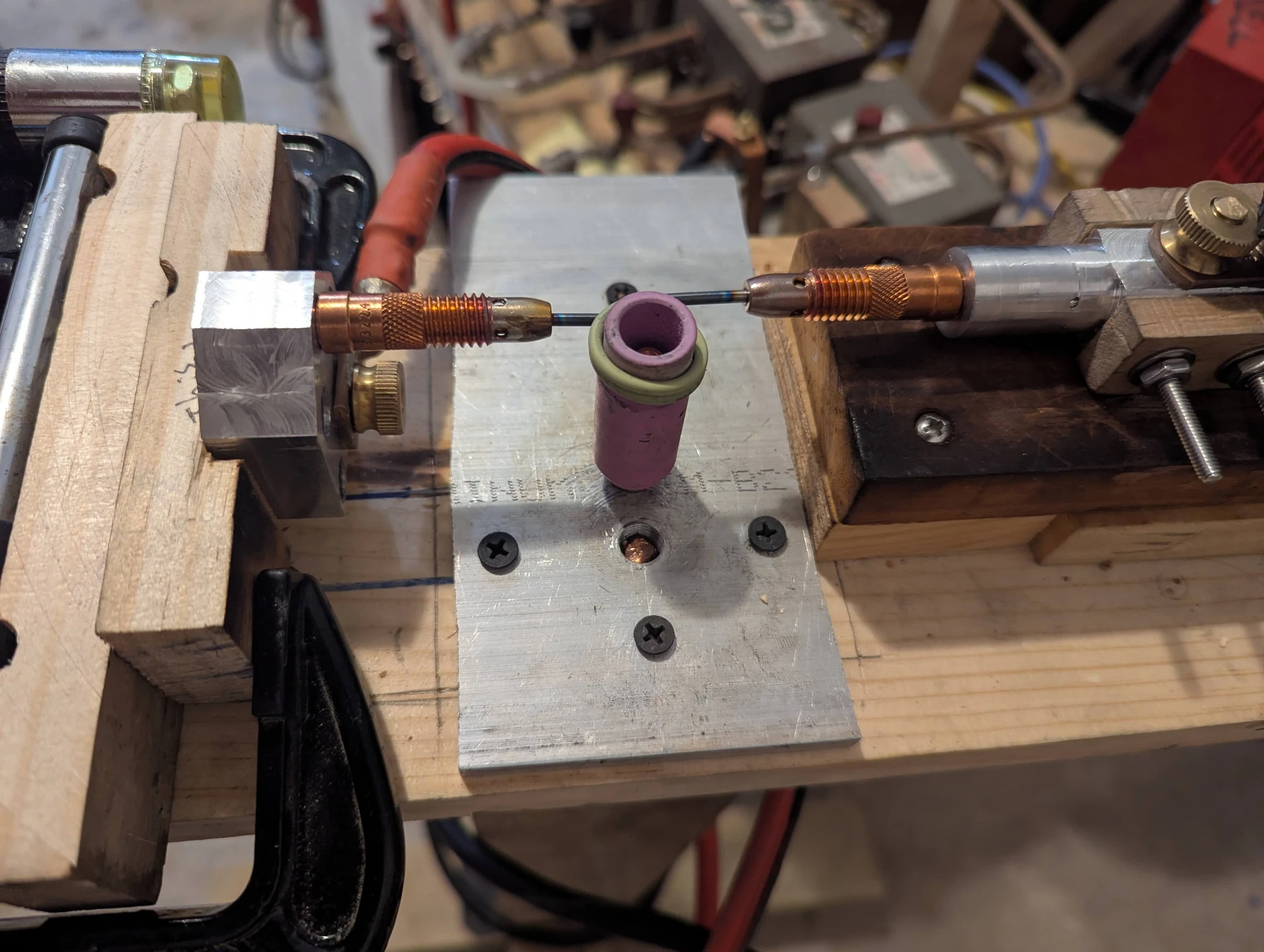
Another view of my current tungsten-filament winding setup, showing the two electrode holders and the mandrel. The clamps and supports hold the assembly in position during forming.
Heated forming with an arbor press
Photos 511–512, 514, 516, 518–520
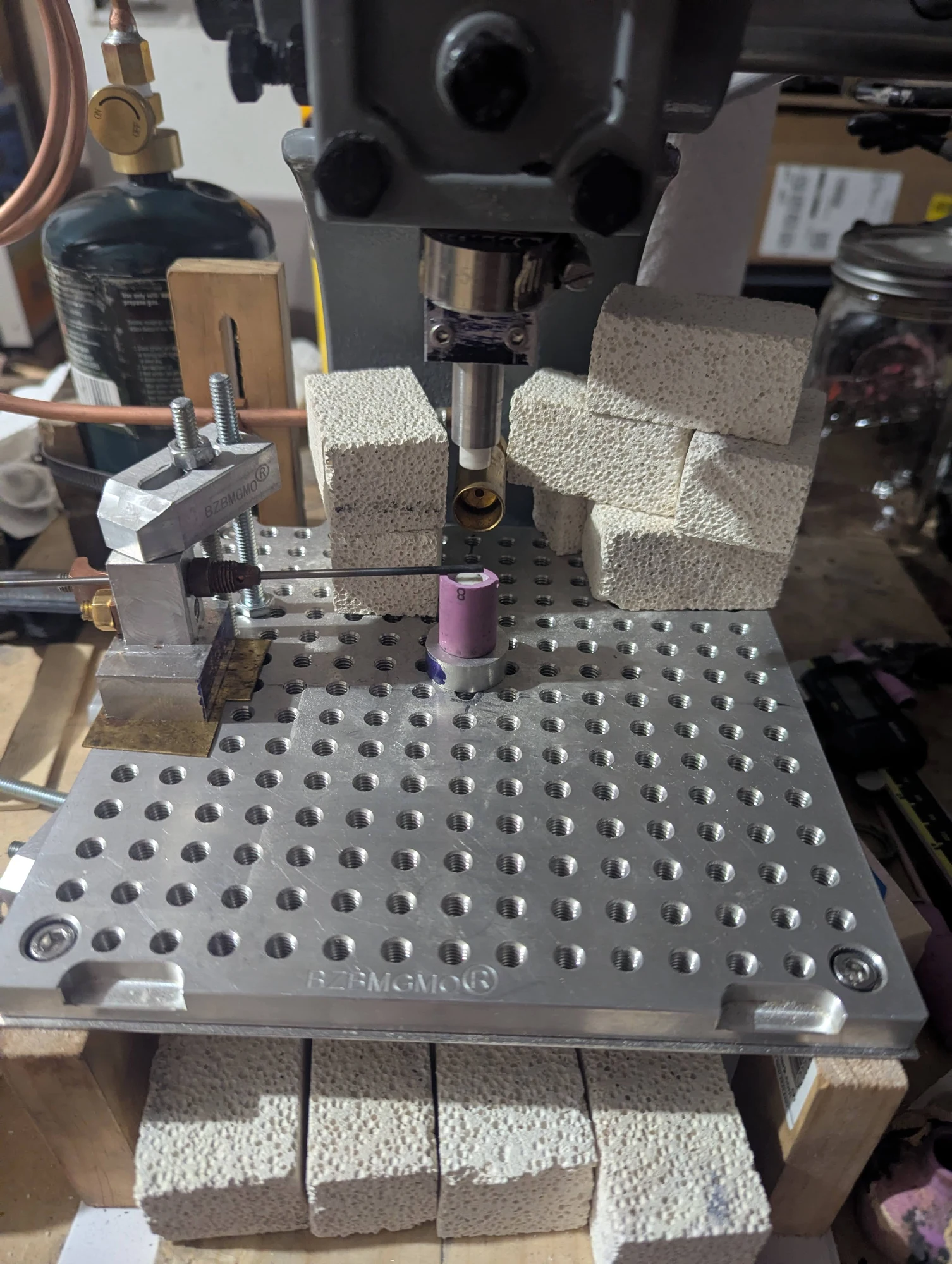
An arbor press fitted with a zirconia ceramic pressing head for shaping tungsten rod. I used a propane torch to heat the rod, then the press to form a small offset so the part would fit inside the furnace. Insulating blocks surrounded the working area to help retain heat.
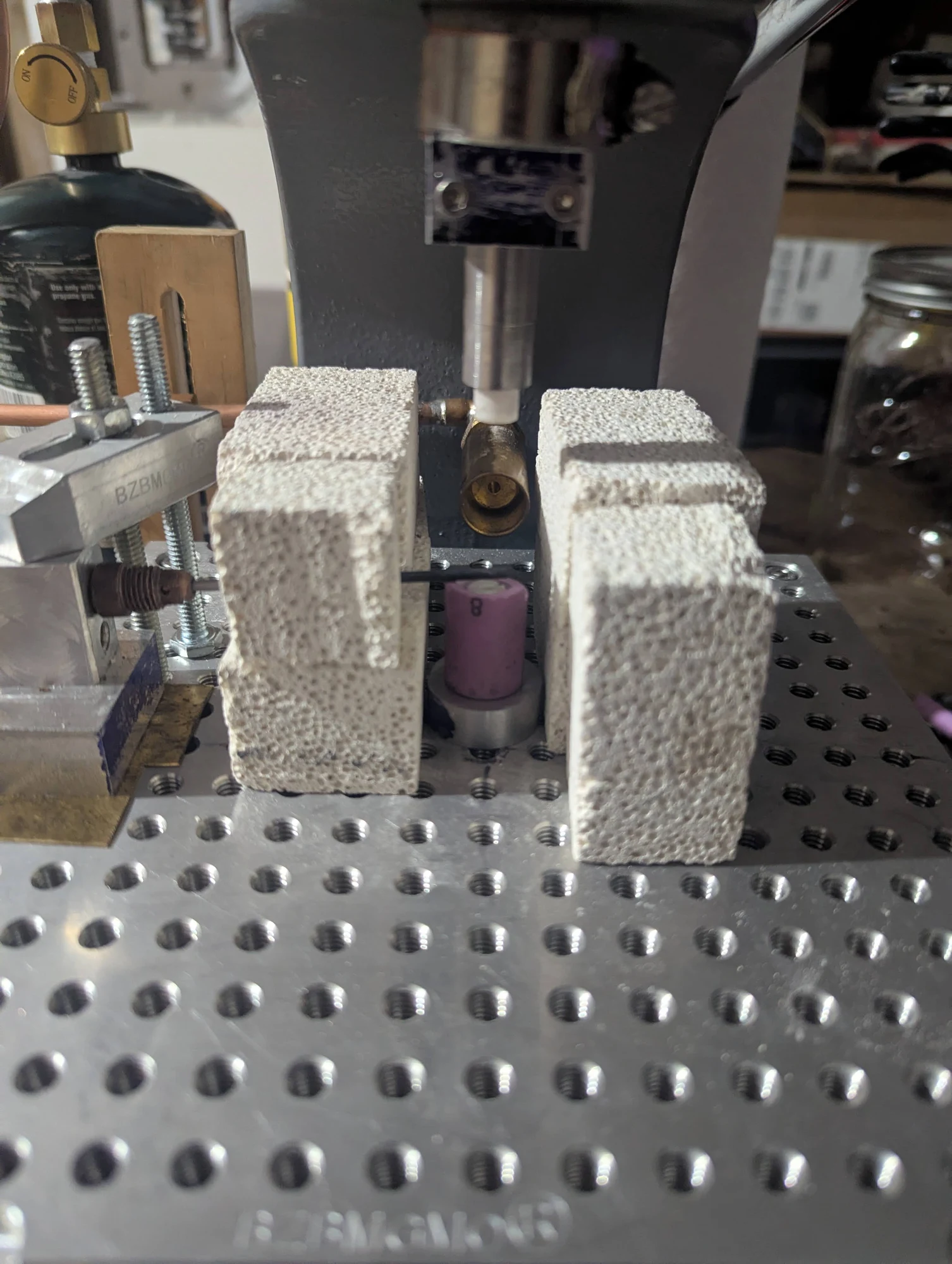
A closer view of the modified press, with the ceramic head above the tungsten-forming area. The surrounding insulating blocks helped limit heat loss while the rod was heated.
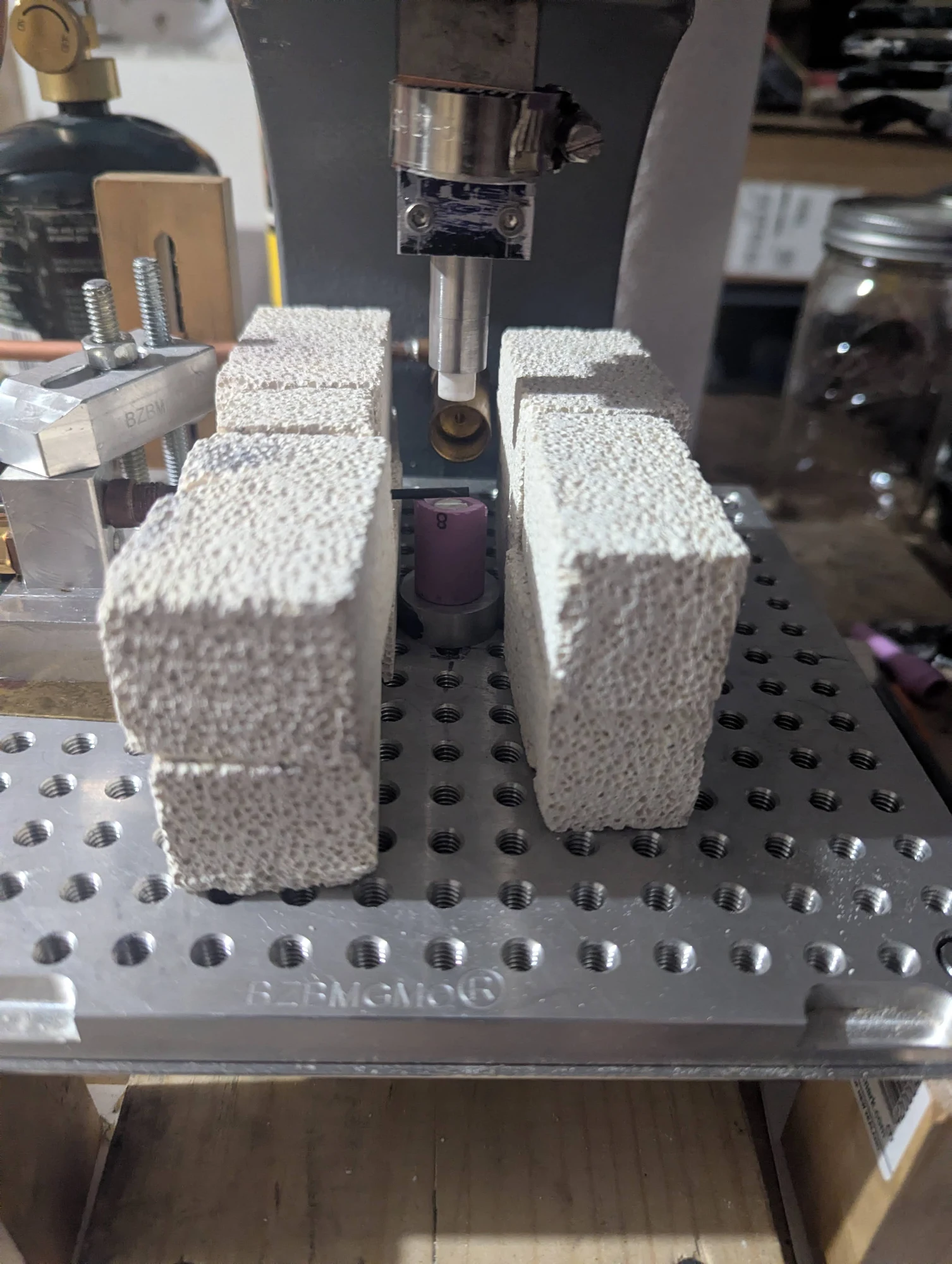
A further view of the fixture used to support the tungsten rod beneath the ceramic pressing head. The goal was to add an offset that would let the rod fit the furnace assembly.
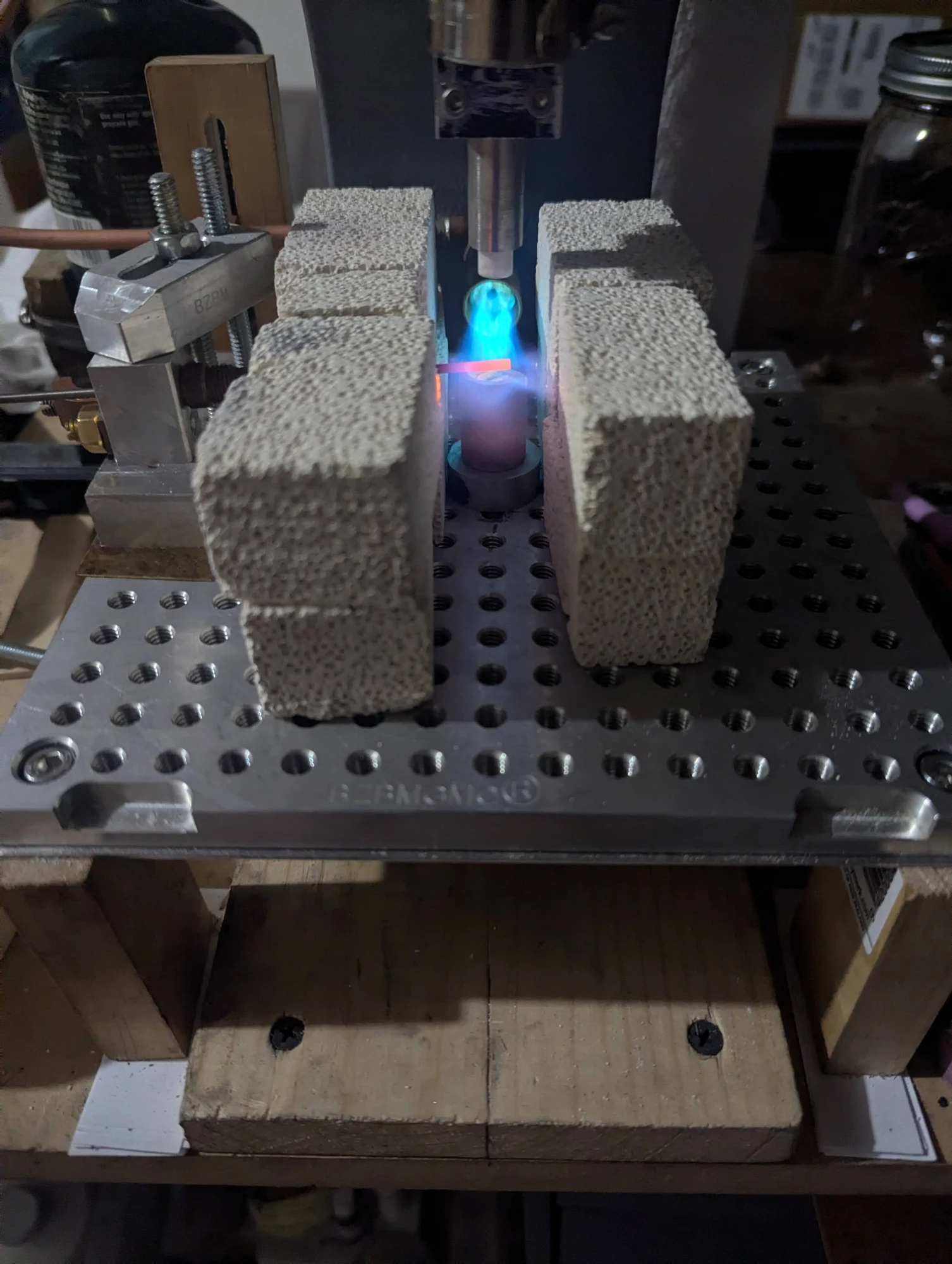
The propane torch heating the tungsten in the insulated work area. The press was used to form the required offset after heating.
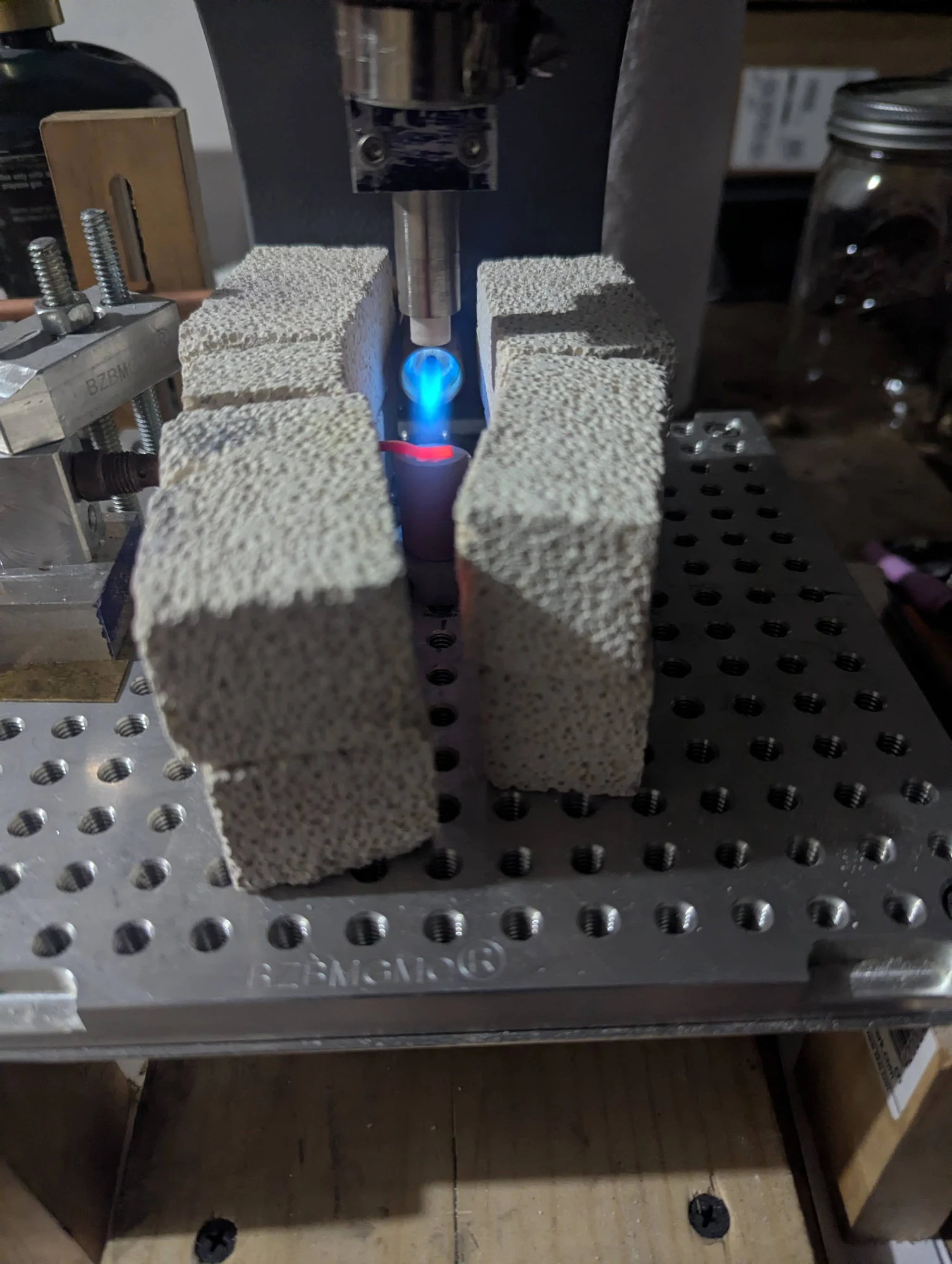
A further photograph of the heating stage. The arrangement kept the torch, insulating blocks, and pressing tool together around the section of tungsten being shaped.
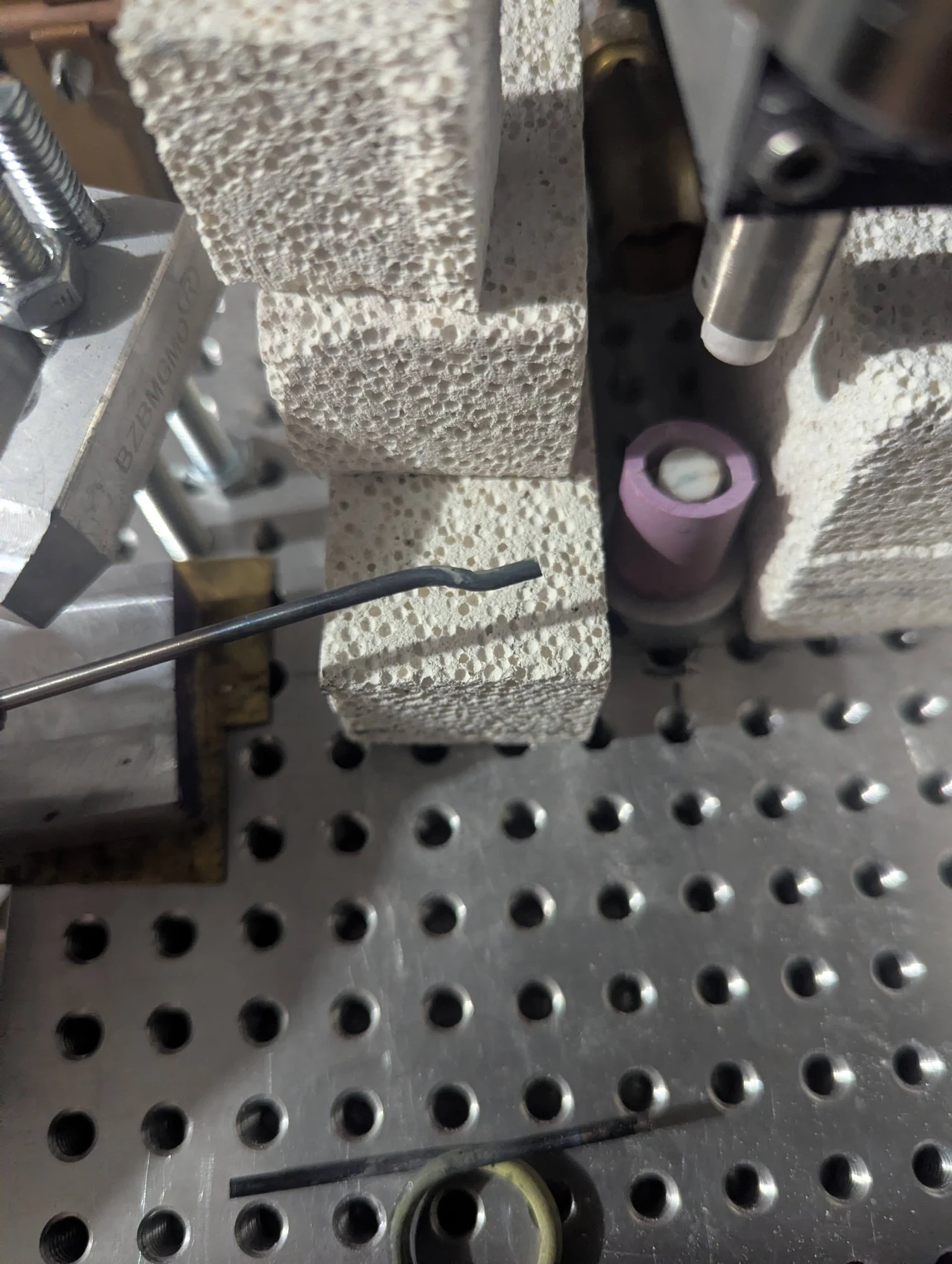
A close view of the shaped tungsten rod beside the ceramic tooling. The offset was made to accommodate the rod’s position inside the furnace.
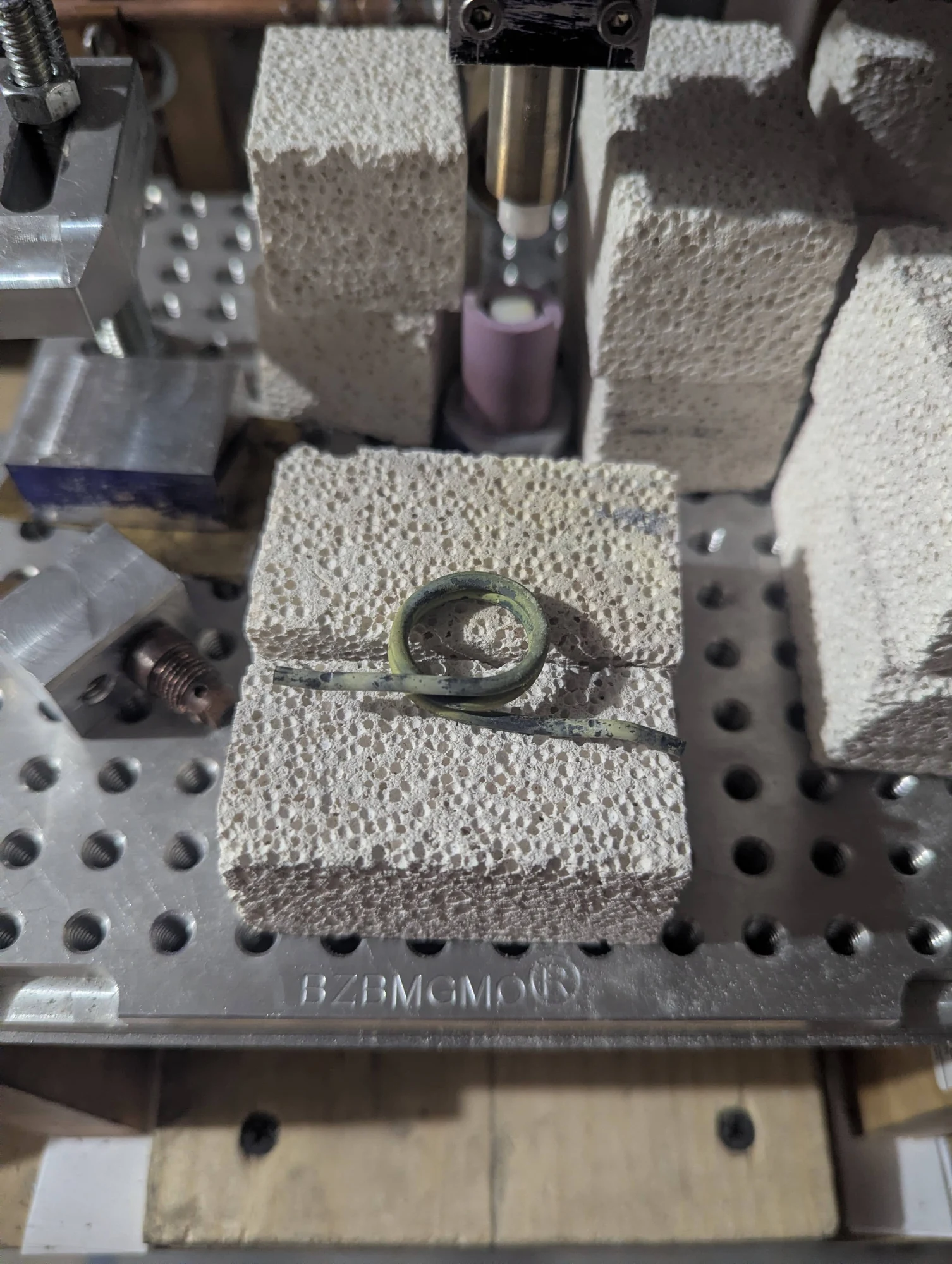
The tooling and tungsten pieces at the press after a forming step. This view records the small working area used to adapt the rod’s shape to the furnace.
Earlier winding method
Photos 26–27
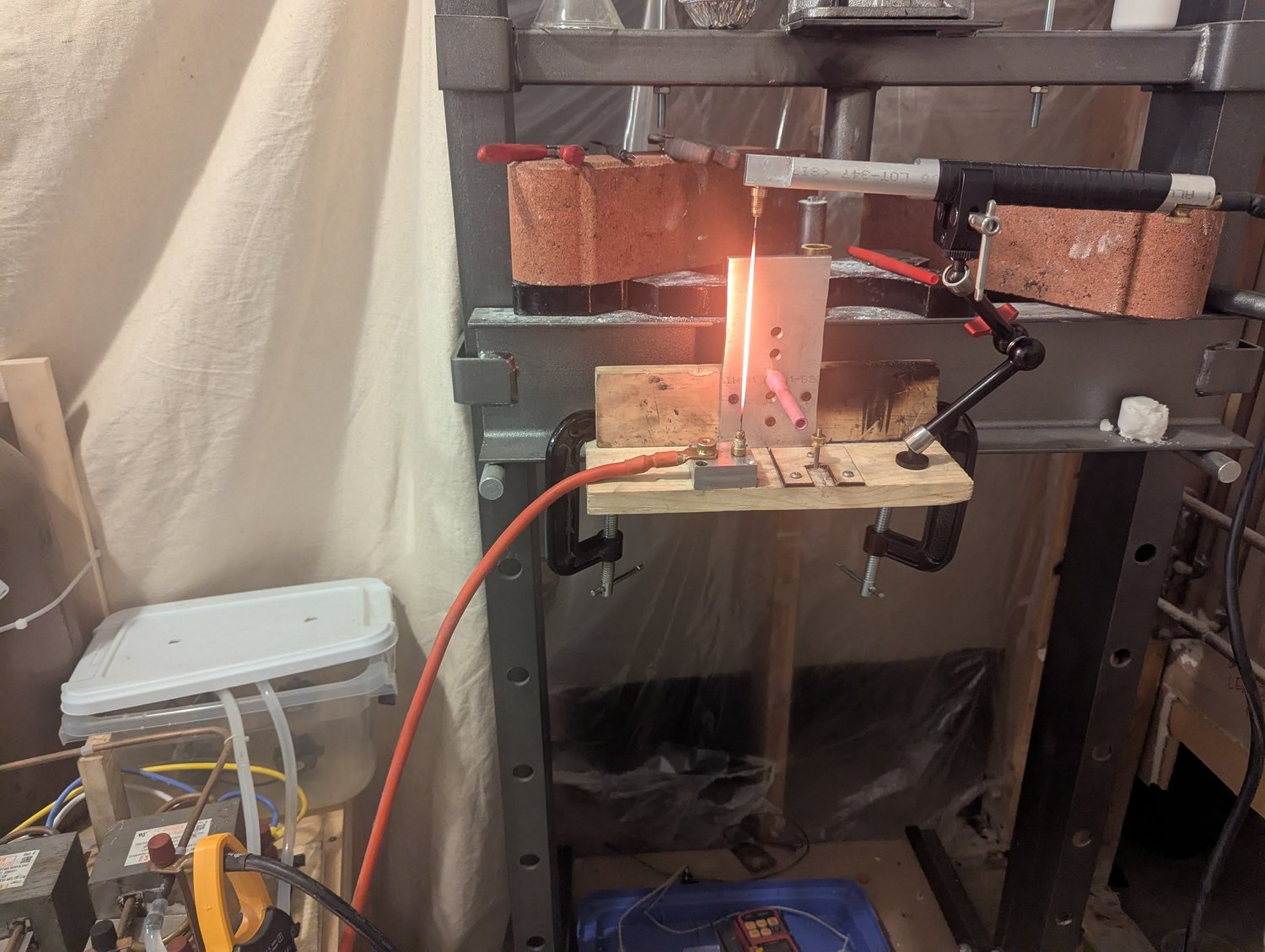
This is the winding fixture I used before my current setup shown in Photos 500 and 501. One end of the tungsten rod stayed fixed while the other was wound around a long alumina mandrel, the form that guided the coil’s shape. It made usable filaments, although getting the same shape each time was difficult.
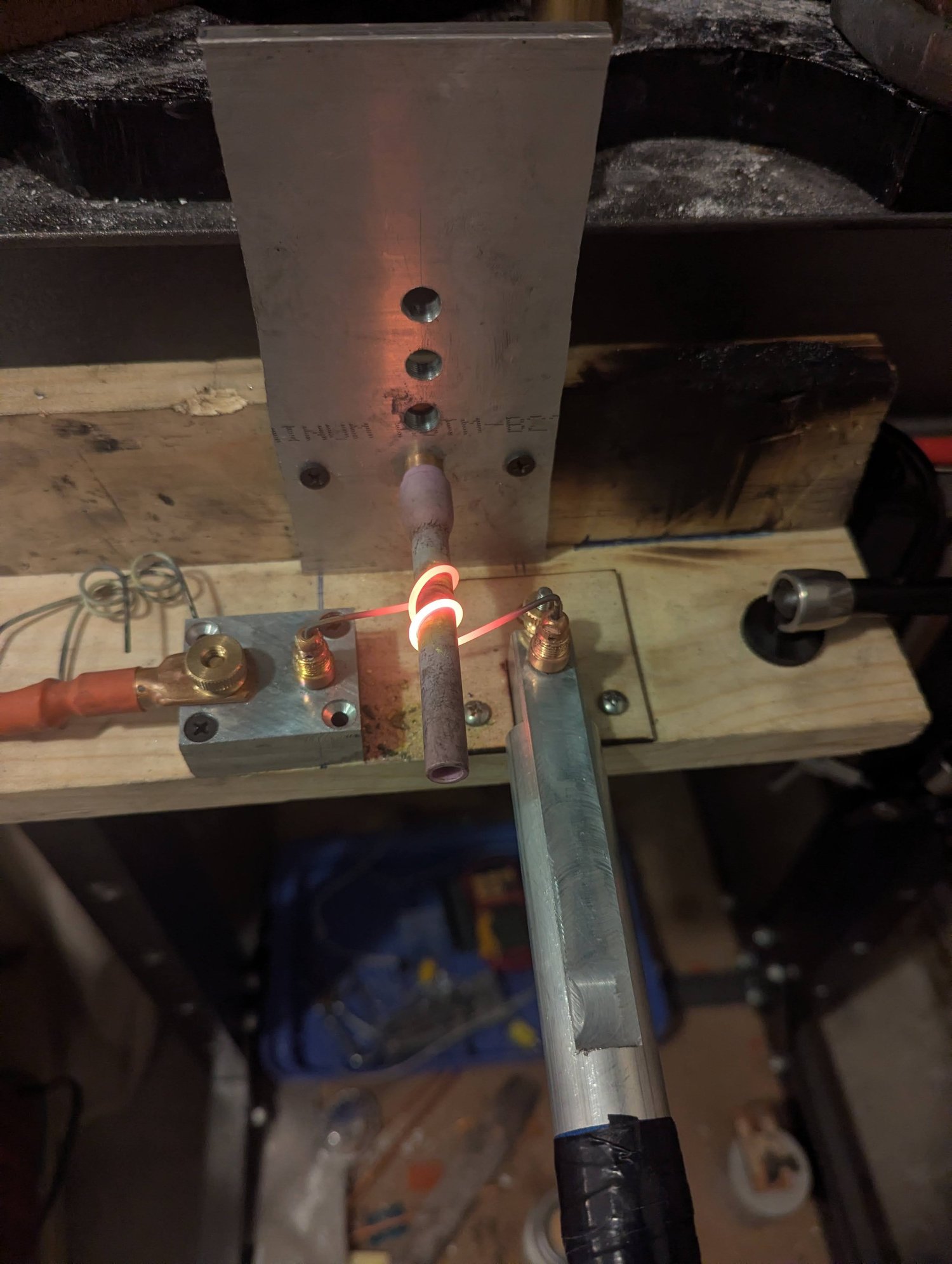
The earlier tungsten winding operation in progress. The alumina mandrel supported the rod as it was formed into a coil. I used this method for the early furnace experiments; my current winding fixture is shown at the top of this project in Photos 500 and 501.