Personal projects / Materials & heat
Tungsten oxidation tests
Investigating tungsten oxidation during furnace heating, and developing titanium oxygen getters to remove residual oxygen and protect the filament.
Open the numbered review →Titanium oxygen getters
Photos 1–4, 8, 12–14
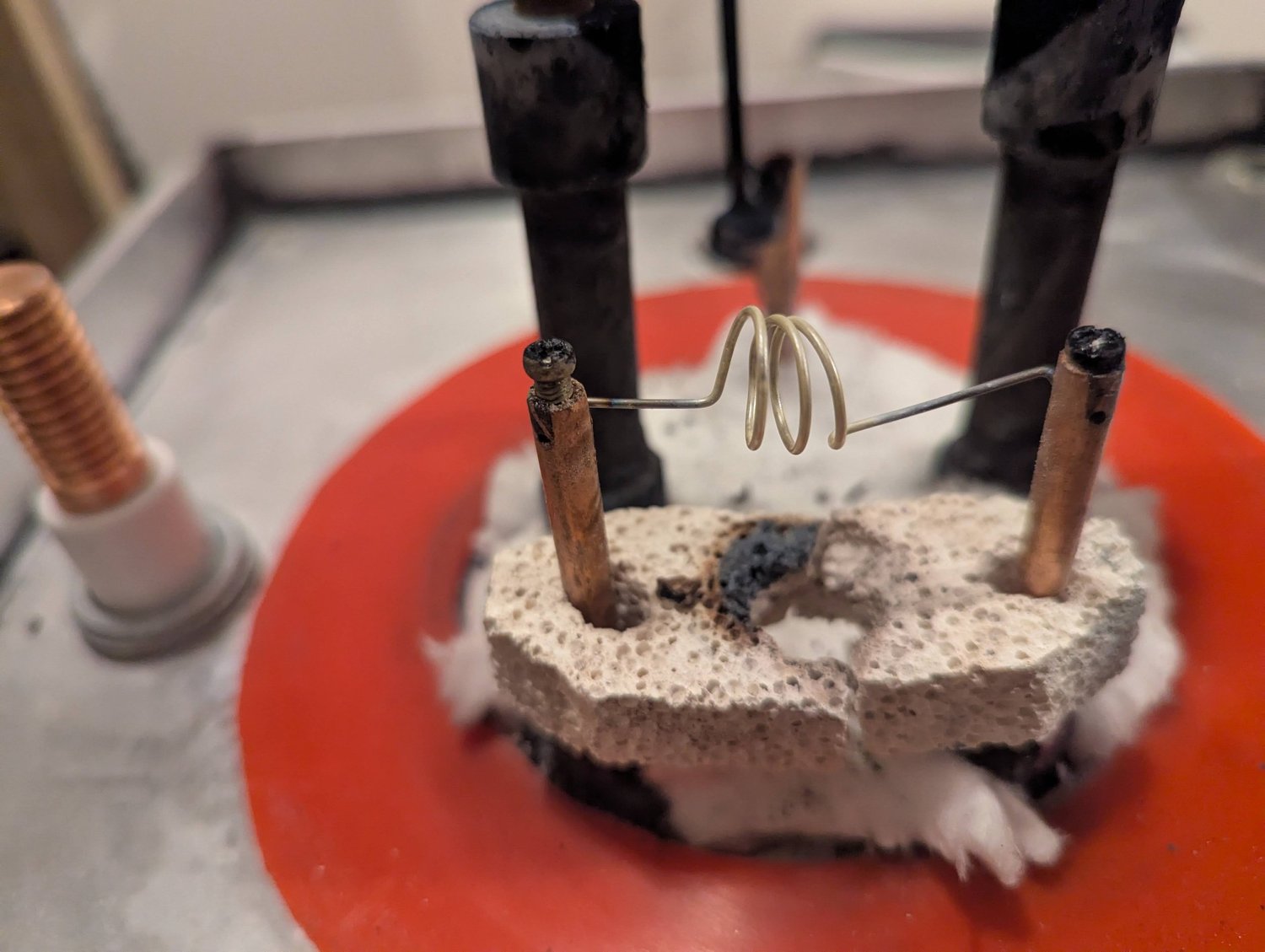
A titanium-wire getter inside the stainless steel ‘noodle pot’ furnace. A getter is a sacrificial material that captures unwanted gas: here, the heated titanium reacts with oxygen and holds it as an oxide. I used it to reduce the oxygen available to attack the hot tungsten filament.
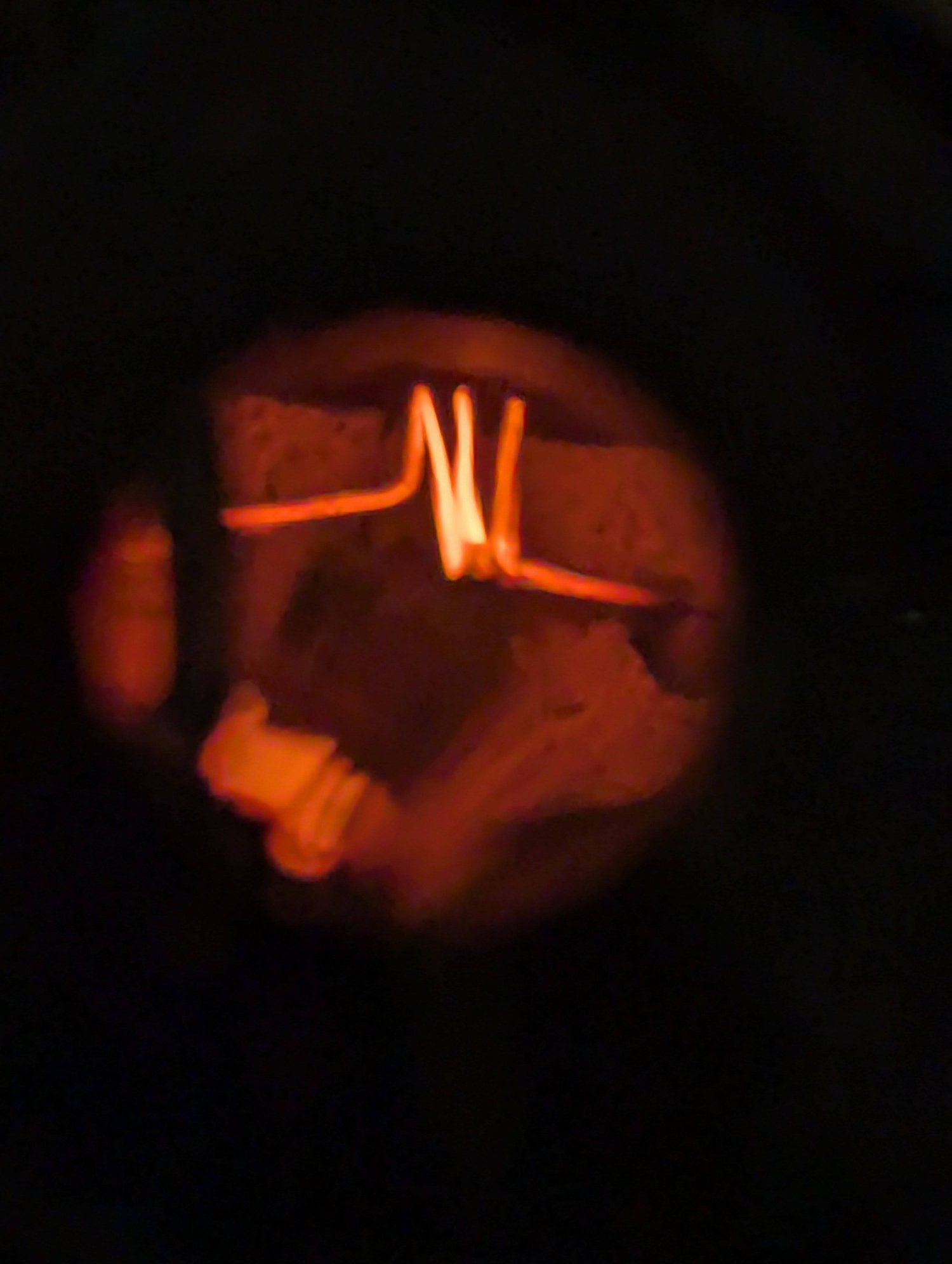
The titanium wire glowing as it heats up. This version used solid wire; in later experiments I used porous titanium sponge around a central nichrome heating coil. The sponge offered much more surface area and seemed to work better in my tests.
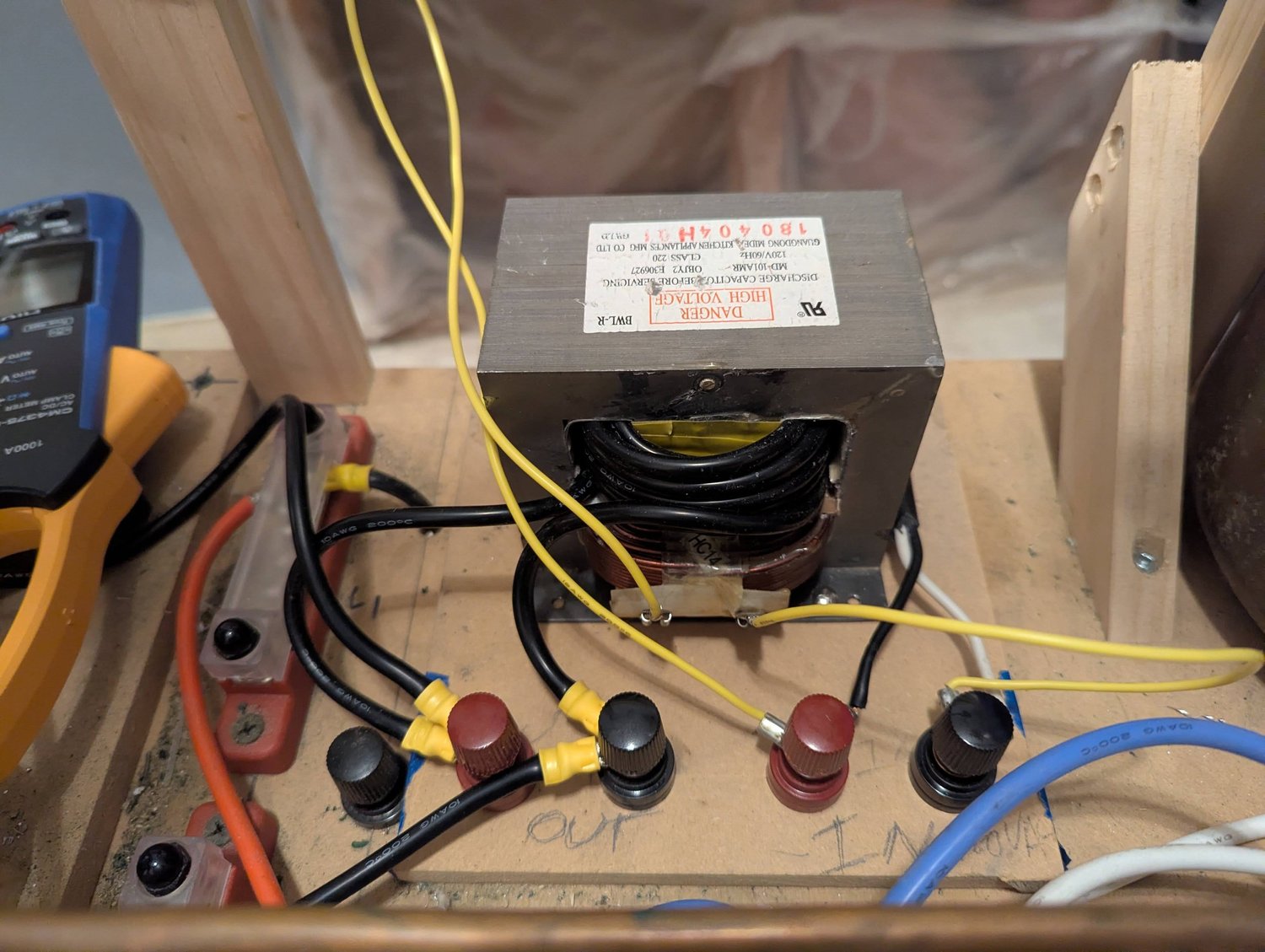
The power supply for the titanium getter. It delivers a large electric current at a low voltage to heat the titanium wire, helping it capture oxygen inside the furnace chamber.
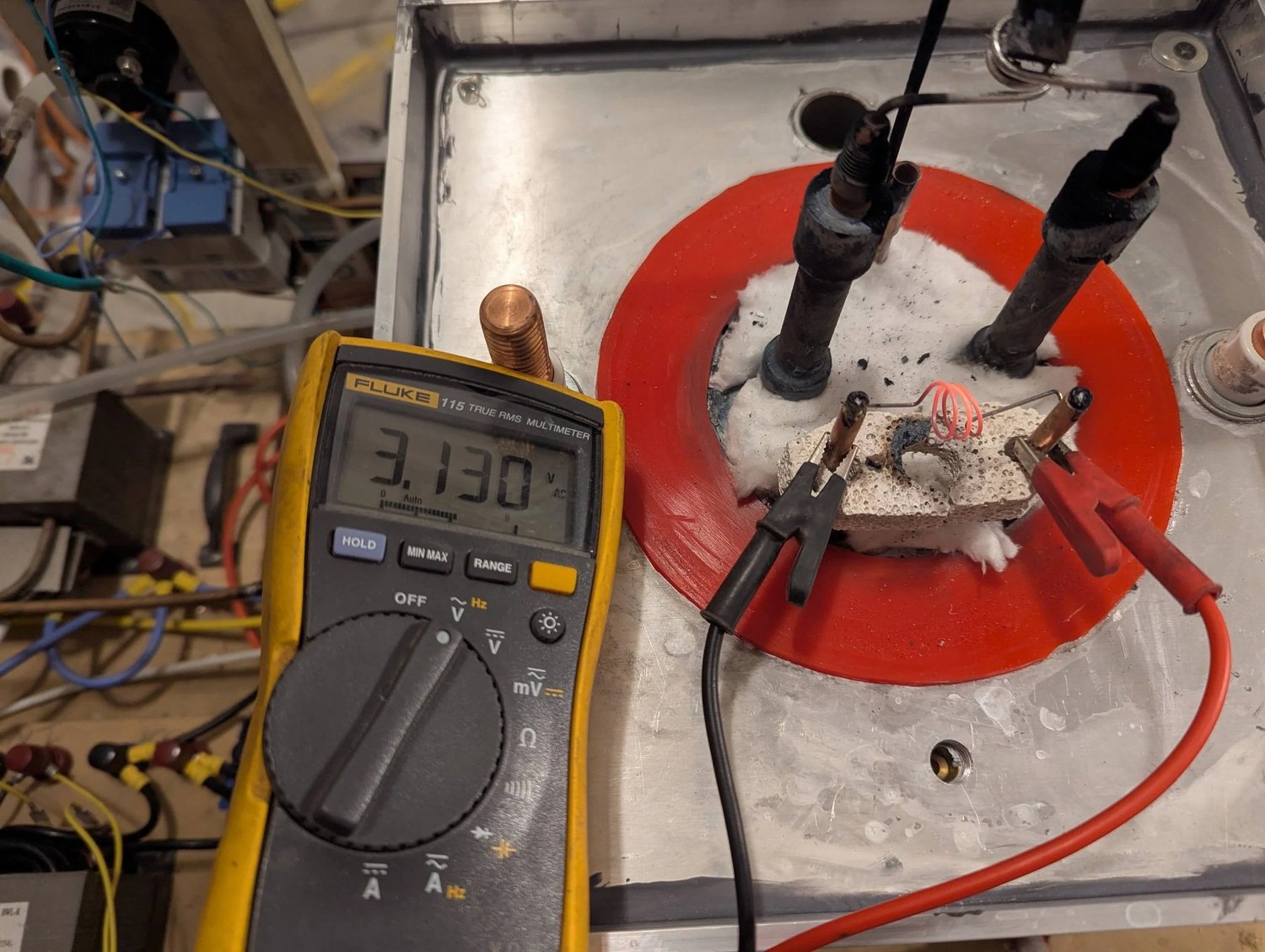
A voltage measurement across the titanium getter during testing. This was part of checking the electrical conditions used to heat the wire.
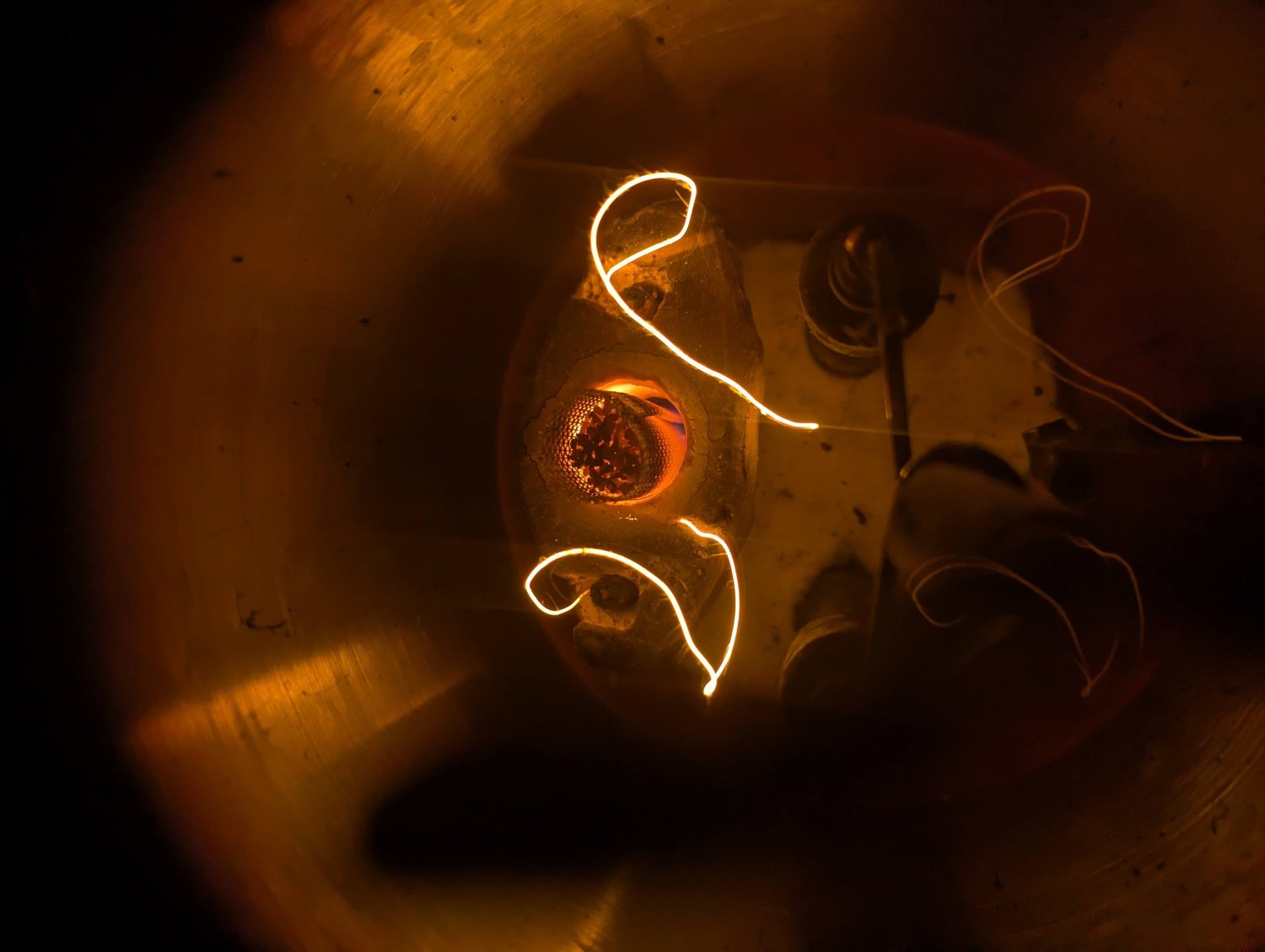
An early titanium-sponge getter with nichrome heating wire wrapped around the outside. I later moved a tight heating coil into the center and packed the sponge around it, which seemed more effective. I also suspected that the firebrick and refractory mortar released trapped moisture and gases during heating, making oxygen control harder.
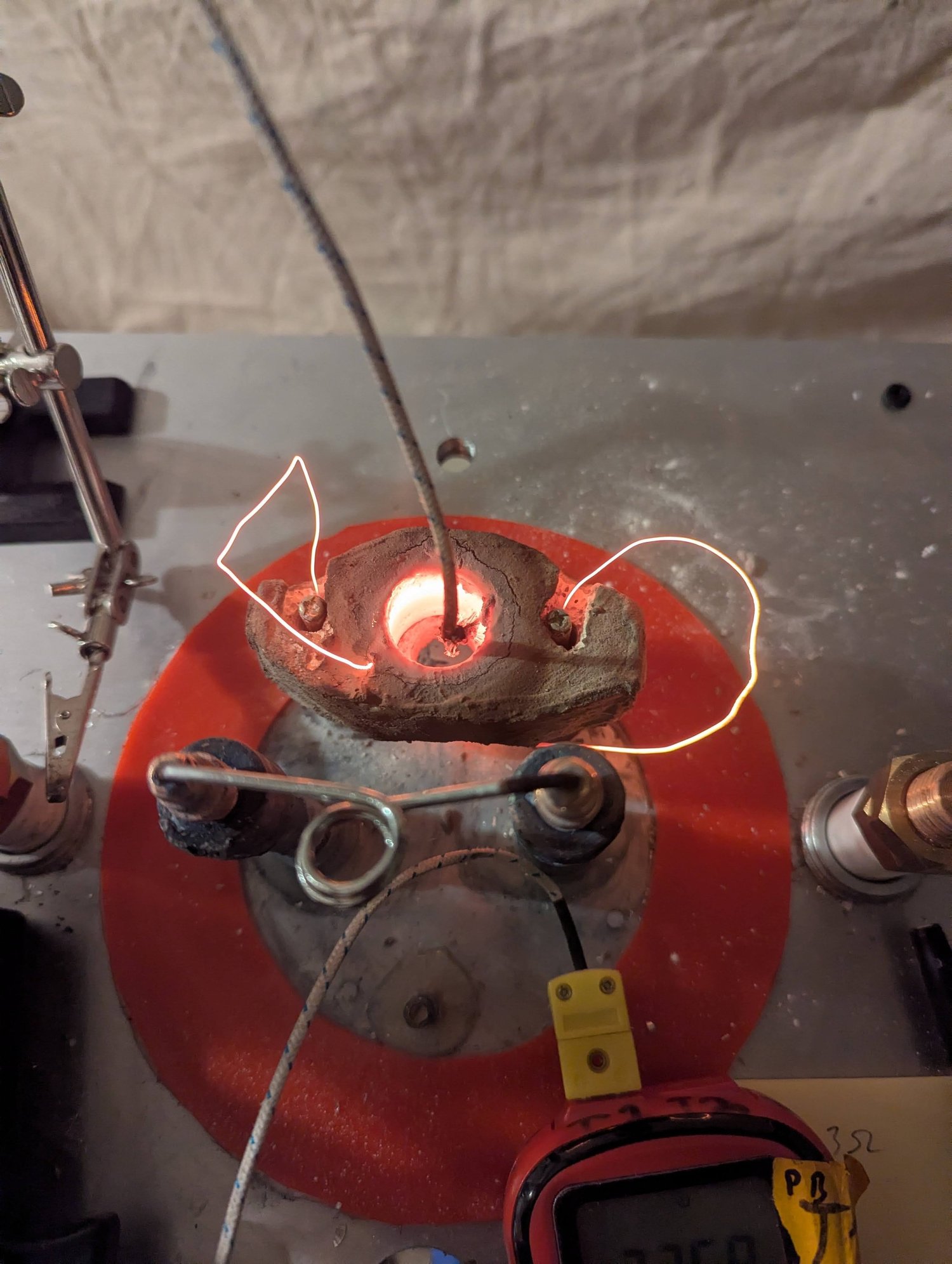
Nichrome wire lines a cavity carved into firebrick to heat the getter material. I recall this version reaching roughly 800°C, although it required running the heating wire very hot. I later replaced it with titanium sponge held around a small central heating coil.
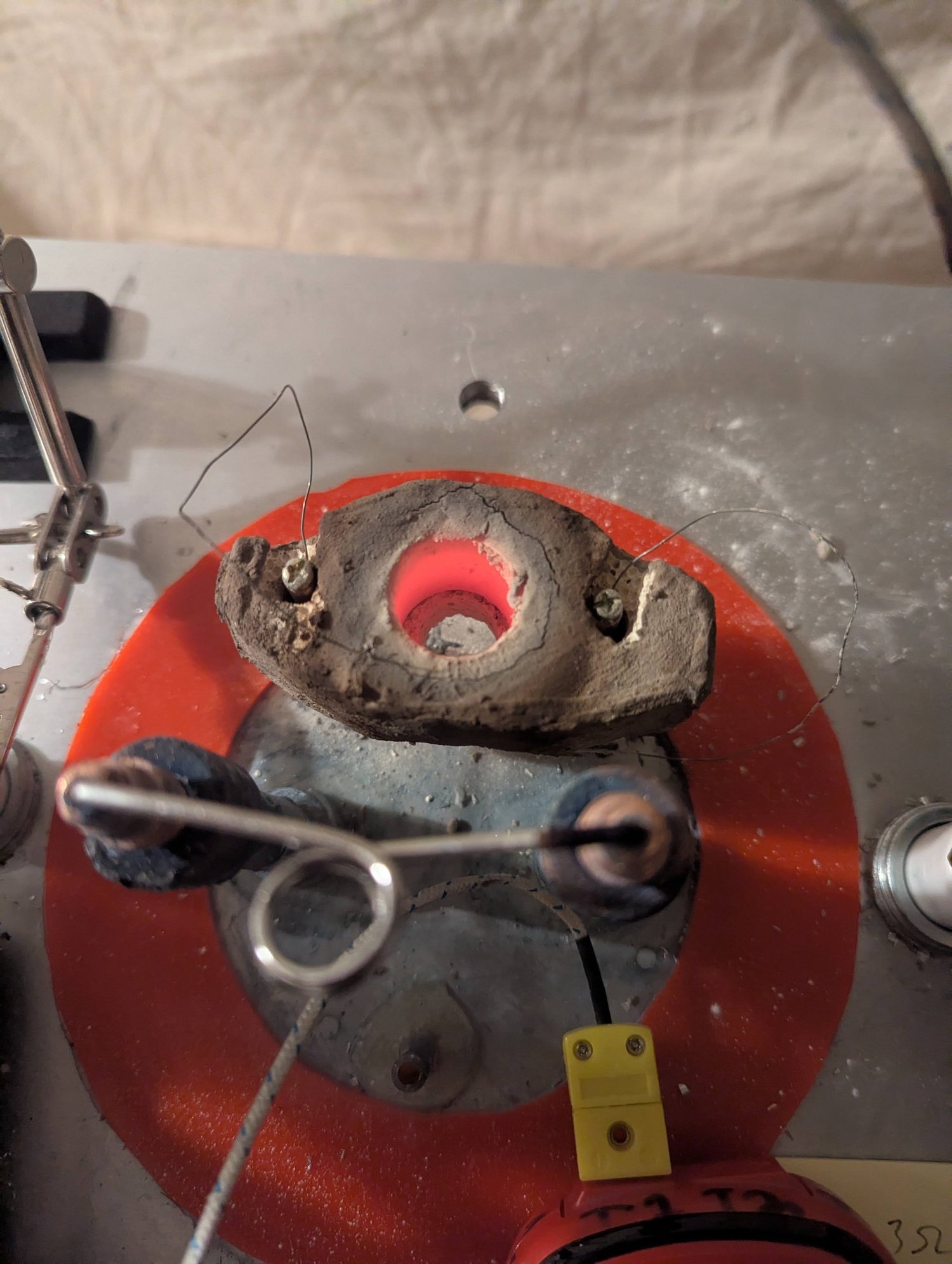
Another angle on the early getter heater, showing the carved cavity and the nichrome wire around its perimeter. This arrangement heated inward from the outside; the later sponge getter placed the heating coil in the center.
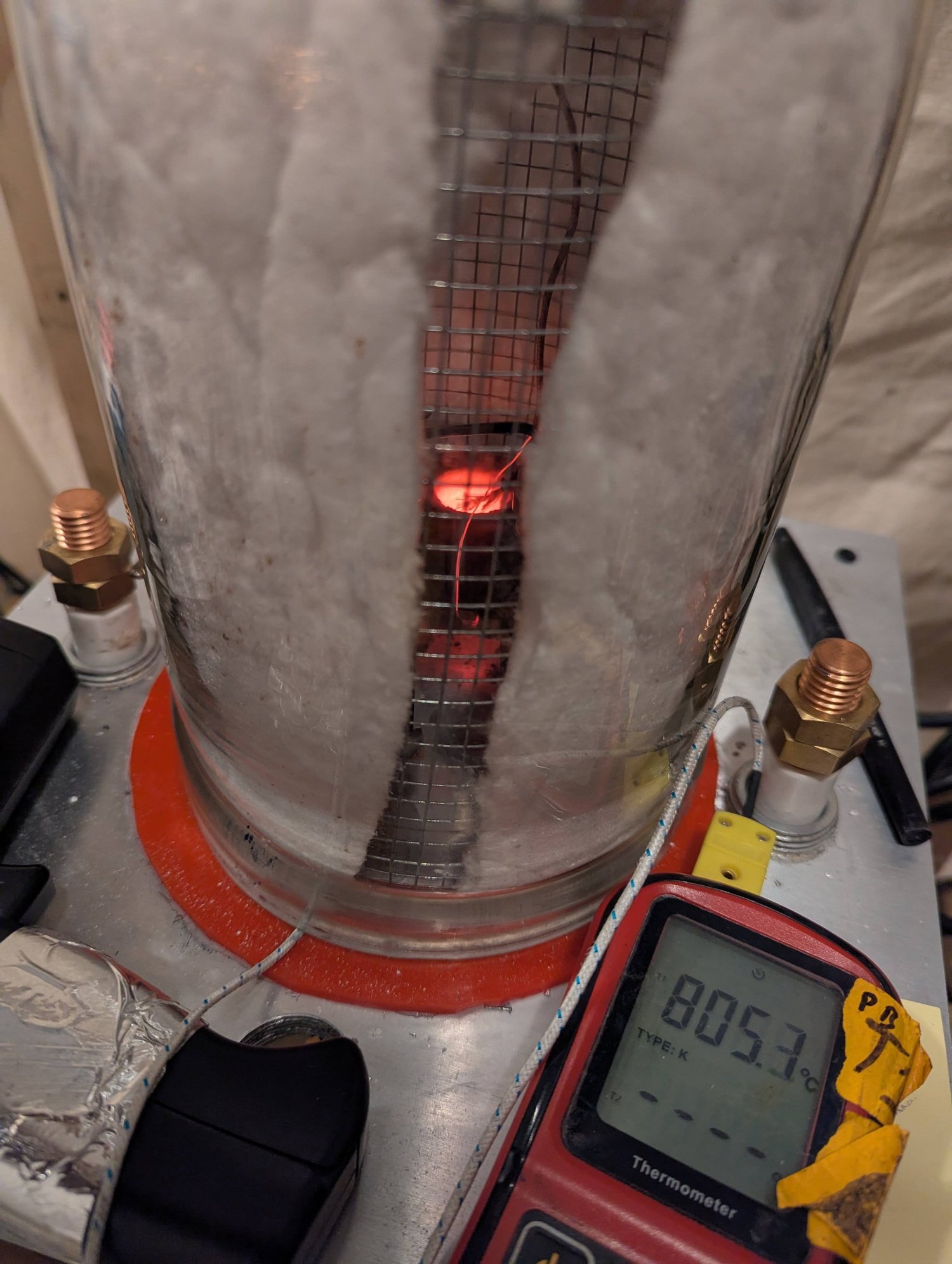
The firebrick-based getter heater installed in a vacuum chamber. I retired this version because I suspected that moisture and gases released by the heated firebrick and mortar were working against the getter. These tests highlighted how sensitive the hot tungsten was to residual oxygen.
Earlier bell-jar observations
Photos 15–17
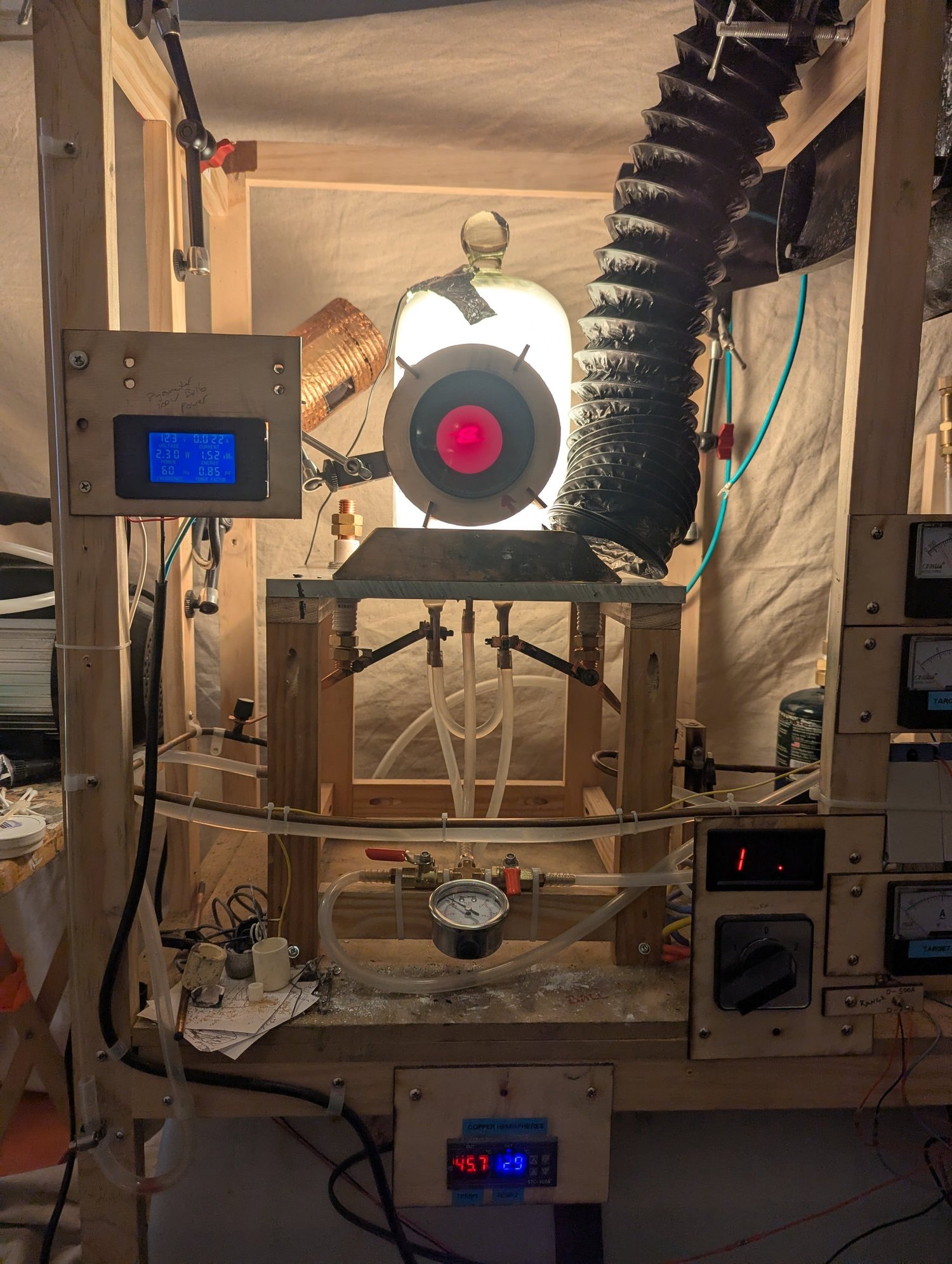
A glass bell jar let me watch the tungsten filament while it heated and investigate why it deteriorated so quickly. I attributed the cloudy deposits inside the glass to tungsten oxide. The red viewing assembly was borrowed from my optical pyrometer and used filters to reduce the intense light and select a red view of the filament.
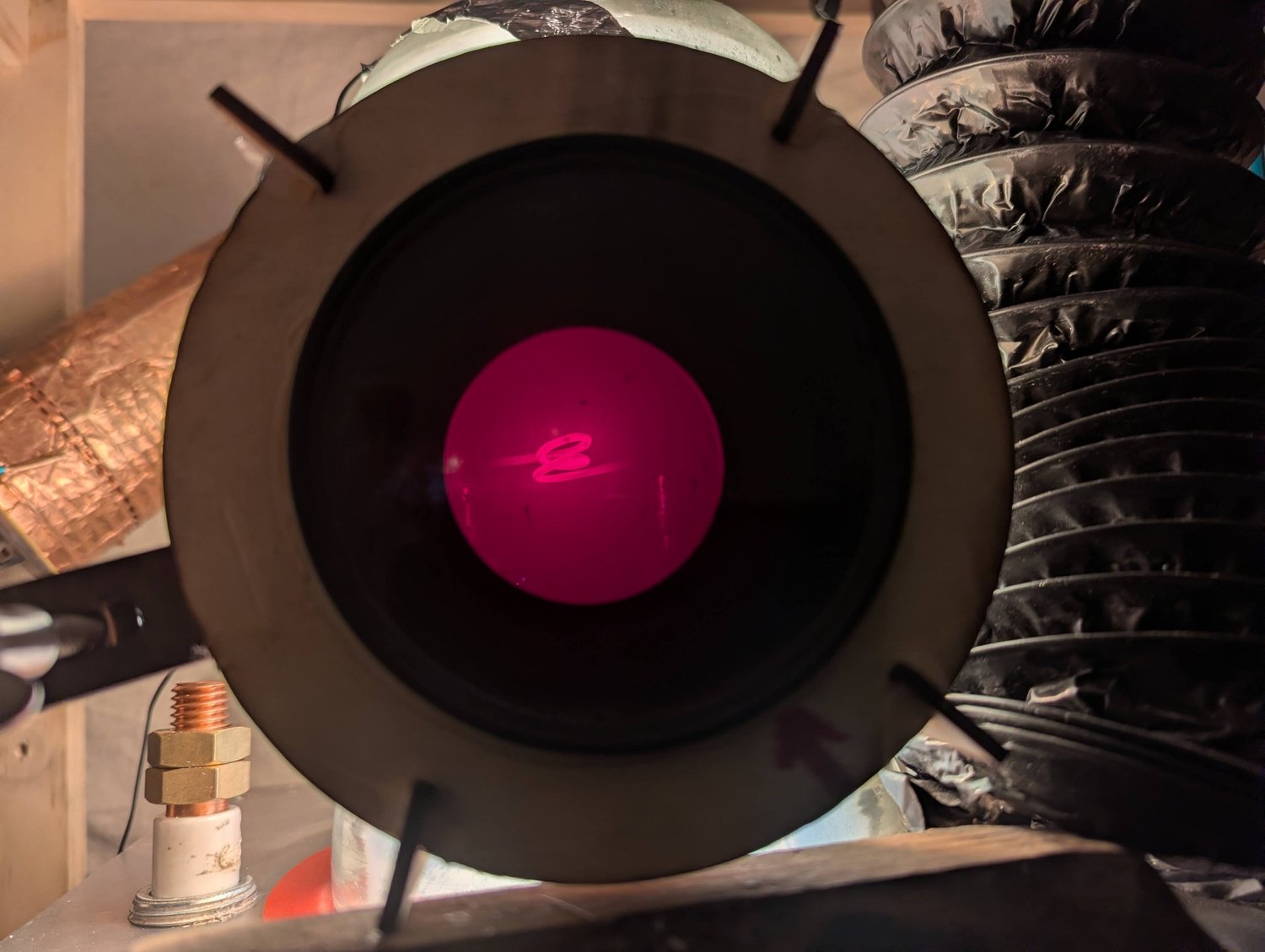
A closer view of the tungsten filament during the bell-jar experiment. I was looking for brighter and darker sections that might reveal uneven heating. This was a visual comparison of the filament’s behavior, not a calibrated temperature map.
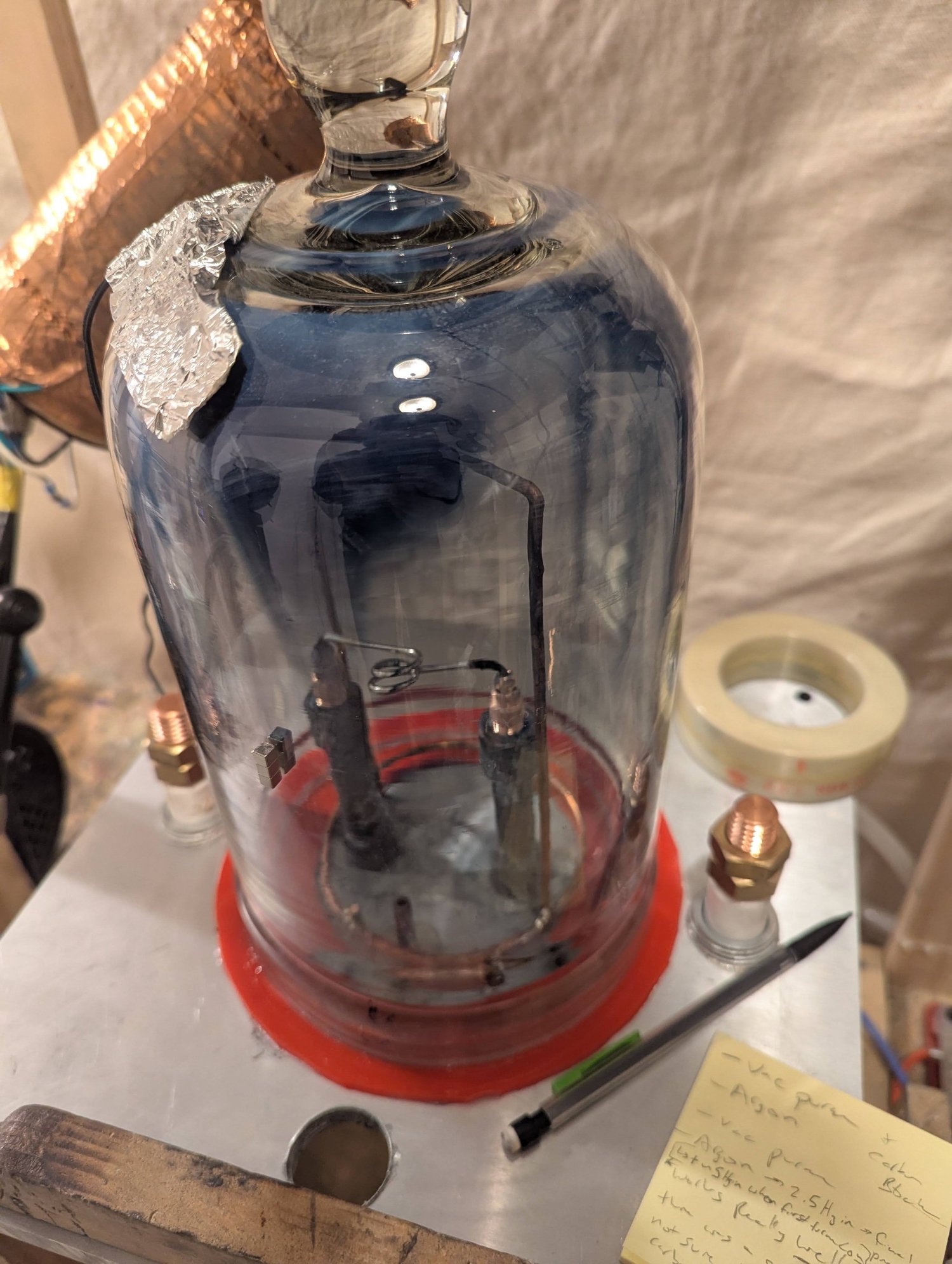
A blue coating developed inside the bell jar during a tungsten-filament test. Tungsten trioxide can be yellow, while oxygen-deficient tungsten oxides can appear blue. I interpreted this blue deposit as an oxygen-deficient oxide and used the differences between blue and yellow deposits as qualitative clues while improving oxygen control in the furnace.